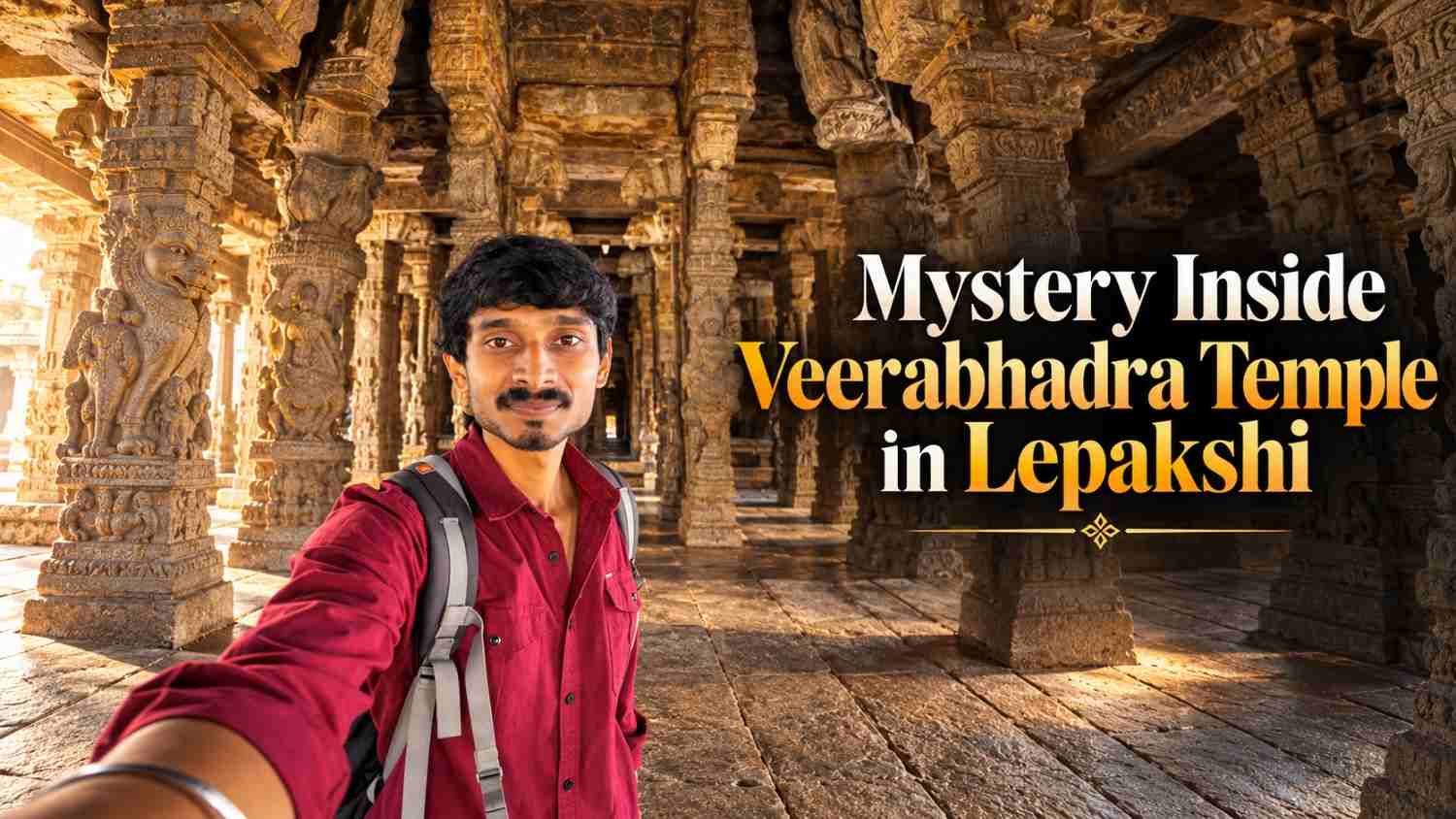
Veerabhadra Temple in Lepakshi: My 484 KM Ride
Some places stay on your travel wishlist for a few weeks.
Some stay there for months.
But Veerabhadra Temple in Lepakshi had been sitting somewhere in my mind since my engineering days.
Back then, I had heard an interesting story about a pillar inside Lepakshi Temple that apparently does not completely touch the ground. People could pass a piece of cloth or paper underneath it.
A hanging pillar inside a centuries-old temple?
That was enough to make me curious.
At that time, I didn’t have a bike or any plan to travel hundreds of kilometres just to see a temple. So I simply kept Lepakshi on my mental wishlist and thought:
Whenever I get a job and buy my own bike, I will visit this place.
Years passed.
I completed my engineering, went through the usual struggle of finding work, got a job and eventually gifted myself a bike.
After exploring several places around Hyderabad, I slowly became more comfortable with long-distance rides.
Then one weekend, I started thinking about doing something bigger.
Not another 100 or 200 km ride.
I wanted a proper long ride.
And suddenly, that old memory came back.
Lepakshi.
The temple with the hanging pillar I had wanted to see since college.
That was enough.
My next destination was fixed.
Quick Information About Veerabhadra Temple in Lepakshi
| Information | Details |
| Temple | Lepakshi Veerabhadra Swamy Temple |
| Location | Lepakshi, Andhra Pradesh |
| District | Sri Sathya Sai District |
| Main Deity | Lord Veerabhadra |
| Architecture | Vijayanagara style |
| Famous For | Hanging Pillar, frescoes, stone carvings, Nagalinga |
| Nearby Landmark | Lepakshi Nandi |
| Nearest Major Town | Hindupur |
| Temple Timings | 6:00 AM to 6:00 PM |
| Best For | Temple visit, architecture, history and photography |
Why Did I Decide to Visit Veerabhadra Temple in Lepakshi?
My reason was actually very simple.
The hanging pillar.
I had been hearing about it since my engineering days, and the curiosity never completely disappeared.
After buying my bike, I had already covered several destinations around Hyderabad. Slowly, I started feeling more confident about highway rides.
So this time I wanted to test myself with a much longer journey.
I opened Google Maps and searched for Veerabhadra Temple in Lepakshi.
Then came the first shock.
From my hostel, the distance shown was approximately 484 km.
And Google Maps was showing roughly 9 to 10 hours of riding.
For a few minutes, I genuinely questioned the plan.
Riding almost 500 km just to reach the destination and then returning the same day made no sense to me. It would be exhausting and, more importantly, I wouldn’t be able to enjoy Lepakshi properly.
So instead of cancelling the plan, I changed it.
My Plan Was Simple
I would:
Hyderabad → Lepakshi → Stay for One Night → Explore Lepakshi → Return to Hyderabad the Next Morning
Once I decided to stay overnight, the trip suddenly looked much more practical.
Finding a Budget Hotel Near Lepakshi Temple
The next question was accommodation.
Because I was travelling alone, I didn’t need any fancy resort. I just wanted a clean room where I could park my bike, freshen up after the long ride and get proper sleep before riding back.
While searching online, I found APTDC Haritha Hotel at Lepakshi.
The biggest advantage was its location.
It was very close to both the Veerabhadra Temple and the famous Lepakshi Nandi.
On Thursday, I booked an AC room online.
My Hotel Cost
Haritha Hotel AC Room: ₹1,109
Room booked.
Destination fixed.
Now I only had to wait for Saturday.
And waiting for a planned bike trip somehow makes the working week feel twice as long.
Preparing My Bike for the 484 KM Ride
Friday evening means one thing before most of my bike trips.
Bike and riding gear preparation.
Since this was going to be one of my longest solo rides at that time, I didn’t want to ignore even small things.
First, I filled approximately 8 litres of petrol, which cost me around ₹860.
Then I checked the tyre pressure.
The tyre shop uncle didn’t actually ask me for money, but I gave him ₹40 as a small tip.
After that came my usual pre-trip ritual.
Helmet cleaning.
Riding gear cleaning.
Checking my luggage.
Charging my phone.
Making sure Google Maps would be ready.
Everything was prepared.
I planned to sleep early because my original plan was to wake up at 5:00 AM.
But there was one problem.
I Couldn’t Sleep.
Whenever I have a big trip the next morning, excitement sometimes becomes the biggest enemy of sleep.
I kept thinking about the road.
Nearly 500 km.
A place I had wanted to visit for years.
The hanging pillar.
The temple.
The long NH44 ride.
Finally, instead of waking at 5 AM…
I woke up at 2:30 AM.
At that point I thought there was no point forcing myself back to sleep.
I got ready.
Packed my things.
Put on my riding gear.
And at approximately 3:00 AM, my ride to Lepakshi officially began.
My Hyderabad to Lepakshi Bike Route
I entered the Haritha Hotel location into Google Maps and followed this route:
Hostel → Shadnagar → Jadcherla → Pebair → Kurnool → Anantapur → Penukonda → Kodur → Lepakshi
Most of my journey was on NH44.
For riders, this was one of the things I enjoyed most about the trip.
Long highways.
Open stretches.
Music playing inside my helmet.
And hundreds of kilometres ahead of me.
After Kodur, I moved onto the road towards Lepakshi.
I was actually surprised by the road condition. Even the final sections towards the destination were comfortable during my visit.
The Scary Part of My 3 AM Ride
Starting at 3 AM sounds exciting, but this ride also taught me why extremely early starts need extra caution.
While crossing Hyderabad and its outskirts, I encountered a stretch where visibility became very poor because of what looked like heavy haze or smog.
For a moment, the road ahead almost disappeared.
That was probably one of the most uncomfortable parts of the entire ride.
Instead of trying to maintain highway speed, I immediately slowed down.
No destination is worth taking unnecessary risks for.
Especially when you’re riding alone.
Once visibility improved, I gradually returned to my normal cruising speed.
The highway opened up again, and I started enjoying the ride.
My First Breakfast Break After Four Hours
By around 7:00 AM, I had already been riding for nearly four hours.
And because I had woken up at 2:30 in the morning, hunger hit me hard.
I started watching the roadside for a small tiffin centre.
Finally, I found one and stopped.
I originally thought about eating bonda, but it wasn’t ready yet.
Idli was available.
So idli it was.
Breakfast Cost: ₹40
It wasn’t anything fancy.
But after riding for four hours, even a simple plate of hot idli feels like a proper reward.
I finished breakfast, stretched my legs for a few minutes and got back on the bike.
There were still hundreds of kilometres left.
Another Petrol Stop During My Lepakshi Ride
After covering many more kilometres, I looked at my fuel indicator.
It was getting low.
On long highway rides, I personally don’t like waiting until the tank is almost empty before searching for a petrol pump.
So when I found one, I stopped.
I filled approximately 6 litres, costing around ₹660.
Fuel sorted.
Ride continued.
But this was the point where I started feeling the physical effect of the journey.
I hadn’t slept properly.
I had started riding at 3 AM.
And I had already spent hours continuously on the highway.
The excitement was still there, but my body was getting tired.
Coconut Water Became My Small Energy Break
After another long stretch, I stopped for coconut water.
Coconut Water: ₹50
It sounds like a tiny detail, but breaks like this make a huge difference during long rides.
I got off the bike, stretched my legs, drank the coconut water and gave myself a few minutes before continuing.
This trip slowly taught me that a long-distance bike ride isn’t about continuously riding as fast as possible.
Sometimes those 10-minute breaks are what help you complete the remaining 200 km comfortably.
Then I was back on NH44 again.
Kilometre after kilometre.
Music.
Highway.
Fuel stops.
Small breaks.
And one destination getting closer on Google Maps.
Finally Reaching Lepakshi After Around 9 Hours
After approximately nine hours of travelling, I finally reached Lepakshi.
The time was around 1:00 PM when I arrived at Haritha Hotel.
That feeling of reaching the destination after such a long solo ride is difficult to explain.
You are tired.
Your shoulders hurt.
Your body wants a bed.
But at the same time your mind is saying:
I actually completed it.
I parked my bike, showed my booking details at reception and received my room.
Before doing anything else, I removed all my riding gear and just sat down for a few minutes.
I needed that break badly.
My Experience Staying at Haritha Hotel Lepakshi
For the price I paid, I personally found the room decent.
I wasn’t expecting luxury.
My priority was:
A proper bed.
AC.
A place to freshen up.
Bike parking.
And a location close to the tourist attractions.
For my requirements as a solo budget traveller, the hotel worked well.
The biggest advantage was definitely the location.
The distance from Haritha Hotel to Veerabhadra Temple in Lepakshi was only around 350 metres during my visit.
That meant after riding nearly 484 km, I didn’t have to travel another 10 or 15 km to reach the temple.
I freshened up, rested for a short time and prepared myself again.
Because even after riding for almost nine hours, I wasn’t going to waste the afternoon inside the hotel.
The place I had waited years to see was just a few hundred metres away.
Where Is Veerabhadra Temple in Lepakshi Located?
Lepakshi is located in Sri Sathya Sai district of Andhra Pradesh, close to the Karnataka border. Following Andhra Pradesh’s district reorganisation in 2022, Lepakshi falls under the present Sri Sathya Sai district. Sri Sathyasai District
This location also explains why searches such as Lepakshi Temple from Bangalore are so common.
Bengaluru is considerably closer to Lepakshi than Hyderabad, while my journey involved approaching from the opposite side through Telangana and Andhra Pradesh.
Why Is Veerabhadra Temple in Lepakshi So Famous?
Before visiting, I mainly knew Lepakshi because of the hanging pillar.
But after researching the place and eventually seeing it myself, I understood that the temple has much more than one unusual pillar.
The Veerabhadra Temple is a major example of Vijayanagara-style architecture and is dedicated to Lord Veerabhadra, a fierce form associated with Lord Shiva. The complex contains elaborate stone carvings, murals and frescoes, multiple shrines, the famous Nagalinga and its unusual hanging pillar. Incredible India
Close to the temple is another structure that makes Lepakshi special.
The enormous Ancient Vijayanagara-era Lepakshi Nandi.
The official district tourism page describes it as a huge monolithic granite sculpture facing towards the Nagalinga associated with the temple complex. Sri Sathyasai District
But reading about all these things online was different.
I wanted to see them myself.
And finally, at around 2:00 PM, after years of keeping Lepakshi on my wishlist, I left the hotel and started walking towards the temple.
The hanging pillar I had heard about during engineering was finally just a few minutes away.
Exploring Veerabhadra Temple, Hanging Pillar & Lepakshi Nandi
At around 2:00 PM, after freshening up at Haritha Hotel and taking a short rest, I finally started towards the place that had been sitting on my wishlist since my engineering days.
Veerabhadra Temple in Lepakshi.
The distance from my hotel to the temple was only around 350 metres, so after riding nearly 484 km to reach Lepakshi, this felt like nothing. Pasted markdown
I had already seen many photos and videos of Lepakshi online, but this visit was never just about seeing another famous temple.
I had come here mainly for one thing.
That hanging pillar.
The same pillar I had heard stories about years ago.
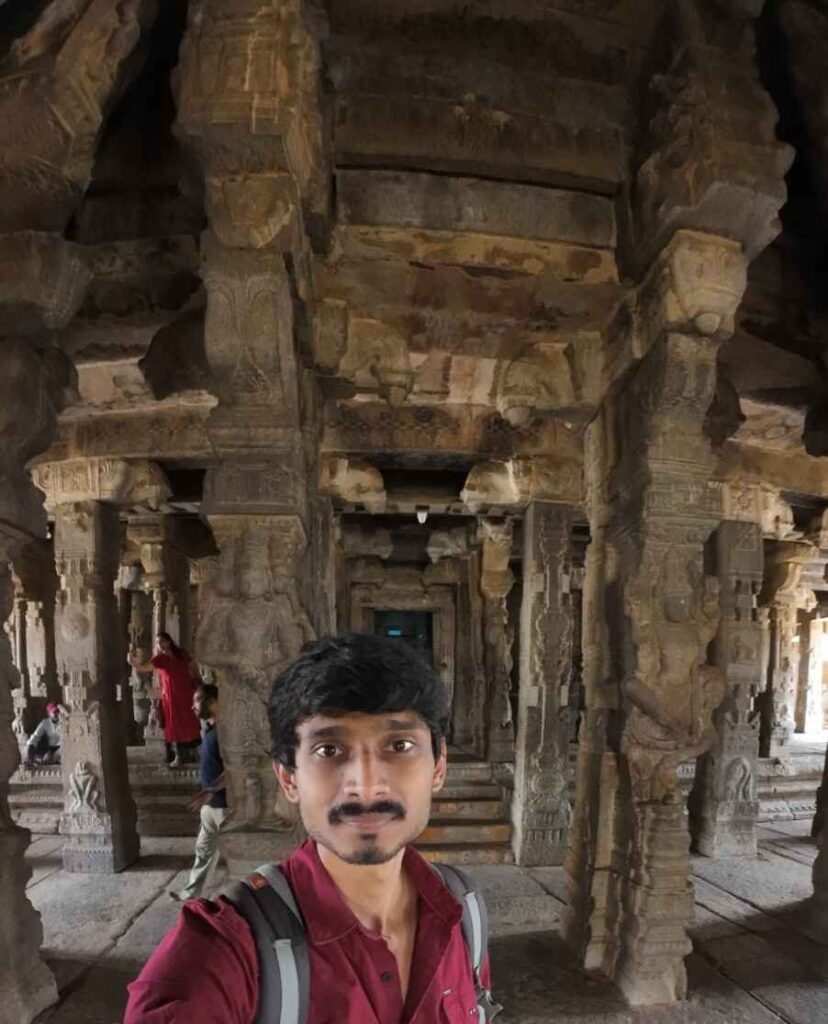
Reaching Veerabhadra Temple in Lepakshi
Within a few minutes, I reached the surroundings of the temple.
During my visit, I found space to park my bike near the temple and no parking fee was collected from me. The footwear facility was also free at that time.
Of course, these are things that can change later, especially during festivals or crowded weekends, so I wouldn’t plan a trip assuming parking will always remain free.
I removed my footwear and walked inside.
The moment I entered, the atmosphere changed completely.
From outside, Lepakshi looks like a relatively peaceful village.
But once I stepped into the temple complex, I started noticing the old stone pillars, carvings, sculptures and structures everywhere.
This didn’t feel like a temple where I should simply take darshan and leave.
It felt like a place that needed to be explored slowly.
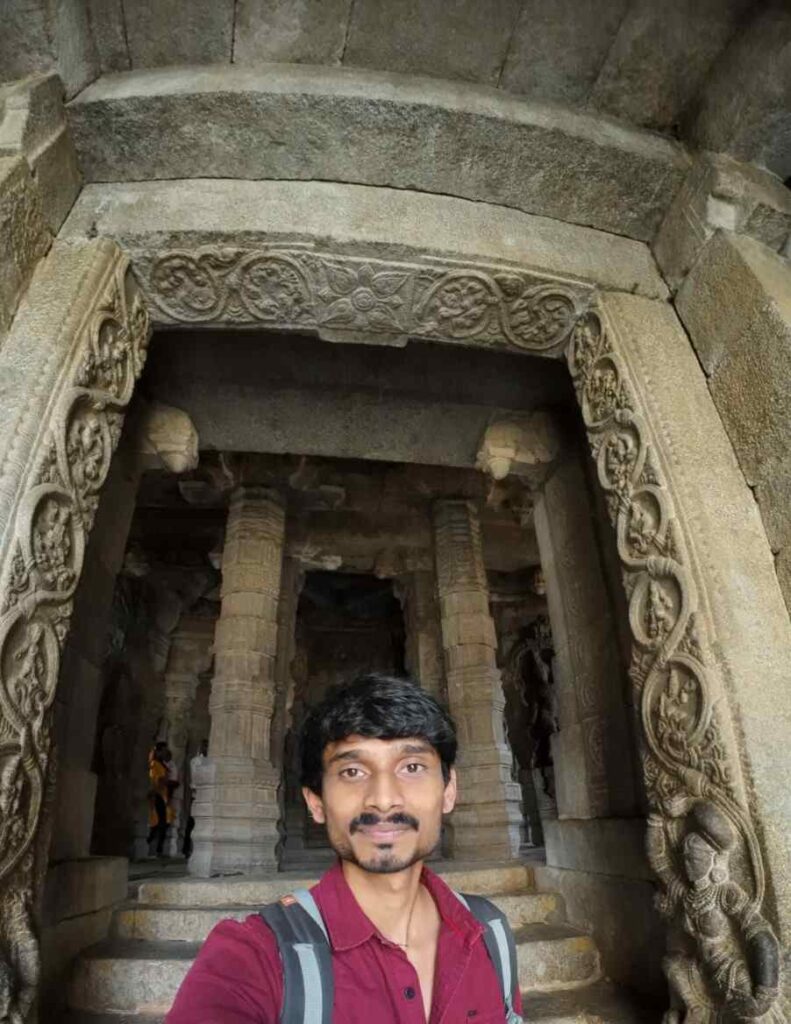
Which God Is Worshipped at Lepakshi Temple?
The main deity of the temple is Lord Veerabhadra, a fierce form associated with Lord Shiva.
The temple complex also contains shrines associated with Shiva, Vishnu and other deities. The Sri Sathya Sai district tourism department describes the Veerabhadra Temple as the most important shrine among the historic temples located on the tortoise-shaped hill traditionally called Kurma Saila. Sri Sathyasai District
Before exploring everything else, I first went for darshan.
After travelling for almost nine hours that morning, finally standing in front of Lord Veerabhadra gave me a completely different feeling.
That was the moment when the destination finally felt complete.
I took blessings, spent some time inside and then slowly started exploring the rest of the temple.
And honestly, the more I walked around, the more interesting Lepakshi became.
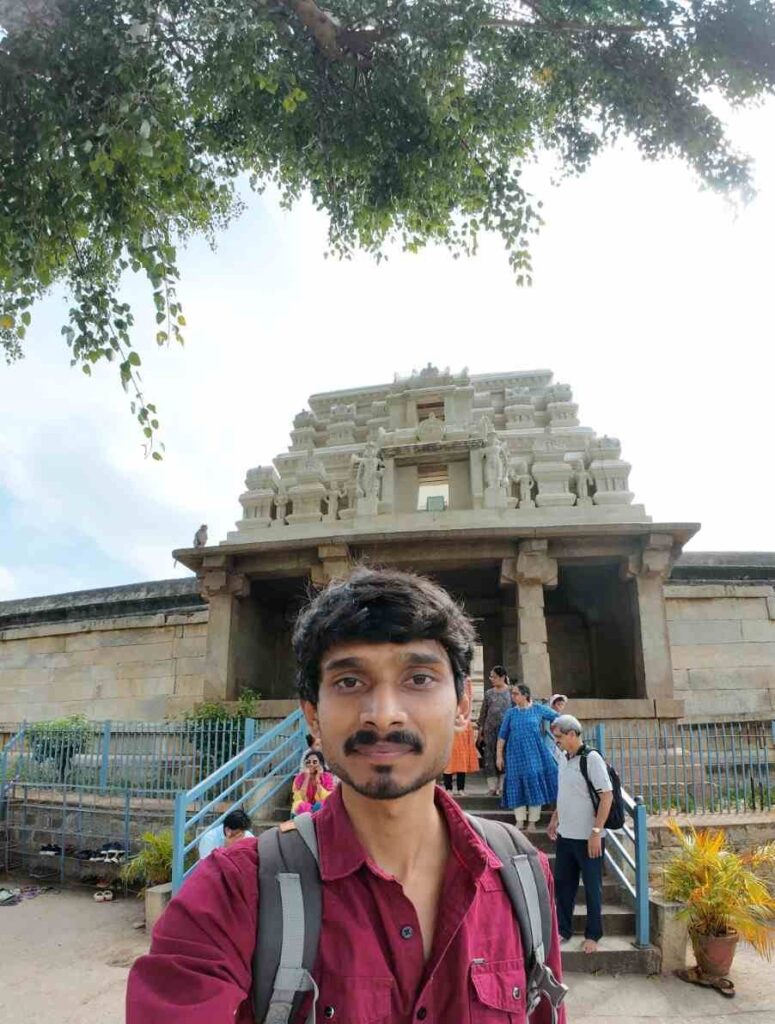
What Is the History of Lepakshi Temple?
This is where the place becomes much more interesting than just its famous hanging pillar.
The present Veerabhadra Temple is mainly associated with the Vijayanagara period in the 16th century.
Historical accounts connect its development with Virupanna and Veeranna, who served during the reign of Vijayanagara ruler Achyuta Deva Raya. Official tourism information credits Virupanna with developing the shrine into the impressive temple complex seen today, while India’s Incredible India portal similarly links the temple’s construction to Virupanna and his brother Veeranna. Sri Sathyasai District
So if you’re searching for a simple answer to who built Lepakshi Temple, the commonly accepted historical answer is:
Virupanna and Veeranna during the Vijayanagara period, under the reign of Achyuta Deva Raya.
However, Lepakshi’s religious history appears to be older than the present structure.
Traditional accounts connect the site with Sage Agastya, while Lepakshi is also mentioned in connection with important Shaiva pilgrimage traditions. That’s why the history of Lepakshi contains a fascinating mixture of documented Vijayanagara history and much older religious legends. Sri Sathyasai District
This is also why I wouldn’t describe Lepakshi only as a “hanging pillar temple.”
There is much more happening here.
Ancient Sculptures Made Me Stop Everywhere
After darshan, I started roaming around the temple.
There were old stone sculptures almost everywhere I looked.
One that immediately caught my attention was the massive Ganesha sculpture.
Then I saw the Shiva-related carvings and the famous Nagalinga, with a multi-hooded serpent rising above the Shiva Linga.
Even without knowing every detail of Vijayanagara architecture, you can appreciate the amount of work that went into these structures.
You start thinking:
How did people create this from stone hundreds of years ago?
How did they achieve this level of detail without the machinery we have today?
That thought followed me through most of my visit.
Official tourism material describes the Lepakshi complex as an important example of Vijayanagara architecture, known not only for sculpture but also for its surviving paintings and frescoes. Incredible India
And then I reached the thing I had waited years to see.
Is the Hanging Pillar at Lepakshi Temple Real?
Yes.
There really is a pillar inside the Veerabhadra Temple that does not completely rest on the floor.
This was the moment I had imagined since my engineering days.
I walked towards it and looked underneath.
There was actually a visible gap.
Official Sri Sathya Sai district tourism information also describes the famous hanging pillar as one that does not fully touch the ground, leaving enough space underneath for something thin to pass through. Sri Sathyasai District
I just stood there looking at it for some time.
My reaction was basically:
How?
I had watched videos about it before travelling to Lepakshi, but seeing something on a phone screen and standing next to it are completely different experiences.
This pillar has become the most famous architectural curiosity associated with Lepakshi, and after seeing it myself, I understood why.
Why Is the Lepakshi Hanging Pillar So Special?
The temple has dozens of stone pillars, but this particular one attracts attention because its base appears to remain slightly above the floor.
Visitors traditionally demonstrate the gap by passing a thin object underneath it.
There is also a popular story that a British-era engineer once tried to investigate or move the pillar to understand how it worked, after which its position was disturbed slightly. That story is repeated in official Incredible India tourism material, although I would treat the finer details as part of Lepakshi’s popular historical lore rather than something visitors need to test themselves. Incredible India
I definitely wouldn’t recommend visitors trying to push, pull or experiment with any of these old structures.
Just look at them.
Take your photos where photography is permitted.
And let a centuries-old monument remain a centuries-old monument.
Seeing It After Waiting for Years Felt Different
For another visitor, the hanging pillar might just be a famous tourist attraction.
For me, this part was personal.
I had first heard about it during my engineering days, when visiting Lepakshi felt like something I might do “someday.”
Years later, I had finished engineering, gone through the struggle of starting my career, bought my own motorcycle and ridden nearly 484 km to finally stand in front of it. Pasted markdown
That is why I like keeping places on my wishlist.
Sometimes you save a location and forget about it.
And sometimes, years later, you finally reach it.
I clicked photos, took a few selfies and spent more time walking through the complex.
There was no reason to rush.
What Else Is Special About Lepakshi Temple?
If you’re visiting only for the hanging pillar, you might miss half the reason Lepakshi is worth visiting.
Apart from the hanging pillar, look out for:
- The main Veerabhadra shrine
- Vijayanagara-era stone pillars
- Ganesha sculpture
- Nagalinga
- Old frescoes and ceiling paintings
- Kalyana Mandapa
- Detailed carvings of gods, dancers and mythological figures
- The footprint traditionally associated with Sita
- The monolithic Nandi outside the main temple complex
The temple has been recognised as an important example of Vijayanagara architecture, and Incredible India describes it as a protected monument known for its sculptures, paintings and architectural details. Incredible India
I would personally keep at least one to two hours for the temple if you’re interested in history or photography.
Going inside, taking darshan and leaving in 20 minutes would mean missing most of the interesting details.
The Ramayana Story Behind the Name Lepakshi
Another interesting part of Lepakshi is its connection with the Ramayana.
According to popular tradition, when Ravana was carrying Sita towards Lanka, Jatayu tried to stop him.
During the battle, Jatayu was badly wounded and fell to the ground.
The legend connects this area with the place where Lord Rama later found the injured bird.
One explanation of the name “Lepakshi” comes from the words “Le Pakshi”, interpreted as “Rise, bird”, which Rama is traditionally believed to have said to Jatayu.
This remains a religious legend rather than documented history, but it is an important part of Lepakshi’s cultural identity and explains why Jatayu appears so prominently around the village today. Incredible India
Knowing that story before visiting Jatayu Park made my next stop more interesting.
But first, I wanted to see another giant structure I had heard about.
From Veerabhadra Temple to Lepakshi Nandi
After exploring the temple and taking enough photos, I started towards the famous Lepakshi Nandi.
During my visit, the distance from the Veerabhadra Temple to the Nandi area was only around 300 metres.
So again, everything was very close.
I rode my bike there and found parking.
Just like at the temple, I wasn’t charged for bike parking during my visit. Pasted markdown
Then I walked inside.
And the first thought that came into my mind was:
This is huge.
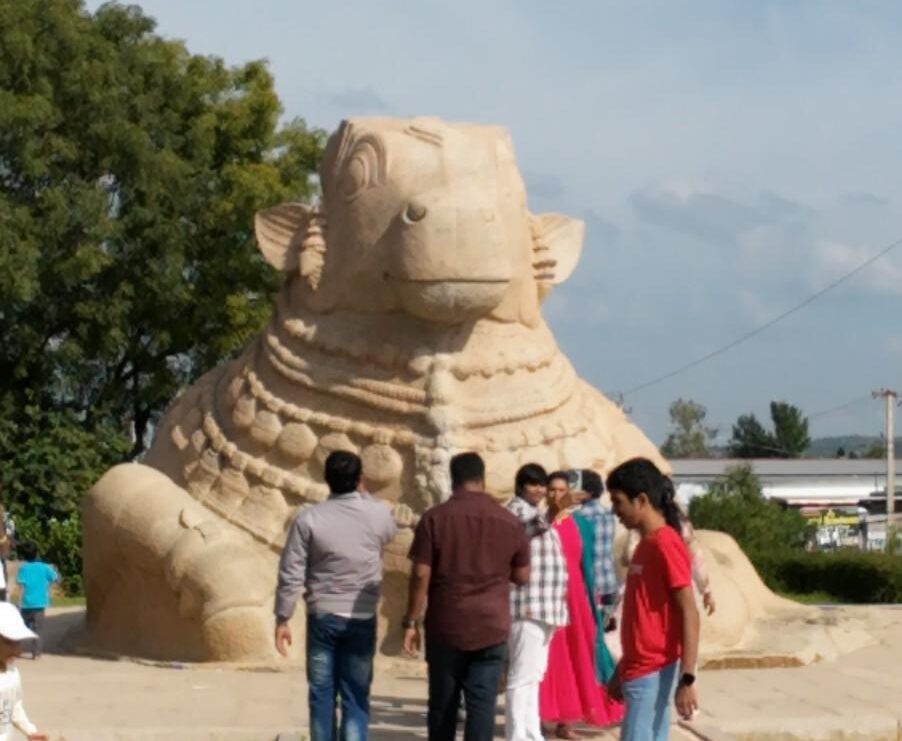
Ancient Vijayanagara Era Lepakshi Nandi
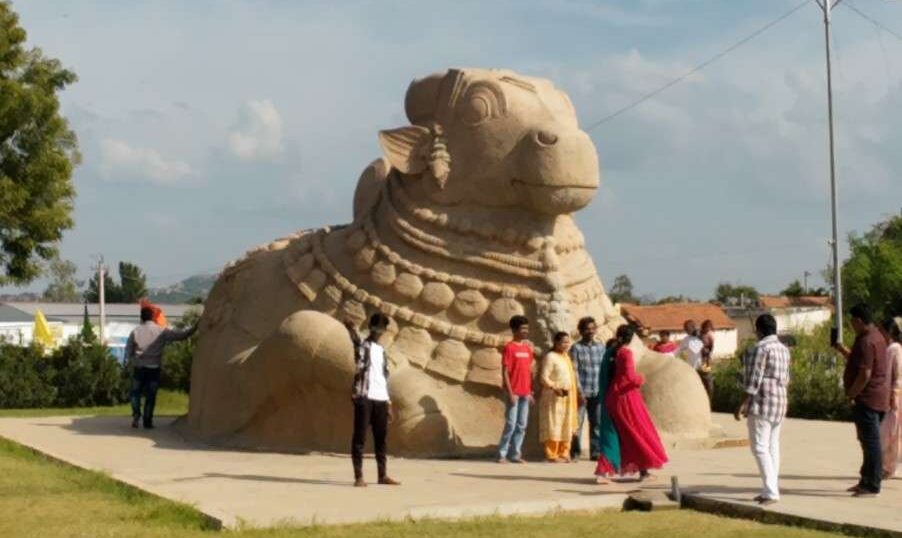
The ancient Vijayanagara-era Lepakshi Nandi is carved from a massive piece of granite.
The district tourism department describes the Nandi as a monolithic sculpture carved from granite and notes that it faces towards the Nagalinga associated with the Veerabhadra Temple. Sri Sathyasai District
What impressed me was not simply the size.
Look closely and you can see carved ornaments, necklaces and details around the Nandi.
When you remember that this wasn’t assembled using separate pieces, the craftsmanship becomes even more impressive.
I spent some time walking around it and clicking photos from different angles.
Compared with the temple, this attraction is much smaller in terms of area.
You basically have the Nandi as the main highlight, surrounded by a maintained garden-like space with places where visitors can sit and relax.
During my visit, the crowd was also manageable.
That made photography easier.
Is Lepakshi Nandi Worth Visiting?
Definitely.
Especially because it is so close to the Veerabhadra Temple.
I wouldn’t travel all the way to Lepakshi and skip it.
You don’t need hours here.
Around 20 to 30 minutes can be enough for most visitors to see the Nandi, take photos and spend a little time in the surrounding area.
The official district tourism information gives the monolithic Nandi as one of Lepakshi’s primary attractions alongside the temple and Jatayu Theme Park. Sri Sathyasai District
For me, seeing such a huge sculpture carved from granite gave the same feeling as the hanging pillar.
Modern machines make us believe almost anything is possible today.
But when I see structures like this from centuries ago, I keep wondering about the skill of the people who created them.
Lunch Near the Lepakshi Nandi
After the temple and Nandi visit, hunger finally caught up with me.
Remember, I had started my journey at 3 AM.
My morning had included idli, coconut water and many hours of riding, but by this point I needed proper food.
Fortunately, I found restaurants around the Nandi area.
I entered a random restaurant and ordered a rice thali / Andhra meals.
My Lunch Cost: ₹80
Nothing fancy.
Just proper Andhra-style food.
But when you’re tired after a long ride and several hours of walking around, simple rice and curry tastes better than some expensive restaurant meal.
I finished lunch, rested for a little while and checked what was still left on my Lepakshi wishlist.
There was one major place remaining.
Jatayu Theme Park.
Visiting Jatayu Theme Park in Lepakshi
After lunch, I started towards Jatayu Park.
This stop connects directly with the Ramayana legend associated with Lepakshi.
When I arrived, this was the first place that charged me for parking during my Lepakshi sightseeing.
What I Paid During My Visit?
| Expense | What I Paid |
| Bike Parking | ₹20 |
| Entry Ticket | ₹10 per person |
These were the prices during my visit, so don’t treat them as permanent current rates. Carry some cash because parking and entry fees can change.
The Short Climb to Jatayu
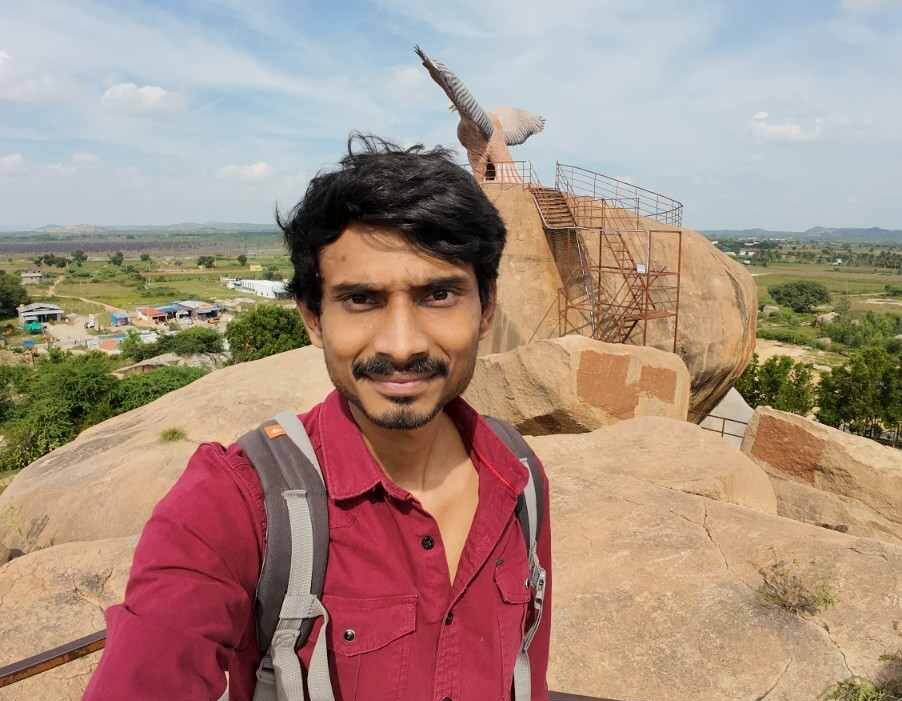
To reach the upper area, I had to do a little bit of climbing.
I wouldn’t call it a difficult trek.
For someone with normal fitness, it was quite easy.
But after my nearly 500 km ride earlier that day, my legs definitely knew they had been working.
Slowly, I went up.
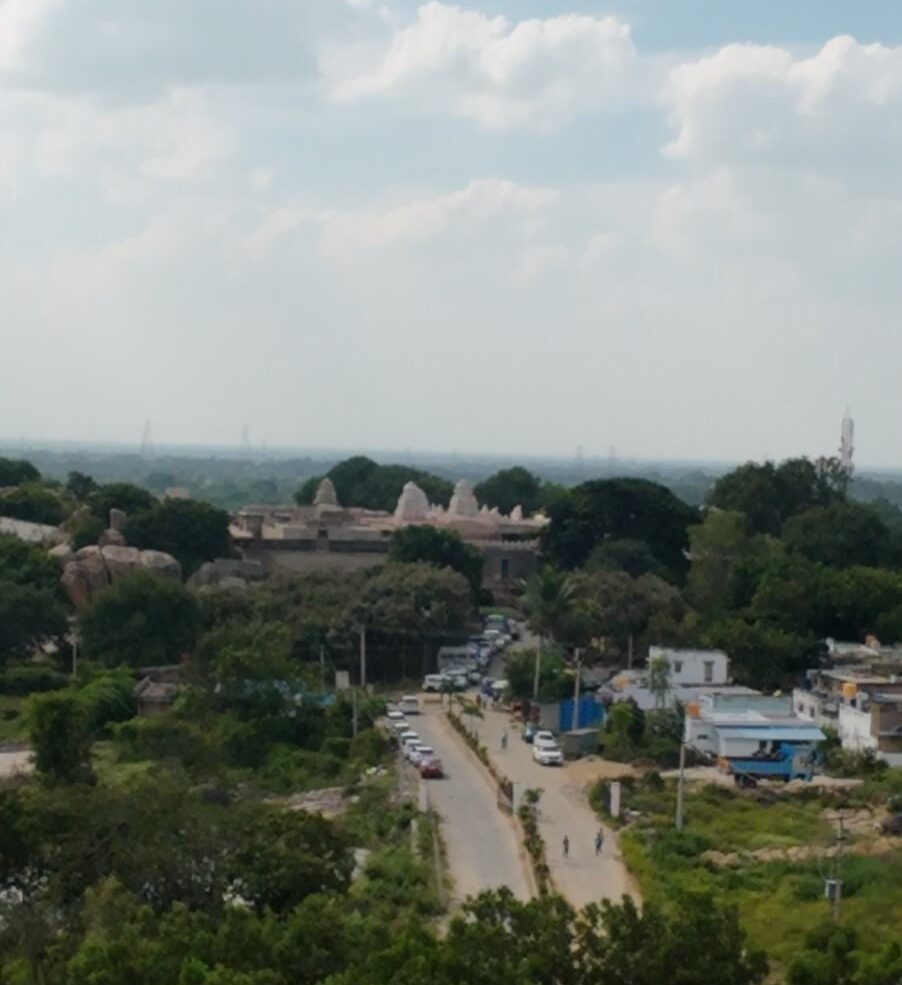
The higher I climbed, the better the surroundings looked.
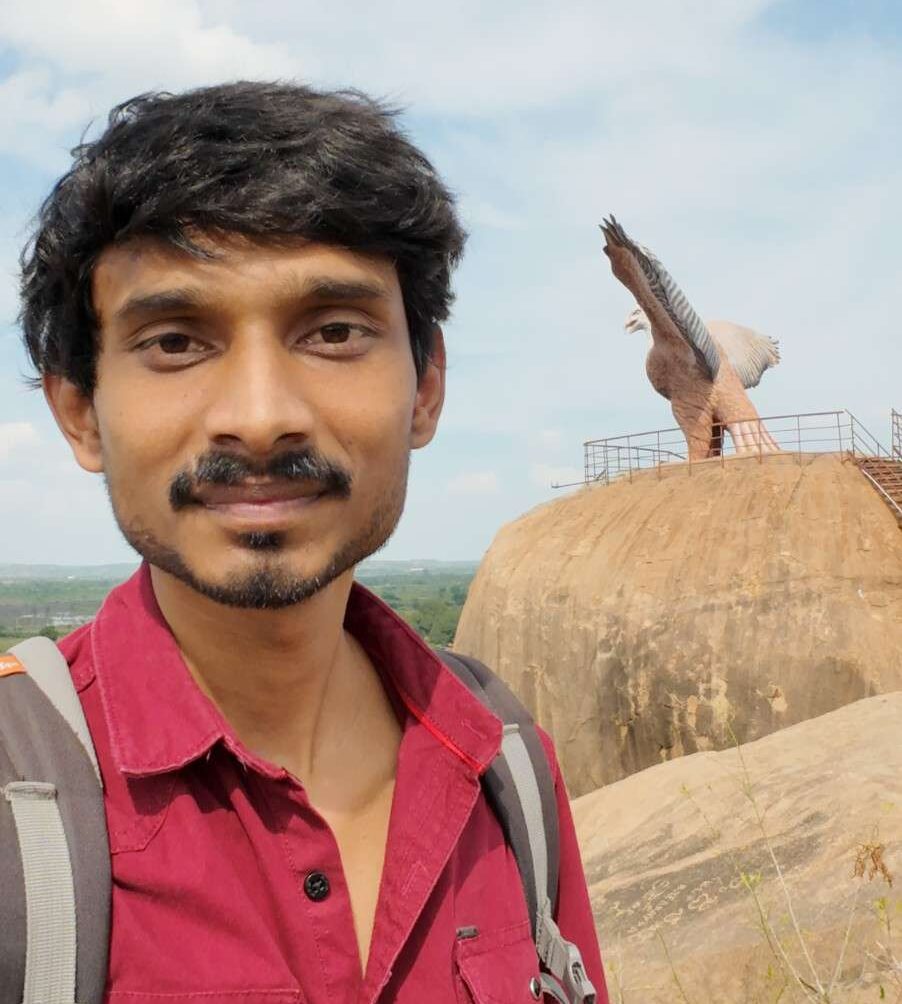
And then I reached the area around the Jatayu structure.
Be Careful With Monkeys Here
This is one practical tip I definitely want to mention.
Be careful with monkeys.
I saw monkeys around the upper area, and they were interested in bags and food.
At one point, seeing them checking people’s belongings genuinely made me a little nervous.
Some local people were carrying sticks and used them to scare the monkeys away when they came too close.
So if you’re visiting:
Keep food inside your bag.
Don’t carry snacks openly in your hands.
Keep zips properly closed.
And don’t intentionally tease or feed the monkeys.
This isn’t something to panic about, but it is something worth knowing before climbing up.
A Small Clarification About Sita’s Footprint at Lepakshi
During my trip, I associated the Jatayu area with the stories of Sita Mata’s footprint because the entire Lepakshi-Jatayu story is connected through the Ramayana.
While later researching the place properly for this article, I found an important distinction.
The famous large footprint traditionally believed to belong to Sita is described within the Veerabhadra Temple complex, while Jatayu Theme Park is a separate nearby attraction built around the story of Jatayu. Incredible India also places the Sita footprint within its description of the temple itself. Incredible India
I wanted to mention this clearly because it is easy to mix up the different Ramayana-related spots when exploring Lepakshi for the first time.
Slowing Down at Jatayu Park
After taking photos, I found a place to sit.
That was probably one of my favourite quiet moments of the day.
Think about it.
I had woken up at 2:30 AM.
Started riding at 3 AM.
Covered hundreds of kilometres.
Reached Lepakshi around 1 PM.
Visited Veerabhadra Temple.
Finally saw the hanging pillar.
Visited the giant Nandi.
Had Andhra meals.
Climbed up to Jatayu.
Now there was nothing left to chase.
So I simply sat there for some time.
No Google Maps.
No kilometres remaining.
No “next destination” pressure.
Just rest.
Those small moments are sometimes the best part of travelling solo.
My First Day in Lepakshi Was Finally Complete
By around 7:00 PM, I had covered almost everything that I had planned for my first day.
Before finishing the day, I filled my bike with petrol again.
Petrol: ₹550
Quantity: Around 5 litres
I know I was filling petrol quite frequently on this trip.
But on long-distance solo rides, I personally prefer keeping enough fuel whenever I get a good opportunity rather than waiting for the tank to reach reserve and then desperately searching for a petrol pump.
Especially when I still had nearly another 500 km ride waiting for me the next morning.
With the tank sorted, I returned to Haritha Hotel.
And the moment I entered my room…
My body basically said:
Enough for today.
I lay down on the bed and rested for some time.
My Simple ₹75 Dinner in Lepakshi
After resting, I eventually went outside for dinner.
I didn’t want a heavy meal.
So instead of looking for a proper restaurant again, I ate some random street food.
Dinner Cost: ₹75
That was enough for me.
I returned to the hotel and prepared everything for the next morning.
Bag packed.
Phone charging.
Riding gear ready.
Bike waiting outside.
The first half of my trip had been successfully completed.
And this time, unlike the previous night, I didn’t struggle to sleep.
After a 484 km ride and a full afternoon exploring Lepakshi, I was exhausted.
I slept early.
Because at 5:00 AM the next morning, my alarm would ring again.
And then came another challenge.
Riding nearly 484 km back towards Hyderabad.
My Return Ride + Complete Lepakshi Travel Guide
The first day in Lepakshi had been long but satisfying. I had finally seen the Veerabhadra Temple in Lepakshi, the hanging pillar that had fascinated me since engineering, the huge monolithic Nandi and Jatayu Park.
By the time I returned to Haritha Hotel, my body was completely tired. This time there was no problem falling asleep.
The next challenge was waiting for me in the morning.
Another almost 484 km ride back to my hostel in Kondapur.
Starting My Return Ride From Lepakshi at 6 AM
The next morning, I woke up at around 5:00 AM.
Unlike the previous night before starting the trip, I had slept properly. That made a huge difference because I already knew how tiring the return journey was going to be.
I packed my bag, arranged everything on the bike, checked that I hadn’t left anything in the hotel room and got ready.
At around 6:00 AM, I started my bike and left Lepakshi.
Destination:
Kondapur, Hyderabad.
I followed almost the same route because I had already found the road comfortable during my onward journey.
Lepakshi → Kodur → Penukonda → Anantapur → Kurnool → Pebair → Jadcherla → Shadnagar → Hyderabad → Kondapur
Once again, a major portion of the journey was on NH44.
Why I Filled Petrol Again Even Though I Still Had Fuel?
A few kilometres after starting, I found another petrol pump.
My tank wasn’t completely empty, but I still stopped.
I filled approximately 7 litres of petrol for ₹768.
One habit I developed during this ride was not waiting until the fuel indicator became dangerously low.
On a normal city ride, finding another petrol pump isn’t a big issue. On a long solo highway journey, I prefer filling whenever I get a good opportunity.
Maybe the next petrol station is only 10 km away.
Maybe it’s 50 km away.
I don’t want to find out when my tank is almost empty.
So throughout this trip, you will notice that I stopped for fuel quite often. It gave me peace of mind and also became an excuse to get off the bike and stretch for a few minutes.
Around 200 KM Later, Hunger Hit Again
For the first couple of hours, I simply enjoyed the ride.
Music playing inside my helmet.
Open highway.
Cooler morning weather.
And kilometre after kilometre disappearing from Google Maps.
After covering close to 200 km, I started getting hungry.
I stopped at an AC tiffin centre somewhere along the highway and ordered breakfast.
Breakfast Cost: ₹110
The food was good, and more importantly, this was another proper break for my body.
Long-distance riding is not only tiring for your back and shoulders. Sitting in the same position continuously also affects your legs.
So whenever I stopped for food or fuel, I tried to walk around and stretch a little before getting back on the bike.
My ₹50 Guava Break
After continuing for some more kilometres, I saw a roadside fruit seller.
I decided to stop again.
I bought three guavas for ₹50.
This wasn’t really because I desperately needed food. I mostly wanted another reason to take a short break from riding.
I ate the guavas, relaxed for a few minutes and then continued.
At another point on the journey, a transgender person stopped vehicles asking for money. I gave ₹20 and continued my ride.
Nothing major happened for the next stretch.
Just me, my bike, my playlist and a lot of highway.
By Afternoon, I Just Wanted to Reach Hyderabad
The onward journey had felt exciting because I was travelling towards a place I had wanted to visit for years.
The return journey felt different.
After a point, only one thought kept coming into my head:
How many kilometres are still left?
This is something I have noticed on long rides.
While going towards a destination, curiosity keeps you excited.
On the return journey, especially after already spending a full day exploring, the same distance can feel much longer.
By around 3:30 PM, I wanted something light to eat.
I didn’t feel like having a proper heavy lunch because I had already eaten the guavas.
So I stopped at a roadside Chinese food place and ordered Manchurian for ₹100.
It tasted good and was enough for me at that moment.
Another ₹216 Petrol Stop
After eating the Manchurian, I continued riding.
Once again, I found an opportunity to fill petrol and decided not to ignore it.
This time I filled around:
2 litres of petrol: ₹216
By now, Hyderabad was getting closer.
That should have felt like good news.
But anyone who has ridden into Hyderabad during traffic hours knows that reaching the city outskirts doesn’t mean your journey is over.
Sometimes that is where the real test begins.
Real Adventure Was Hyderabad Traffic
After approximately nine hours of return riding, I finally reached the Hyderabad outskirts.
Before entering city traffic, I stopped at a random tea stall.
I ordered something to drink and some French fries, sat there for a while and stretched properly.
I knew what was coming next.
Highway riding may be physically tiring, but at least you are generally moving.
Hyderabad traffic is different.
Clutch.
Brake.
Move five metres.
Stop.
Repeat.
After almost an entire day on the motorcycle, that was the last thing my body wanted.
Still, there was no shortcut.
I entered the traffic and started making my way towards Kondapur.
As expected, the final city section took me nearly two hours.
Even my bike engine started getting noticeably hot in the slow traffic.
By that stage, I wasn’t interested in sightseeing, music or enjoying the ride anymore.
I simply wanted to reach my hostel.
And finally, at around 8:00 PM, I did.
Finally Back at My Hostel
When I parked the bike at my hostel, there was a different kind of satisfaction.
This wasn’t simply another weekend temple visit.
I had ridden roughly 968 km for the round trip based on my approximately 484 km one-way route, stayed alone overnight, explored a destination that had been on my wishlist since engineering and successfully returned to Hyderabad.
After parking the bike, I had dinner with my friends and went to sleep early.
Because Monday morning didn’t care that I had just completed a huge bike trip.
Office routine was waiting again.
But at least another destination on my wishlist was finally marked as done.
What Did This Long Ride Teach Me?
This Lepakshi trip made me realise that completing a long bike ride isn’t mainly about riding continuously for hundreds of kilometres.
Rest matters just as much as riding.
Starting my onward journey after not sleeping properly made the ride noticeably more tiring. On the return journey, after getting proper sleep at the hotel, I could clearly feel the difference.
So if you’re planning Lepakshi Temple from Hyderabad by bike, I wouldn’t recommend turning it into a race.
Take breaks.
Drink enough water.
Eat something.
Stretch your body.
Most importantly, get proper sleep before starting.
Covering 450 to 500 km in one day is already enough. There is no prize for completing it while completely exhausted.
My Lepakshi Trip Budget
One thing I like sharing in my travel stories is what I actually spent.
Based on the expenses I recorded during this trip, this was my budget:
| Expense | My Cost |
| Petrol before starting | ₹860 |
| Tyre-pressure shop tip | ₹40 |
| First breakfast | ₹40 |
| Petrol stop | ₹660 |
| Coconut water | ₹50 |
| Haritha Hotel AC room | ₹1,109 |
| Andhra meals | ₹80 |
| Jatayu bike parking | ₹20 |
| Jatayu entry ticket | ₹10 |
| Petrol in Lepakshi | ₹550 |
| Dinner | ₹75 |
| Return-ride petrol | ₹768 |
| Return breakfast | ₹110 |
| Guavas | ₹50 |
| Roadside payment | ₹20 |
| Manchurian | ₹100 |
| Final 2-litre petrol fill | ₹216 |
| Documented Total | ₹4,758 |
The ₹4,758 total doesn’t include my tea and French fries near Hyderabad because I didn’t note their exact cost, so the actual trip cost was slightly higher.
Fuel alone cost me approximately ₹3,054, while the AC room at Haritha Hotel cost ₹1,109.
Considering that this was almost a 1,000 km solo bike trip with an overnight stay, I was happy with what I managed to spend.
Veerabhadra Temple in Lepakshi Distance From Major Cities
One important thing to remember is that road distance changes depending on your exact starting point and the route Maps selects.
For example, online route planners currently put central Hyderabad to Lepakshi at roughly 460 to 480 km, while my own route from my hostel in Kondapur to Haritha Hotel showed approximately 484 km.
| Starting Point | Approx. Road Distance | Suggested Travel Time |
| Hindupur | 13–15 km | 20–30 mins |
| Bangalore / Bengaluru | 115–125 km | 2.5–3 hrs |
| Puttaparthi | Around 64 km | 1.5–2 hrs |
| Kurnool | Around 255 km | 4–5 hrs |
| Hyderabad | Around 460–485 km | 7–9 hrs |
| Vijayawada | Around 530–565 km | 8–10 hrs |
| Warangal | Around 630 km | 10+ hrs |
| Karimnagar | Roughly 630–645 km | 10–11 hrs |
For long-distance routes, always check Google Maps again on the morning of your trip because construction, diversions and your exact starting point can change both distance and travel time.
What Is the Distance From Bangalore to Lepakshi?
The distance from Bangalore to Lepakshi is roughly 115 to 125 km by road, depending on where you start in Bengaluru.
For someone coming from Bengaluru, Lepakshi can easily work as a day trip if you start early.
My situation from Hyderabad was completely different.
At nearly 484 km from my hostel, I personally preferred taking an overnight stay instead of forcing myself to return another 484 km on the same day.
What Is the Hindupur to Lepakshi Distance?
The Hindupur to Lepakshi distance is approximately 13 to 15 km.
That makes Hindupur the most useful nearby transport hub, especially if you’re travelling by train.
The Government of India’s rural tourism information identifies Hindupur Junction as the nearest railway station, around 13 km from Lepakshi, while Sri Sathya Sai district tourism gives the road distance as about 15 km.
How to Reach Lepakshi?
How to Reach Lepakshi by Bike or Car?
For me, travelling by motorcycle was the most convenient option because I could explore Veerabhadra Temple, Nandi and Jatayu Park independently.
From Hyderabad, my route was:
Hyderabad → Shadnagar → Jadcherla → Pebair → Kurnool → Anantapur → Penukonda → Lepakshi
Most of my long-distance ride followed NH44 before turning towards Lepakshi.
From Bengaluru, Lepakshi is much closer. Travellers generally approach through the northern Bengaluru and Bagepalli side before entering Andhra Pradesh.
How to Reach Lepakshi by Train?
There is no major railway station directly at Lepakshi.
The easiest option is usually to reach Hindupur Junction and continue approximately 13 to 15 km by local road transport.
This makes train travel a practical alternative for anyone who doesn’t want to drive hundreds of kilometres.
How to Reach Lepakshi by Flight?
The nearest major airport is Kempegowda International Airport in Bengaluru.
From there, you can continue towards Lepakshi by road.
Because Lepakshi is much closer to Bengaluru than to Hyderabad, visitors flying from another part of India will usually find Bengaluru the most practical air gateway.
What Are the Veerabhadra Temple Timings?
The current official Incredible India listing gives the Veerabhadra Temple in Lepakshi timings as 6:00 AM to 6:00 PM.
| Detail | Timing |
| Opening Time | 6:00 AM |
| Closing Time | 6:00 PM |
| My Preferred Visit | Morning or late afternoon |
| Time to Keep for Temple | Around 1–2 hours |
I would personally avoid arriving just before closing time.
There is too much architecture to see here.
If you only take darshan and immediately leave, you could easily miss the hanging pillar, Nagalinga, Ganesha sculpture, frescoes, Kalyana Mandapa, Sita’s footprint and many smaller carvings.
What Is the Best Time to Visit Lepakshi Temple?
For comfortable sightseeing, I would choose October to February.
Lepakshi can become very hot during summer.
Winter mornings are much more comfortable for exploring and photography.
If you’re travelling by bike, starting early also helps you avoid some daytime heat.
Places to Visit Near Veerabhadra Temple in Lepakshi
The nice thing about Lepakshi is that its main attractions are concentrated within a relatively small area.
| Place | Approx. Distance/Context | Why Visit |
| Veerabhadra Swamy Temple | Main destination | Hanging pillar, Vijayanagara architecture, frescoes |
| Lepakshi Monolithic Nandi | Around 300 m from temple during my visit | Huge Nandi carved from a single granite rock |
| Jatayu Theme Park | Nearby Lepakshi attraction | Jatayu sculpture, viewpoint and Ramayana connection |
| Moksh Ghat | Lepakshi area | Another officially listed local attraction |
| Hindupur | Around 13–15 km | Nearest railway hub |
| Puttaparthi | Around 64 km | Can be combined with a longer regional trip |
My Suggested Lepakshi Itinerary
For travellers coming from Bengaluru or nearby places, one day should be enough for the main attractions.
For someone travelling from Hyderabad like I did, I strongly prefer an overnight plan.
| Time | My Suggested Plan |
| Early Morning | Start towards Lepakshi |
| 8:00–10:00 AM | Breakfast/fuel break depending on route |
| Afternoon | Check in and freshen up if coming from Hyderabad |
| 2:00–4:00 PM | Veerabhadra Temple and hanging pillar |
| 4:00–4:30 PM | Lepakshi Nandi |
| 4:30–6:30 PM | Jatayu Park/local sightseeing |
| Evening | Dinner and overnight stay |
| Next Morning | Start return journey after proper sleep |
If you’re coming from Bangalore to Lepakshi, you can simply leave early, visit all three major attractions, have lunch and return the same evening.
If you’re riding from Hyderabad, Warangal or Karimnagar, I wouldn’t try to copy that schedule.
The distances are completely different.
Where to Stay in Lepakshi?
I stayed at APTDC Haritha Hotel Lepakshi.
I paid ₹1,109 for an AC room during my visit.
For my requirements as a solo traveller, I found it worth the price.
The main advantage was location.
Veerabhadra Temple was only around 350 metres from my hotel during my visit, while the Nandi was also nearby. Pasted markdown
Room rates can obviously change, so check current pricing before booking.
Is One Day Enough for Lepakshi?
Yes, one sightseeing day is enough to cover the main attractions in Lepakshi.
The temple, Nandi and Jatayu area aren’t spread across a huge region.
The bigger question is where you’re travelling from.
From Bengaluru, a day trip is realistic.
From Hyderabad, I personally recommend two travel days with one night in Lepakshi, especially if you’re riding a motorcycle.
My own experience made one thing very clear: nearly 500 km going, sightseeing for several hours and then trying to ride nearly 500 km back on the same day would have been unnecessarily exhausting.
Practical Tips Before Visiting Lepakshi
| What to Know | My Suggestion |
| Temple timing | Plan within 6 AM–6 PM |
| Ideal season | October to February |
| Temple exploration | Keep at least 1–2 hours |
| Parking | I wasn’t charged at the temple or Nandi during my visit |
| Jatayu parking | I paid ₹20 during my visit |
| Jatayu entry | I paid ₹10 during my visit |
| Monkeys | Keep food inside closed bags |
| Fuel | Fill early if doing a long bike trip |
| Long-distance riders | Take breaks every few hours |
| Overnight stay | Recommended for Hyderabad-distance travellers |
| Photography | Spend time looking at ceilings and carvings, not only the hanging pillar |
| Cash | Keep small notes for parking, food and local charges |
| Navigation | Recheck Maps before leaving because routes can change |
The parking and ticket prices above reflect my visit, not guaranteed current rates.
Three More Temple Trips From My Blog
If you enjoy historical temples and long-distance rides like this one, I have personally covered a few more that fit nicely with this article.
My Jogulamba Temple Alampur travel story covers my ride to one of the Shakti Peethas near the Telangana-Andhra Pradesh border.
For another historical Shiva temple, my Kolanupaka Shiva Temple article covers the Someshwara temple, its medieval history and why I originally became curious about its connection with the Pancha Peetha tradition.
I have also shared my Edupayala Vana Durga Temple trip from Karimnagar, including the ride, temple history, parking and the famous seven-stream surroundings.
Is Veerabhadra Temple in Lepakshi Worth Visiting?
For me, yes.
But my answer has a personal reason behind it.
The hanging pillar was something I had heard about when I was still studying engineering.
Back then, visiting Lepakshi was simply an idea.
Years later, after getting a job, buying my own bike and slowly building confidence through other rides, I finally rode hundreds of kilometres to see it myself.
And the funny thing is that after reaching Lepakshi, the hanging pillar wasn’t the only thing that impressed me.
The old Vijayanagara architecture, massive stone sculptures, ceiling paintings, Nagalinga, unfinished structures, Nandi and stories connected with Jatayu made the destination much more interesting than I expected.
Official tourism information describes the Veerabhadra Temple as a major example of Vijayanagara architecture and highlights its hanging pillar, frescoes, Nagalinga, Sita footprint and monolithic Nandi. Incredible India
If you enjoy architecture, temples, history or simply unusual places, Lepakshi deserves at least one visit.
My Final Thoughts on Lepakshi
This trip started with a story I had heard during my engineering days.
A temple somewhere in Andhra Pradesh had a pillar that didn’t completely touch the ground.
Years later, that small piece of curiosity turned into one of my longest rides.
I rode nearly 484 km to reach Lepakshi, finally saw the hanging pillar with my own eyes, explored the historic temple, stood in front of the giant Nandi, visited Jatayu Park, stayed overnight and then rode all the way back to Hyderabad the next day.
The ride was exhausting.
There were moments when I badly wanted the remaining kilometres on Google Maps to disappear faster.
But after reaching my hostel and parking the bike, I knew one thing.
I would remember this trip for a long time.
Another destination from my wishlist was finally completed.
And on Monday, it was back to the same office routine again, waiting for the next weekend and the next place to explore.
If you have any place you think I should visit next, leave it in the comments.
Stay tuned. More rides and more real travel experiences are coming.
Frequently Asked Questions
Who Built Lepakshi Temple?
The present Veerabhadra Temple at Lepakshi is associated with Virupanna and Veeranna, who served during the Vijayanagara period under King Achyuta Raya.
Official district information credits Virupanna with developing the shrine into its present form and identifies the brothers with the Vijayanagara-era construction. Sri Sathyasai District
What Is Lepakshi Famous For?
Lepakshi is most famous for the Veerabhadra Temple, its hanging pillar, Vijayanagara architecture, ancient frescoes, Nagalinga, monolithic Nandi and Ramayana connection with Jatayu.
The hanging pillar is probably the feature that gets the most attention online, but the entire temple complex is worth exploring. Incredible India
How to Reach Lepakshi From Bangalore?
The easiest way to reach Lepakshi from Bangalore is by road.
The distance from Bangalore to Lepakshi is roughly 115–125 km, depending on where you start in Bengaluru. Sri Sathya Sai district tourism gives approximately 123 km from Bangalore City.
You can also take a train towards Hindupur and continue approximately 13–15 km by road to Lepakshi.
Lepakshi Temple Is Dedicated to Which God?
The main deity of Veerabhadra Temple in Lepakshi is Lord Veerabhadra, a fierce form associated with Lord Shiva.
The wider complex also contains other Shiva-related and Hindu shrines.
What Is Special About Lepakshi?
Lepakshi combines history, architecture and mythology in one small town.
Its most unusual attraction is the famous hanging pillar, but the giant monolithic Nandi, Vijayanagara frescoes, Nagalinga, stone sculptures and Jatayu legend make the overall destination special.
How Far Is Hindupur From Lepakshi?
The Hindupur to Lepakshi distance is approximately 13–15 km.
Hindupur Junction is the nearest useful railway station for most travellers visiting Lepakshi by train.
How Much Time Is Needed to Visit Lepakshi Temple?
I would keep around 1 to 2 hours for the Veerabhadra Temple itself.
If you’re also visiting the Nandi and Jatayu Theme Park, keeping roughly half a day for Lepakshi sightseeing will make the trip much more relaxed.
Solo traveller, biker, and explorer sharing honest travel guides, hidden places, and unforgettable road trips across India.