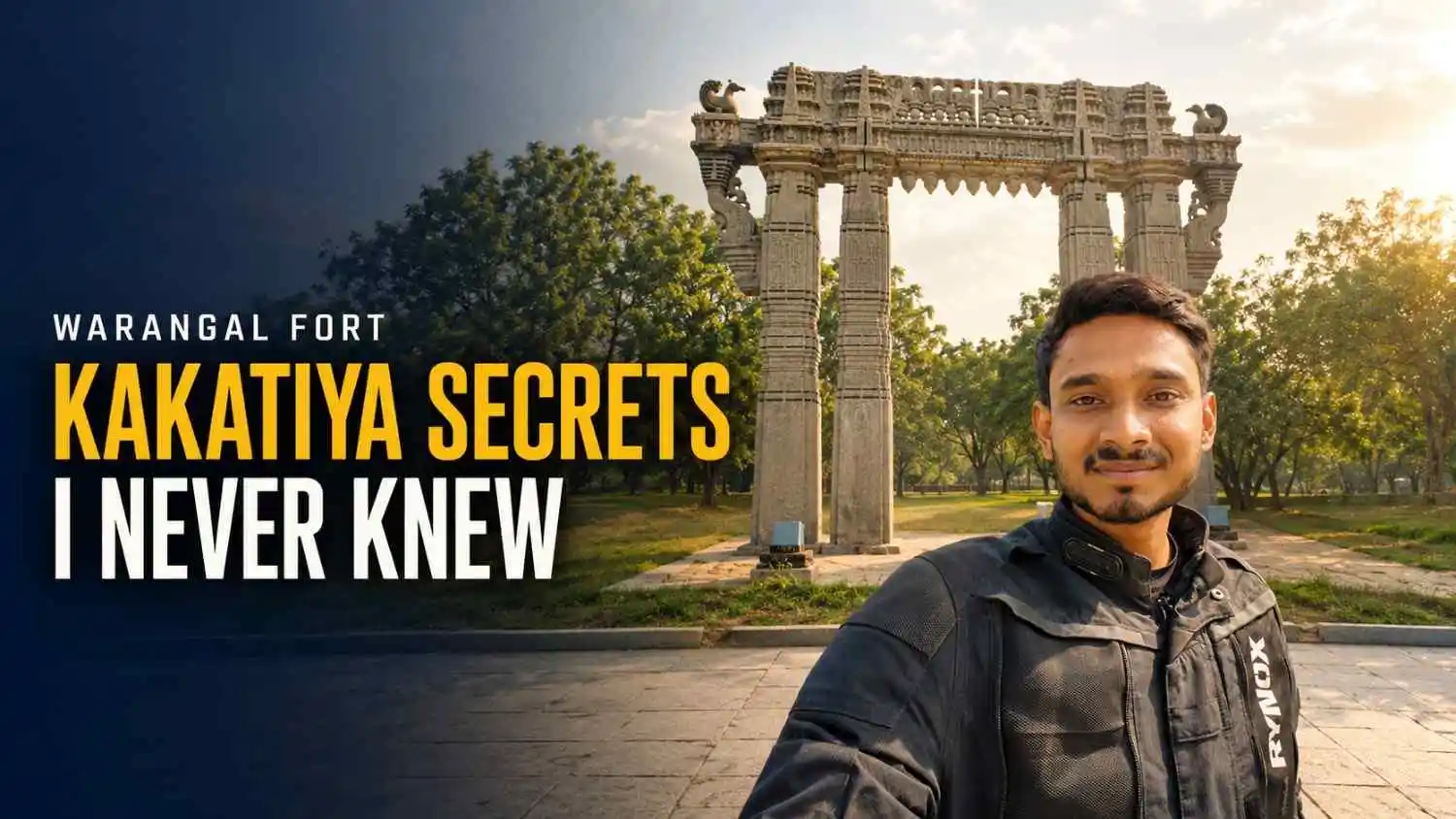
My Weekend Trip to Warangal Fort
Warangal Fort had remained on my travel list after my previous visit to the city.
During that first trip, I covered Bhadrakali Temple, Padmakshi Temple and the Thousand Pillar Temple in a single day. However, Warangal has much more to offer beyond its famous temples.
The city was once the capital of the powerful Kakatiya dynasty. Its ruined temples, massive stone gateways, defensive walls and detailed sculptures still preserve that history.
Therefore, for my second Warangal trip, I planned to cover three nearby attractions:
- Kush Mahal, officially known as Khush Mahal
- Warangal Fort
- Ekashila Gutta
All three places are located close to each other, making them easy to cover during a half-day heritage trip.
I had not originally planned to visit Pakhal Lake. That decision came later, after completing the historical circuit earlier than expected.
What started as a short visit to Warangal Fort Telangana eventually became a complete one-day journey covering history, a small hill trek, a lakeside garden and an unexpected ride to Pakhal Lake.
Before This Trip: My First Warangal Temple Circuit
This was not my first one-day trip to Warangal. On my previous visit, I explored three of the city’s most important religious and historical sites—Sri Bhadrakali Temple Warangal, Padmakshi Temple and the Thousand Pillar Temple.
If you are planning a complete Warangal trip, first read my Bhadrakali Temple Warangal one-day travel guide. It covers all three temples, their history, timings and my complete bike journey from Karimnagar.
That first trip introduced me to the spiritual side of Warangal.
This time, I wanted to understand its royal and historical side.
Warangal Fort Quick Information
| Information | Details |
| Place | Warangal Fort |
| Location | Mathwada, Warangal, Telangana |
| District | Warangal district |
| Famous for | Kakatiya Kala Thoranam, stone carvings, temple ruins and Kakatiya history |
| Built and expanded by | Ganapatideva, Rani Rudrama Devi and Prataparudra II |
| Historical period | Mainly 12th–13th centuries |
| Commonly listed timings | 8:00 AM to 6:00 PM |
| Entry fee during my visit | ₹25 by cash or ₹20 through online booking |
| Video-camera charge during my visit | ₹25 |
| Entry for children | Free for children up to 15 years |
| Parking during my visit | Free |
| Ideal visiting time | 1–2 hours |
| Best season | October to March |
| Nearby places | Khush Mahal, Ekashila Gutta, Bhadrakali Temple, Padmakshi temple, Pakhal Lake & Thousand Pillar Temple |
| Distance from Karimnagar | Approximately 82 km from my home |
| Map | Warangal Fort location |
Timings, ticket prices and camera rules can change. I recommend checking the ASI online ticket portal or confirming at the entrance before your visit.
Why Visit Warangal Fort?
Warangal Fort is worth visiting because it helps you understand the architectural, cultural and military strength of the Kakatiya dynasty.
This is not a fort where you will find one complete palace surrounded by tall walls. Most of the central structures are now in ruins.
Its real beauty can be found in the details.
You will see:
- Four enormous Kakatiya stone gateways
- Sculptures of Hindu gods and mythological figures
- Broken pillars and temple panels
- A large Nandi sculpture
- Ruins of the ancient Swayambhu Shiva Temple
- Remains of the old fortification system
- Intricately carved stones displayed like an open-air museum
Warangal Fort is especially suitable for history lovers, architecture students, photographers, families and travellers who want to understand Telangana’s Kakatiya heritage.
The official Warangal district portal identifies the fort as one of the city’s main attractions and connects its development with the Kakatiya rulers who governed the region for more than two centuries.
Waiting for Another Weekend Ride
As usual, I was waiting for the weekend so I could plan another short trip from Karimnagar.
By Friday, my plan was ready.
I decided to leave on Saturday morning, visit Kush Mahal first and then cover Warangal Fort and Ekashila Gutta. Because these places are located close to each other, I knew I could complete the circuit without rushing.
On Friday night, I prepared my basic riding items and went to sleep early.
I wanted to start before the roads became busy and reach Warangal while the weather was still comfortable.
Starting My Ride from Karimnagar at 6 AM
I woke up at around 5:00 AM on Saturday.
After getting ready, I wore my riding gear, checked my helmet and prepared my bike for the journey.
By approximately 6:00 AM, I started riding towards Warangal.
This time, I did not need to depend on Google Maps.
I had already travelled to Warangal during my previous temple trip, so I was familiar with the route.
My route was:
Karimnagar → Keshavapatnam → Huzurabad → Warangal
| Route section | Approximate experience |
| Karimnagar to Keshavapatnam | Comfortable early-morning road |
| Keshavapatnam to Huzurabad | Familiar highway section |
| Total distance from my home | Around 82 km |
| Riding time | Approximately 2 hours |
During my previous ride, several parts of this road were under construction.
This time, the situation was much better. Most of the work appeared to be completed, although a few short sections were still under construction.
The improved road made the ride more enjoyable.
I continued riding while listening to music inside my helmet. Because the total distance was only around 82 km, I did not take a tea or breakfast break.
The journey felt short compared with some of my longer bike trips.
Reaching Kush Mahal in Warangal
After entering Warangal, I decided to visit Kush Mahal first.
Although many travellers search for Kush Mahal Warangal, the structure is officially and historically referred to as Khush Mahal. Both spellings generally refer to the same monument near Warangal Fort.
Khush Mahal and the main Warangal Fort archaeological area are separated by only a short distance. This makes it convenient to visit both places together.
I followed the location and reached the open area beside Khush Mahal.
Parking Near Kush Mahal
I parked my bike on the right side of the monument.
There was no parking charge during my visit.
A large open ground is available around the Khush Mahal and Warangal Fort area. It can accommodate motorcycles, cars and buses.
The spacious ground is useful because many schools organise educational trips to Warangal’s historical attractions. Several student groups and school buses can arrive together, especially on weekends or during the winter season.
After parking, I secured my helmet to the bike and walked towards the monument.
My First Impression of Kush Mahal
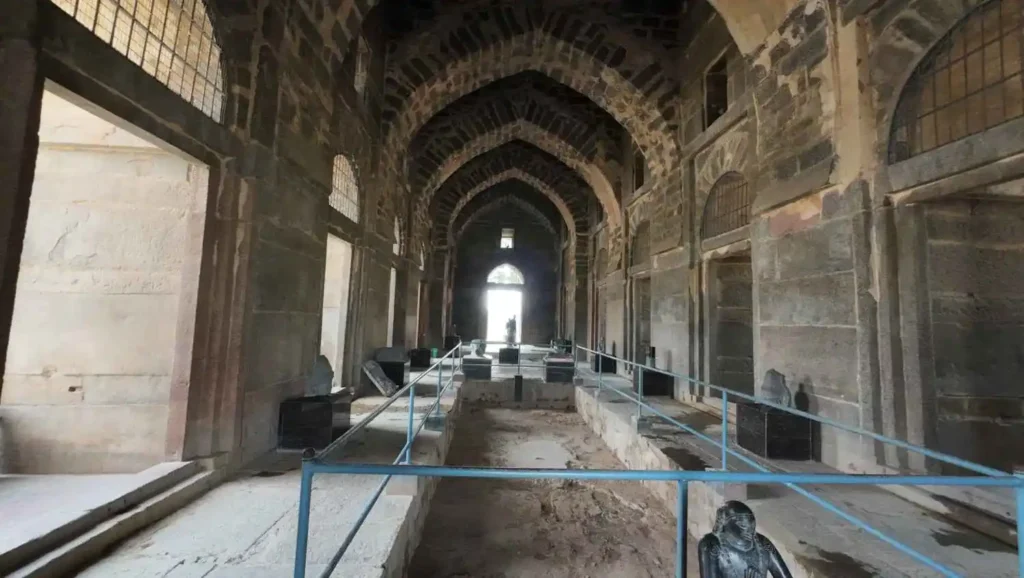
Khush Mahal is not a huge palace complex.
It is a single rectangular building standing in an open area. You can walk around it and observe the complete structure without needing much time.
Despite its relatively small size, the building immediately caught my attention.
Its thick, sloping walls and large arched openings give it a simple but powerful appearance. The architecture looks very different from the detailed stone carvings associated with the Kakatiya period.
The structure is old, but it has survived for centuries.
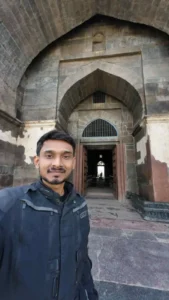
I walked around slowly, observed the arches and clicked several Kush Mahal photos from different angles.
You can cover the monument quickly, but if you are interested in architecture or photography, you may want to spend additional time examining its walls and interior space.
Kush Mahal History
Khush Mahal is believed to have been constructed during the 14th century, after the Tughlaqs captured Warangal.
It was probably used as an audience hall where rulers or administrators met officials and visitors.
The building was later associated with Shitab Khan, who governed Warangal during the 16th century. This is why the monument is sometimes also referred to as Shitab Khan Mahal.
According to the Hanumakonda District Administration, Khush Mahal displays the architectural style of the Tughlaq period. Its main features include a large central chamber, arched openings on four sides and thick sloping walls.
| Period | Development |
| Kakatiya period | The surrounding area formed part of the Kakatiya capital |
| 14th century | Khush Mahal was probably built during Tughlaq rule |
| 16th century | The hall was later used by Shitab Khan |
| Present day | Preserved as an important monument beside Warangal Fort |
The exact original purpose and construction history are still debated. However, it is widely described as an audience hall built over or near the remains of an earlier Kakatiya structure.
Its plain but strong design creates a clear contrast with the carved gateways, sculptures and temple ruins found inside Warangal Fort.
Why Does Kush Mahal Look Different from Warangal Fort?
The architectural difference exists because the monuments belong to different political and artistic periods.
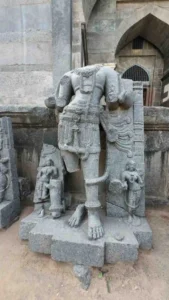
Warangal Fort mainly represents Kakatiya architecture. Its surviving sculptures contain detailed carvings of flowers, animals, gods and decorative patterns.
Khush Mahal, on the other hand, reflects the simpler and heavier architectural style associated with the Tughlaq period.
Its main design features include:
- Thick walls
- Sloping exterior surfaces
- Large arches
- A high central hall
- Minimal exterior decoration
- A strong and functional appearance
Visiting Khush Mahal before Warangal Fort helped me notice this contrast more clearly.
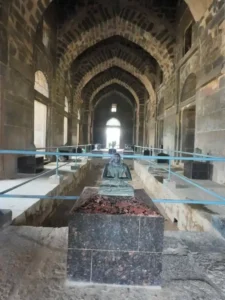
Access to the Top of Kush Mahal Was Restricted
There are steps that were previously used to reach the upper portion of Khush Mahal.
However, access to the top was restricted during my visit.
Local authorities had placed barricades near the stairway so visitors could not climb further. I later came to know that people were once allowed to go up and see the surrounding fort area from above.
Visitors should respect the barricades and avoid attempting to cross into restricted sections.
These restrictions are generally introduced to protect both visitors and the historic structure. Conditions can change, so access may be different when you visit.
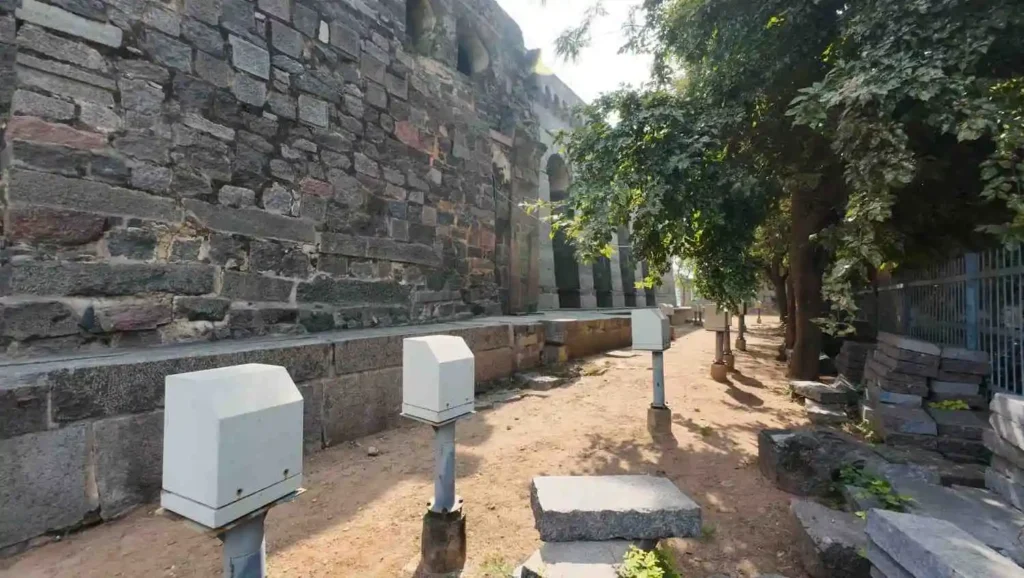
How Much Time Is Required for Kush Mahal?
Most visitors can explore Khush Mahal in approximately 20–30 minutes.
You may need longer if you want to:
- Read about the monument’s history
- Study its architectural design
- Capture Kush Mahal photos
- Compare it with the nearby Kakatiya structures
There was no separate entry ticket or parking charge during my visit.
From Kush Mahal to Warangal Fort
After spending a few minutes walking around Khush Mahal and clicking photographs, I returned to my bike.
The main Warangal Fort archaeological area was only about 250 metres away.
You can comfortably walk between the two places. However, because I was wearing full riding gear and wanted to keep the bike close to the fort entrance, I decided to ride the short distance.
I started my motorcycle, travelled approximately 250 metres and reached the entrance of Warangal Fort.
Before entering, I had to understand its two ticket-payment options—and I discovered that paying online was actually cheaper than paying in cash.
Warangal Fort: Tickets, History and Ekashila Gutta Trek
Reaching the Warangal Fort Entrance
After exploring Khush Mahal, I returned to my bike and rode approximately 250 metres towards Warangal Fort.
You can easily walk between the two places because they are located very close to each other. However, since I was wearing full riding gear and wanted to keep my bike near the entrance, I covered the short distance by bike.
I parked outside the Warangal Fort archaeological complex.
There was no parking charge during my visit. The surrounding open area had enough space for bikes, cars and tourist buses.
From the parking area, I walked towards the ticket counter.
Warangal Fort Entry Fee and Ticket Options
Warangal Fort had two ticket-payment options during my visit.
Interestingly, the online ticket was cheaper than the cash ticket.
| Ticket category | Price during my visit |
| Adult ticket paid in cash | ₹25 per person |
| Adult ticket booked online | ₹20 per person |
| Children below 15 years | Free |
| Video or action-camera charge | ₹25 |
| Parking | Free during my visit |
If you have cash, you can purchase a ₹25 ticket directly from the counter.
If you prefer online payment, a QR code is displayed near the ticket counter. Scanning it redirects you to the ASI ticket-booking website. You can select the monument, enter the required information and complete the payment.
I was carrying my camera and wanted to record videos, so I paid ₹25 for my entry ticket and another ₹25 for videography.
My total payment was ₹50.
After receiving the tickets, I proceeded towards the entrance. A security guard scanned my ticket before allowing me into the protected archaeological area.
My First Look Inside Warangal Fort
As soon as I entered, I understood that Warangal Fort was different from many other forts I had previously seen.
Do not expect to find a completely preserved palace, royal rooms or one continuous fort wall inside the main visitor area.
Warangal Fort is now mainly an archaeological complex.
Its greatest attractions are the massive Kakatiya gateways, temple remains, broken pillars, stone sculptures and architectural pieces preserved across the grounds.
Many structures have collapsed, but their surviving parts still reveal the skill of the people who constructed them centuries ago.
I started walking slowly through the complex.
There were numerous stone carvings depicting gods, animals, flowers and traditional decorative designs. Some pillars were standing, while others had broken into different sections.
At first, these pieces may look like scattered stones.
When you observe them closely, however, you begin to notice the craftsmanship on every surface.
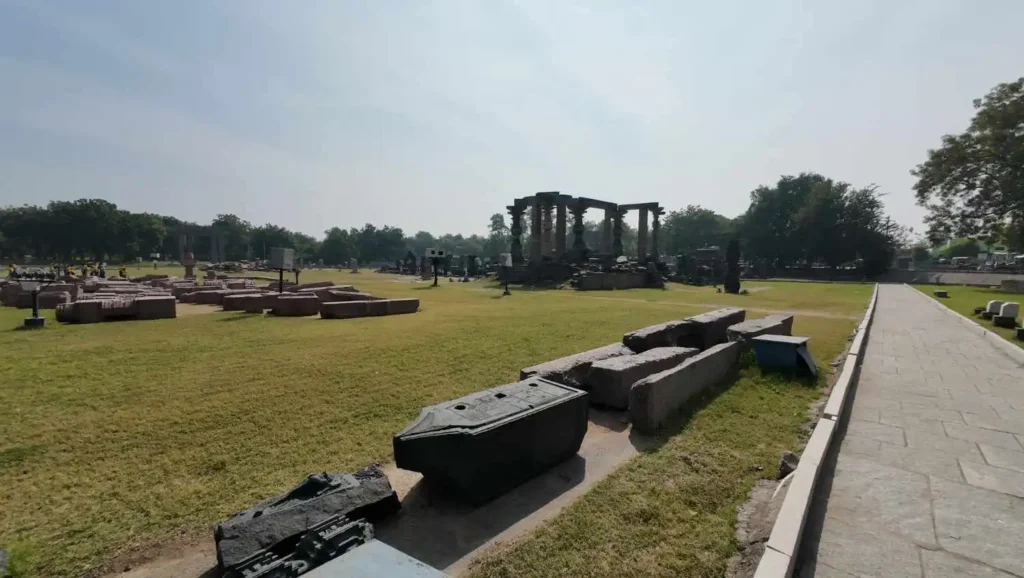
Warangal Fort History
Warangal Fort was one of the most important political and cultural centres of the Kakatiya dynasty.
Warangal was formerly known as Orugallu or Ekasila Nagaram. Both names are commonly associated with the idea of a city built around a single massive stone.
The Kakatiyas initially governed from Hanamkonda before developing Warangal as their capital. King Ganapatideva is widely associated with the major construction of the fort during the 13th century.
His daughter, Rani Rudrama Devi, continued strengthening the capital and its defensive system. Later, Prataparudra II ruled from Warangal during the final major period of Kakatiya power.
The Warangal District Administration states that the city served as the Kakatiya capital and that the fort is especially known for its four enormous stone gateways, carved pillars and surviving medieval structures.
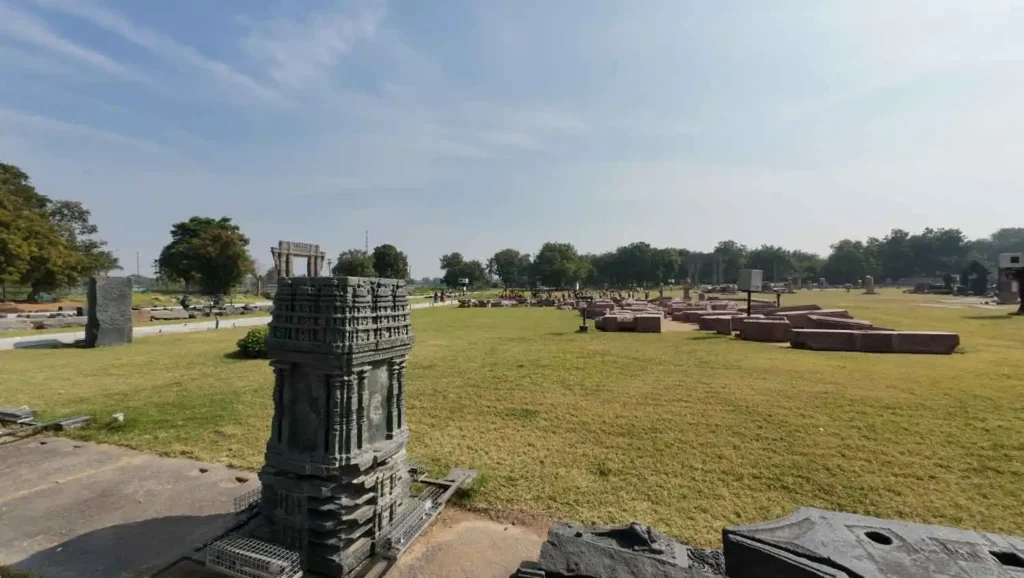
Warangal Fort History Timeline
| Historical period | What happened |
| 12th century | Warangal began developing as an important Kakatiya centre |
| 13th century | Ganapatideva developed the fort and established Warangal as a powerful capital |
| Reign of Rani Rudrama Devi | Defensive walls and fortifications were strengthened |
| Reign of Prataparudra II | Warangal remained the political centre of the Kakatiya kingdom |
| Early 14th century | The fort faced repeated invasions from the Delhi Sultanate |
| 1323 CE | Warangal was captured, bringing the main period of Kakatiya rule to an end |
| Later centuries | The fort passed through different rulers and many structures were damaged or altered |
| Present day | The surviving ruins are protected as an archaeological monument |
The story of Warangal Fort is therefore not limited to one ruler or one building.
It represents the rise of the Kakatiya capital, its architectural achievements, its military importance and the political conflicts that changed the region.
How Was Warangal Fort Protected?
Warangal Fort once had a sophisticated defensive layout consisting of three concentric fortifications.
The inner stone fortification reportedly contained 45 bastions, with gateways positioned in the four main directions. The outer defensive sections included earthen walls and moats that made it more difficult for an invading army to enter the capital.
According to the Archaeological Survey of India, the inner stone fortification and its 45 bastions are important examples of early medieval defensive architecture.
The fort’s main defensive elements included:
- A central fortified zone
- A strong inner wall built using large stone blocks
- Approximately 45 defensive bastions
- Gateways facing the cardinal directions
- Outer earthen fortifications
- Moats surrounding important walls
- Protected areas containing temples and royal structures
Most visitors today explore only the central archaeological complex.
The original fortified city covered a much larger area than the ticketed section that we commonly identify as Warangal Fort.
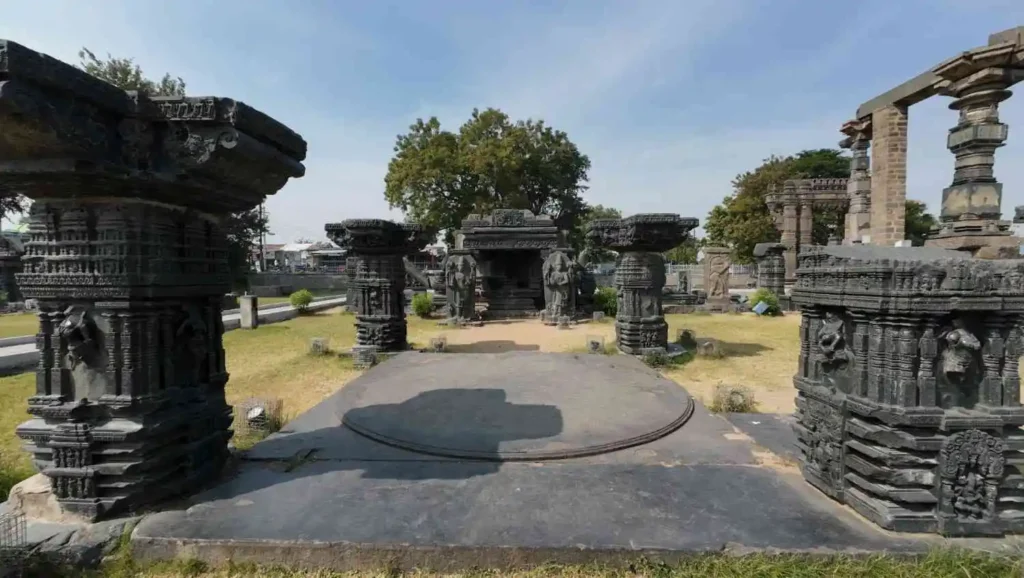
Kakatiya Kala Thoranam: The Symbol of Telangana
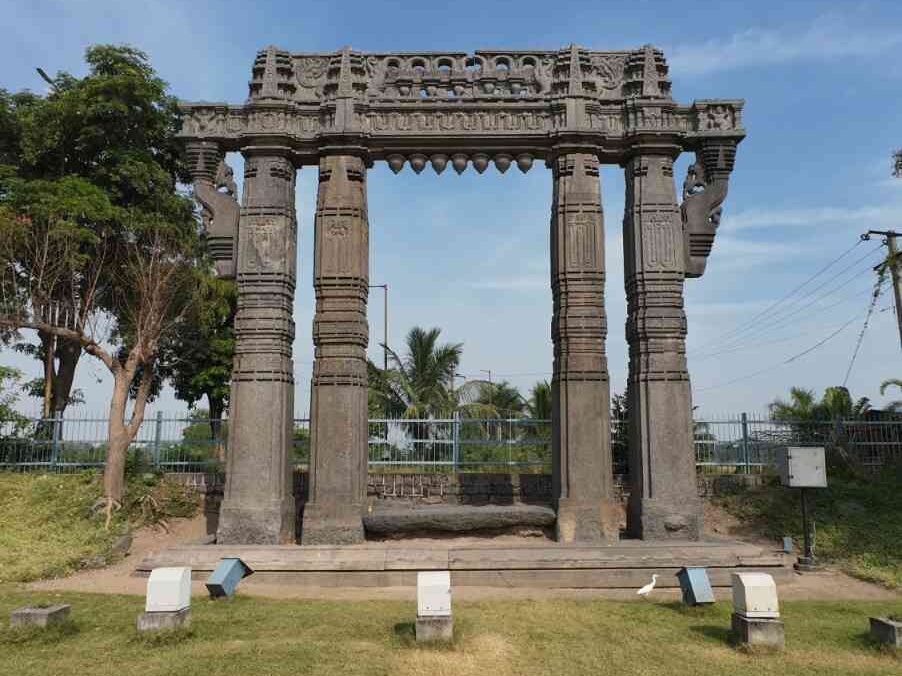
The most recognisable structures inside Warangal Fort are the four enormous stone gateways known as the Kakatiya Kala Thoranam.
These gateways stand around the remains of the Swayambhu Shiva Temple complex.
Unlike a closed gateway with doors and walls, each thoranam has two tall stone pillars connected by a carved horizontal beam. Their balanced proportions and detailed stonework make them look impressive even though the temple they once surrounded is largely ruined.
The four thoranams have become powerful symbols of Kakatiya architecture and Telangana’s cultural identity. The Kakatiya gateway design is also represented in the official emblem of Telangana.
This is one of the most popular photography locations inside Warangal Fort.
When you search for Warangal Fort Telangana online, most photographs show these iconic gateways.
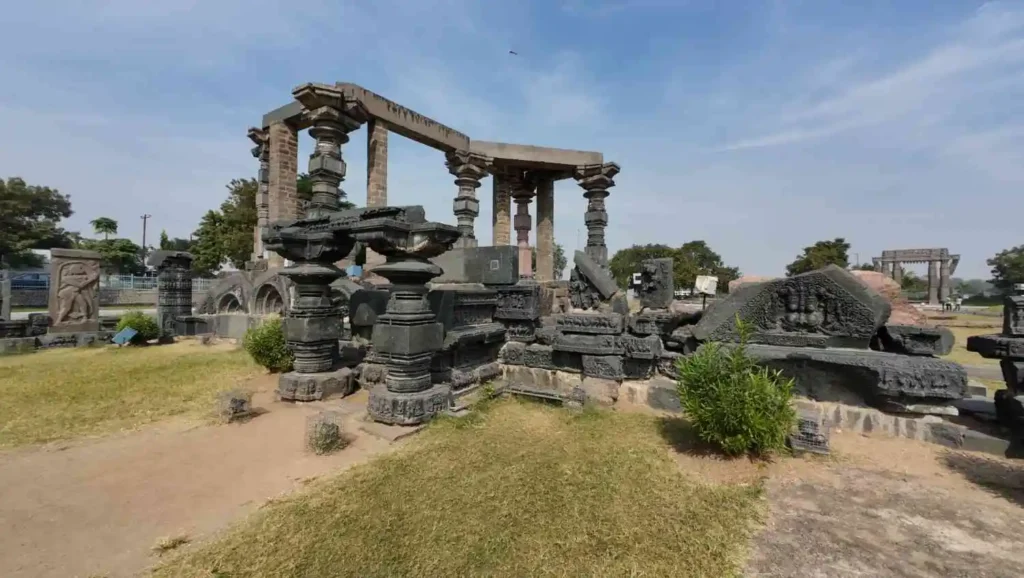
The Ruins of the Swayambhu Shiva Temple
The four Kakatiya gateways originally marked the main approaches to the Swayambhu Shiva Temple.
The temple was once an important religious structure at the centre of the Kakatiya capital. Today, much of it survives only through its foundation, pillars, sculptures and scattered architectural components.
The Archaeological Survey of India describes the Swayambhu Temple remains, surrounded by four lofty stone toranas, as some of the finest surviving examples of Kakatiya art.
While walking through this area, I could see:
- Carved temple pillars
- Sculptures of Hindu deities
- Nandi sculptures
- Decorative stone panels
- Floral and geometric designs
- Broken sections of temple walls
- Pieces that may once have formed mandapas and entrances
The site feels like an open-air museum, but these are not decorative replicas.
They are original remains connected to a city that once served as the centre of a powerful kingdom.
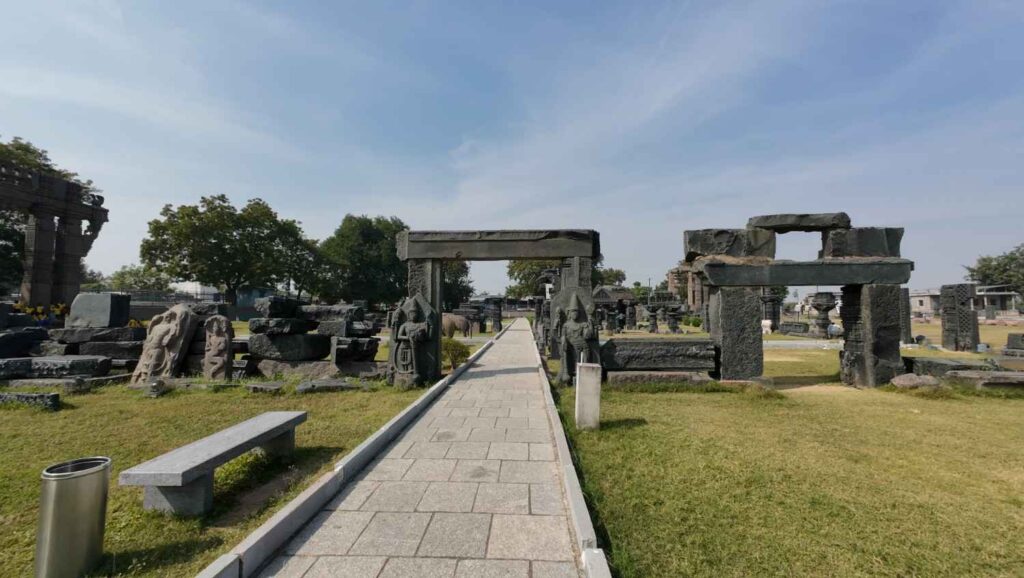
Exploring the Stone Sculptures
I spent a good amount of time roaming around the fort and studying the sculptures.
There were so many statues and carvings that it was difficult to decide where to look first.
Some sculptures were almost complete, while others had lost their faces, arms or decorative sections. A few large pillars were still standing, but many had fallen and were arranged across the archaeological grounds.
Instead of feeling disappointed by the ruined condition, I felt that every broken section carried a part of the fort’s story.
These sculptures help us understand:
- The religious beliefs of the Kakatiya period
- Traditional clothing and jewellery
- Stone-carving techniques
- Temple architecture
- Mythological stories
- Floral and animal motifs
- The artistic wealth of medieval Telangana
I clicked photographs of the stonework and took a few selfies for my memories.
However, I also kept my phone and camera aside for some time.
When you continuously focus on taking photos, it becomes easy to miss the small carvings around you.
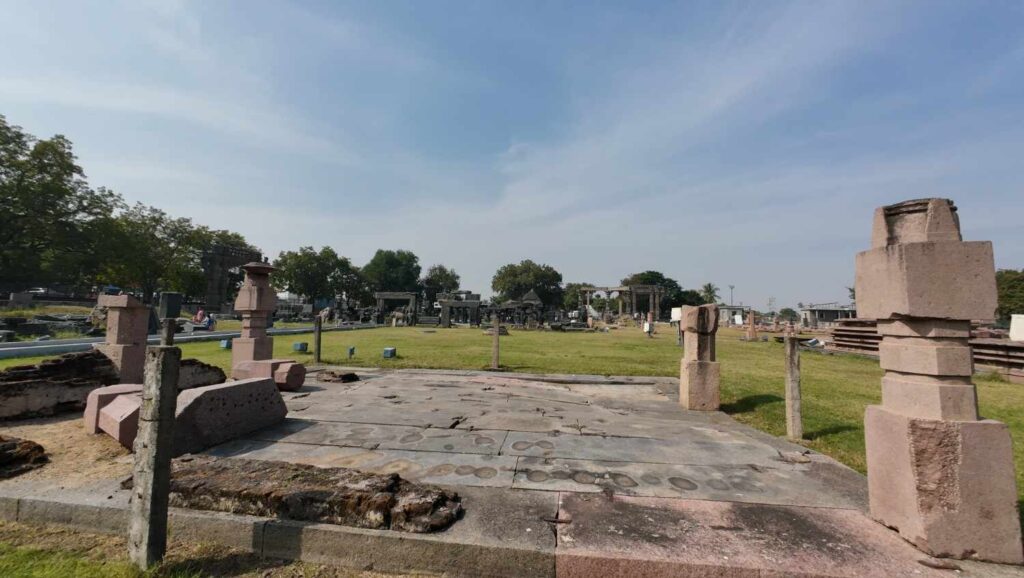
Why Warangal Fort Is More Than a Photo Location?
Many visitors come to Warangal Fort mainly to take photographs in front of the Kakatiya gateways.
The thoranams are certainly beautiful, but the fort deserves more attention than a quick photo stop.
When I looked at the broken pillars, temple remains and massive stone pieces, I started thinking about the people who created them without modern machines.
I also thought about the wars the fort had witnessed and how much of its original architecture had disappeared.
Even in its ruined condition, Warangal Fort shows the richness of Indian history.
It tells us who ruled this region, how they protected their capital, what they worshipped and what kind of art they valued.
That was the part I loved most about this visit.
How Much Time Do You Need at Warangal Fort?
You should keep at least 1–2 hours for Warangal Fort.
| Type of visit | Recommended time |
| Quick sightseeing and photographs | 45–60 minutes |
| Fort history and major sculptures | 1–2 hours |
| Detailed photography or architecture study | 2–3 hours |
| Khush Mahal and Warangal Fort together | Around 2–3 hours |
I recommend visiting in the morning or late afternoon.
The complex has large open sections with limited shade, so exploring it during the afternoon can be tiring, particularly in summer.
Walking from Warangal Fort to Ekashila Gutta
After completing my Warangal Fort visit, I walked towards Ekashila Gutta.
Ekashila Gutta is located beside the fort complex, so you do not need another long drive.
There was no separate ticket for climbing the hill during my visit.
To reach the hill, visitors first have to pass through Ekashila Children’s Garden.
Ekashila Children’s Garden
Before the climb, I spent a few minutes inside the garden.
The garden has different activities for children, making it a useful stop for families visiting Warangal Fort.
There was also a boating facility near the lake. I did not try boating here, so I cannot confirm the exact price. You can ask the staff at the boating counter for the current charges and operating schedule.
The garden area included:
- Children’s play activities
- Seating spaces
- A lake view
- Small refreshment stalls
- A pathway towards Ekashila Gutta
- Boating during operating hours
It was summer, and walking in my riding gear was becoming difficult.
I purchased badam milk from a shop inside the garden, sat down for a few minutes and enjoyed the lake view.
That short break gave me the energy I needed for the climb.
Climbing Ekashila Gutta
The climb to Ekashila Gutta is short and relatively easy.
From my experience, there appeared to be approximately 200–300 steps, although I did not count every step.
It took me around 15 minutes to reach the top.
| Trek information | My experience |
| Difficulty | Easy |
| Estimated steps | Around 200–300 |
| Time required to climb | Approximately 15 minutes |
| Suitable for beginners | Yes, with normal fitness |
| Best time | Morning or late afternoon |
| Main attraction | Panoramic view of the fort, lake and Warangal |
| Entry fee during my visit | Free |
Most people with normal fitness should be able to complete the climb.
However, summer heat can make even a short climb feel tiring. Carry water and take breaks whenever required.
Senior citizens and people with knee problems should assess the steps before climbing.
Shiva Temple on Ekashila Gutta
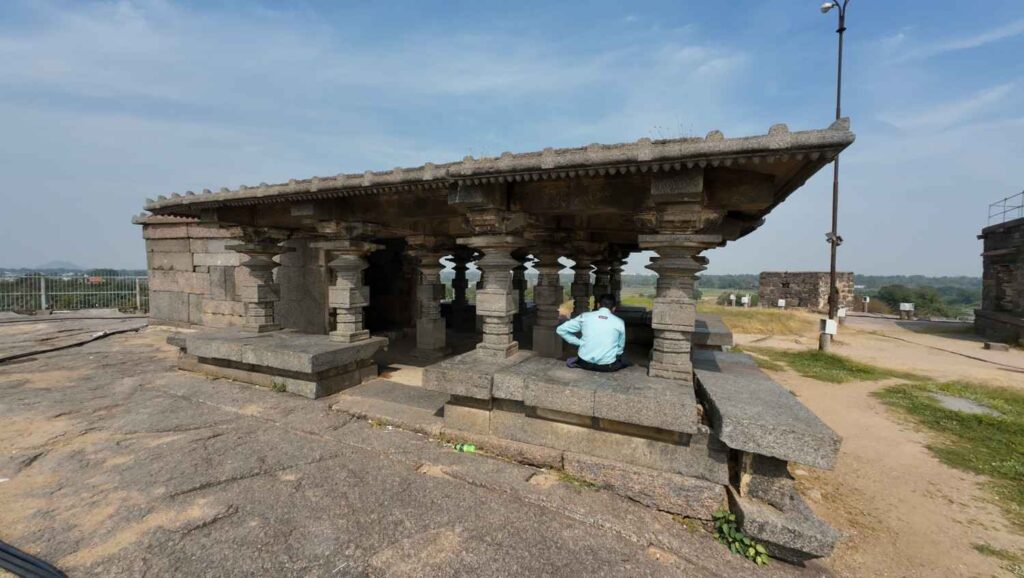
After reaching the top, the first place I visited was the old Shiva temple.
The structure was in a ruined condition, but it still had a peaceful atmosphere.
I offered my namaste and stood there silently for a few moments.
This small hill is closely connected with Warangal’s old identity as Ekasila Nagaram or Orugallu—the city associated with a single stone.
Standing there helped me connect the name with the landscape instead of treating it as only a line from a history book.
The View from the Top of Ekashila Gutta
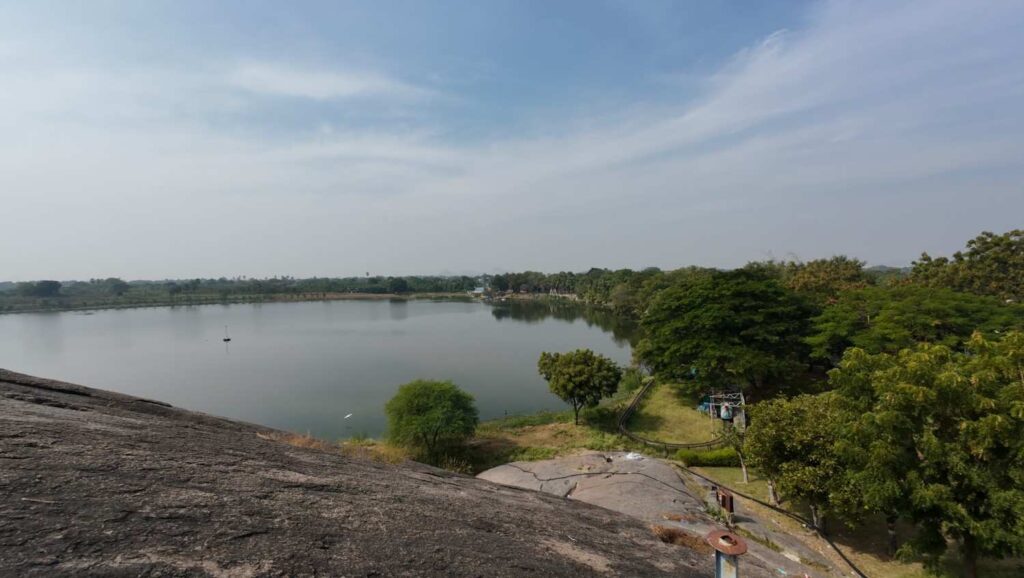
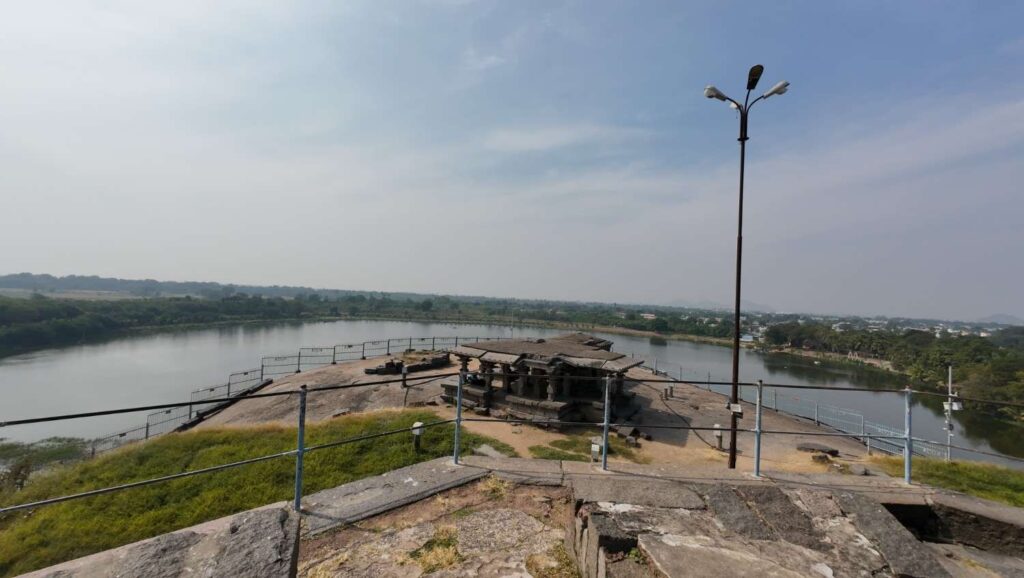
The top view was the reward for the climb.
From Ekashila Gutta, I could see:
- Warangal Fort
- The Ekashila garden
- The nearby lake
- Parts of Warangal city
- Green areas surrounding the hill
- Historical ruins around the fort landscape
The combination of the lake, garden, city and fort looked beautiful from above.
I walked around carefully, clicked several photographs and spent some time enjoying the breeze.
After roaming around, I returned to the Shiva temple and sat in silence.
I kept thinking about how developed and culturally rich this place must have been during the Kakatiya period.
From the fort below to the temple remains on the hill, the entire area felt connected with Warangal’s history.
An Unplanned Decision to Visit Pakhal Lake
After spending some peaceful time on Ekashila Gutta, I checked my phone to see whether there were any other attractions I could visit.
I had completed Khush Mahal, Warangal Fort and Ekashila Gutta earlier than expected, so I still had plenty of time left.
That was when I found Pakhal Lake.
The map showed that Pakhal Lake was approximately 60 km from Ekashila Gutta and would take around one hour to reach.
My planned heritage trip was complete, but I did not want to return home so early.
Therefore, I decided to add one more destination to the journey.
My route was:
Ekashila Gutta → Narsampet → Ashoknagar → Pakhal Lake
I climbed down, returned to my bike and started riding towards Pakhal Lake.
I did not know that Google Maps would soon lead me towards the wrong side of the lake—or that a packet of chips would create the funniest monkey encounter of my entire trip.
Pakhal Lake Detour, Travel Budget and Final Tips
Riding from Ekashila Gutta to Pakhal Lake
After climbing down from Ekashila Gutta, I returned to my bike and started my unplanned journey towards Pakhal Lake.
According to Google Maps, the distance from Ekashila Gutta to Pakhal Lake was nearly 60 km, and the journey would take approximately one hour.
My route was:
Ekashila Gutta → Narsampet → Ashoknagar → Pakhal Lake
The road journey was comfortable for most of the route, but Google Maps created some confusion when I came closer to the lake.
Google Maps Took Me to the Wrong Side of Pakhal Lake
The map directed me through the Ashoknagar–Dabeerpet side.
I followed the suggested route, thinking it would take me towards the main entrance. However, it brought me to the back side of Pakhal Lake.
The road eventually appeared to end, and I could not find any proper public entry point.
There was also nobody nearby whom I could ask for directions.
Because Pakhal is a huge lake, simply reaching its edge does not mean you have reached the tourist entrance. This is an important point for first-time visitors.
I turned back and returned towards Ashoknagar Stage.
There, I finally found a local person and asked him for the correct route. He told me to continue straight on the main road until I found the official entrance gate.
After following his directions, I finally reached the proper Pakhal Lake tourist entry point.
To avoid the same confusion, use the Pakhal Lake map direction provided by the me.
Before starting the final section of your journey, check that your map is taking you towards the entrance gate and not simply towards an isolated edge of the lake.
Pakhal Lake Quick Information
| Information | Details |
| Place | Pakhal Lake |
| District | Warangal district, Telangana |
| Distance from Warangal | Approximately 50–60 km |
| Distance from Narsampet | Approximately 12 km |
| Entry fee during my visit | ₹50 per person |
| Bike parking during my visit | Free |
| Parking availability | Limited near the entrance |
| Boating | Available, subject to crowd and operating conditions |
| Ideal visiting duration | 1–2 hours, excluding boating wait |
| Best time to visit | Post-monsoon and winter |
| Main attractions | Lake views, boating, forest scenery and photography |
| Main caution | Monkeys may approach visitors carrying food |
| Official map | Pakhal Lake Directions |
The entry fee, boating price, parking rules and opening hours can change. The official district page does not publish updated ticket prices, so treat ₹50 as the amount charged during my visit rather than a guaranteed current rate.
A Short History of Pakhal Lake
Pakhal Lake is not only a picnic or photography location. It is also connected with the same Kakatiya history that I had explored at Warangal Fort.
The lake was constructed around 1213 CE during the reign of Kakatiya ruler Ganapatideva. It was created as an artificial reservoir and became an important water source for the surrounding region.
According to the Warangal District Administration, the lake spreads over approximately 30 square kilometres. The surrounding Pakhal Wildlife Sanctuary covers about 839 square kilometres and supports animals including chital, nilgai, jackals, sloth bears, langurs and bonnet macaques.
This historical connection made Pakhal Lake a meaningful addition to my trip.
I had started the day by seeing the architectural remains of the Kakatiya capital at Warangal Fort. I was now ending it beside a lake created during the rule of one of the dynasty’s most important kings.
Parking at Pakhal Lake
After finally reaching the correct entrance, I parked my bike opposite the Pakhal Lake entry point.
There was no bike parking charge during my visit.
However, the available parking space was limited compared with the large open parking ground near Warangal Fort and Khush Mahal.
If you are visiting during a weekend, holiday or winter season, reaching early may help you find a better parking spot.
After parking, I crossed the road and walked towards the entry counter.
Pakhal Lake Entry Fee
I paid ₹50 to enter the Pakhal Lake viewing area.
This ticket was separate from the Warangal Fort ticket I had purchased earlier in the day.
| Charge | Amount during my visit |
| Pakhal Lake entry | ₹50 per person |
| Bike parking | Free |
| Boating | Separate charge |
| Food and water | Based on shop prices |
Carry both cash and a working UPI payment option. Network connectivity can sometimes be unreliable around forest and lake areas, so cash is useful as a backup.
Road Construction Near the Entrance
During my visit, cement-road construction was taking place near the lake entrance.
The middle section of the road was under construction, and visitors had to walk through the muddy side area. This made the approach slightly uncomfortable, especially while wearing full riding gear.
The construction may have been completed by now, but road conditions can change again during the monsoon or future maintenance work.
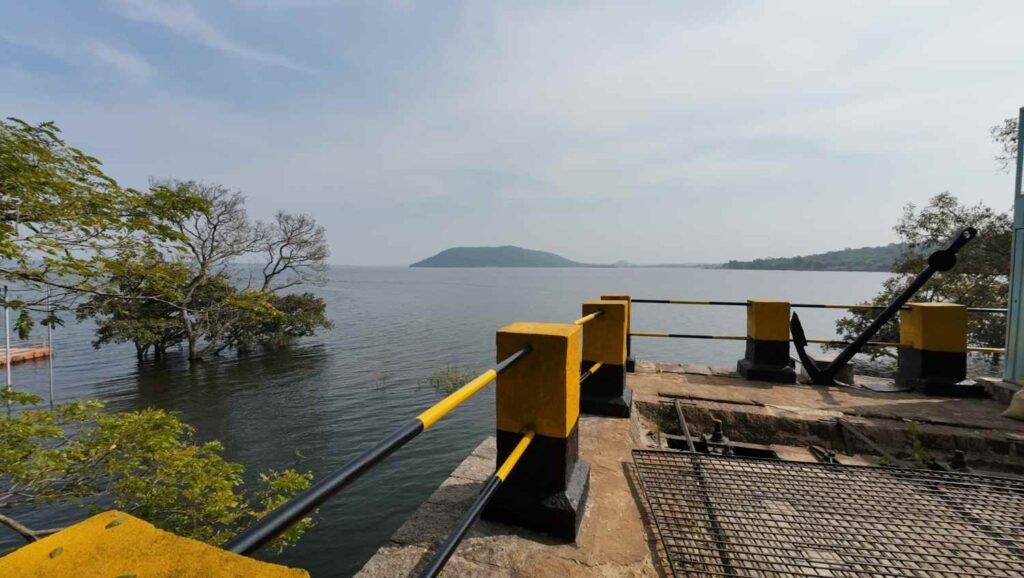
First View of Pakhal Lake
After crossing the construction area, I started walking towards the lake viewpoint.
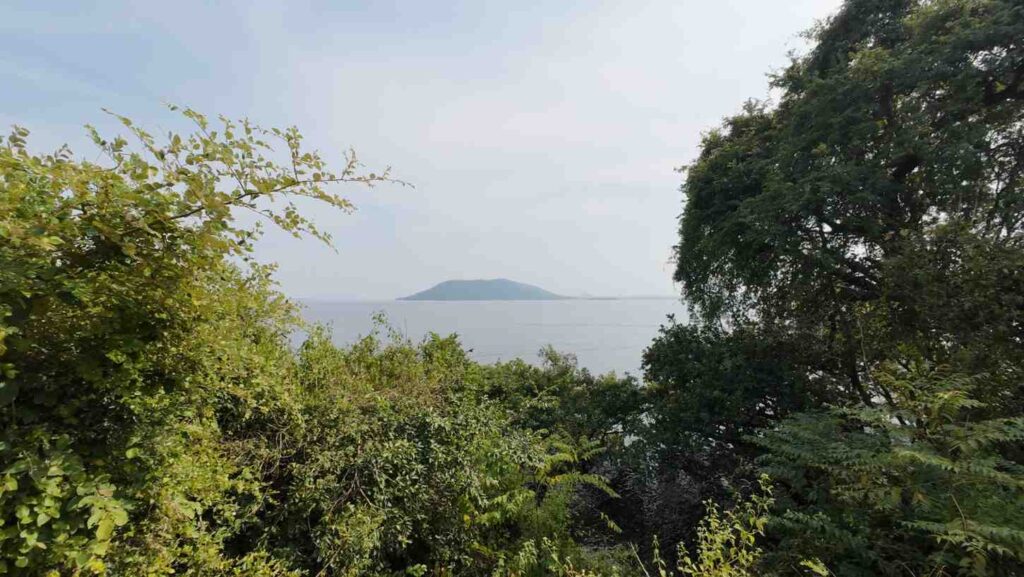
Pakhal Lake looked calm and wide, with forested land surrounding the water.
Compared with the stone structures and open archaeological grounds of Warangal Fort, this place had a completely different atmosphere.
Warangal Fort was about architecture, sculptures and history.
Pakhal Lake was about water, greenery and silence.
The change in scenery made the additional 60 km ride feel worthwhile.
Shops and Food Availability
Visitors have to descend approximately 50 metres from the main entry area to reach the lake section.
There was one small shop along the way during my visit.
I purchased:
- One packet of chips
- One water bottle
The shopkeeper charged me ₹55 in total.
The price felt higher than the regular retail price. Since there were very few shops nearby, visitors did not have many alternatives.
I recommend carrying your own water bottle and a few snacks from Warangal or Narsampet. Keep all food sealed inside your backpack because monkeys can notice packets very quickly.
My Funny Monkey Incident at Pakhal Lake
While climbing the steps, I stopped at one step to rest and eat my chips.
I had hardly started eating when I noticed a monkey approaching me.
At first, I thought it would pass by.
Instead, it continued coming directly towards me while looking at the chips in my hand.
I became nervous.
Rather than trying to protect the packet, I placed it on the step and slowly moved away. I also immediately put my water bottle inside my backpack.
The monkey reached the packet, sat there and started eating the chips peacefully.
It was funny after I moved to a safe distance, but the situation also showed how comfortable the monkeys had become around visitors.
Monkey Safety at Pakhal Lake
Be careful with anything that looks like food.
Monkeys may try to grab:
- Chips and biscuit packets
- Plastic carry bags
- Fruit
- Water bottles
- Open backpacks
- Items held loosely in your hand
Keep your backpack properly closed and do not carry food openly.
If a monkey approaches you: Do not tease it
The tourist area would benefit from more warning signs, covered dustbins and staff monitoring around places where monkeys frequently approach visitors.
Exploring the Pakhal Lake Viewpoint
After the chips incident, I continued towards the main viewpoint.
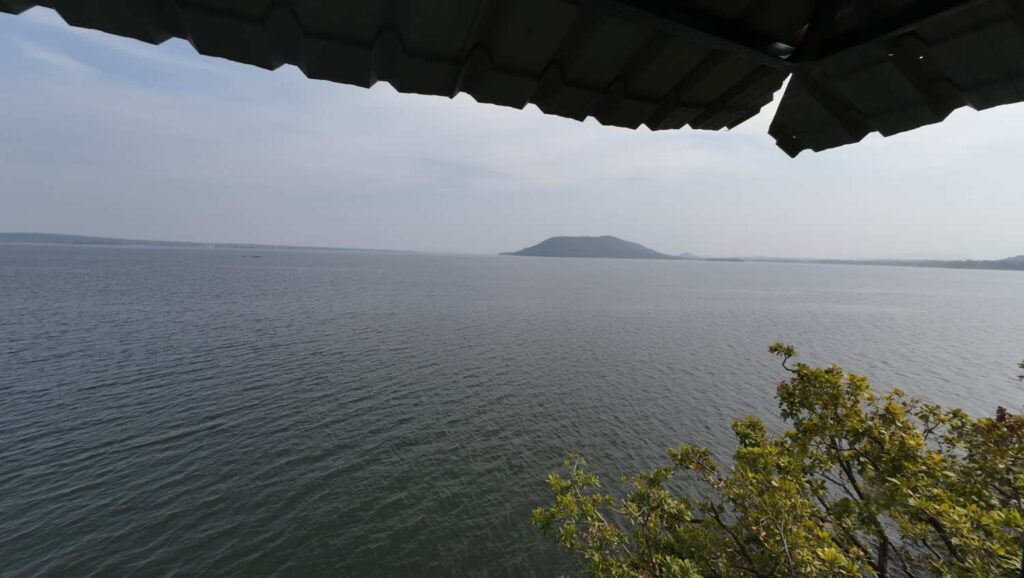
The viewpoint provided a wide view of the lake and the surrounding landscape.
I wanted to take a few photographs, so I removed my camera.
The monkeys saw something in my hand and immediately became interested. They appeared to think that I was holding food.
I waited without making any sudden movement.
After a few minutes, they moved away, and I managed to click two or three photographs.
However, another monkey soon came closer and started watching my hand again.
I immediately placed the camera inside my pocket and started walking out of the viewpoint area.
This is why visitors should avoid standing close to monkeys while holding small objects. Even if the object is not food, a monkey may approach to investigate it.
Boating at Pakhal Lake
Boating was one of the activities I was most interested in trying at Pakhal Lake.
The lake is very wide, and a boat ride appeared to be the best way to experience it properly.
When I reached the boating counter, the staff told me that the regular boat required approximately ten passengers before it could start.
There were only a few visitors at that time.
I decided to wait.
First, I waited for around 30 minutes.
When enough passengers still had not arrived, I waited for another 15 minutes.
Even after approximately 45 minutes, there were not enough people for the boat ride.
I had already spent a long day riding and exploring, so I finally decided to leave.
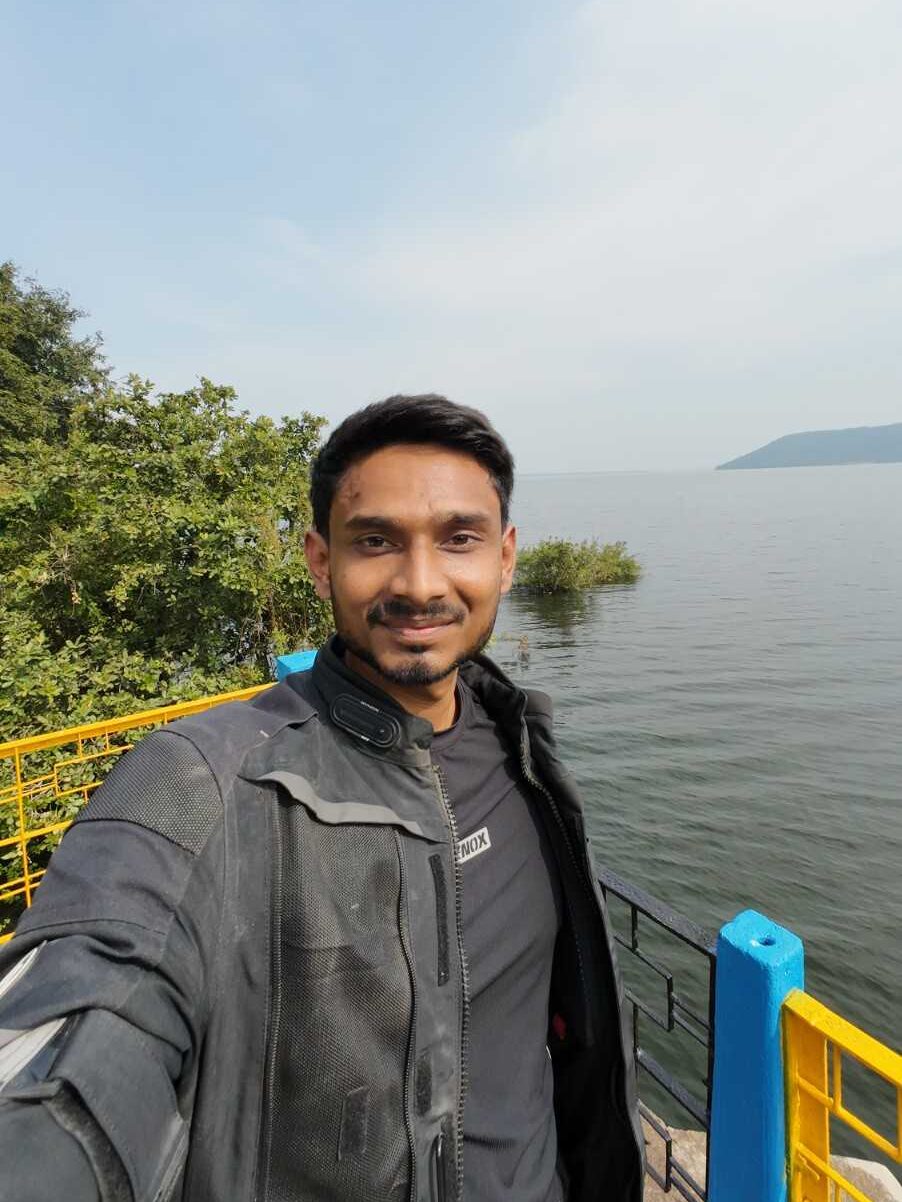
My Only Regret from the Trip
Missing the Pakhal Lake boat ride was my only regret from this journey.
However, every trip does not go exactly according to plan.
Sometimes a location is crowded when we want silence. At other times, the place is so empty that an activity cannot operate.
I could have waited longer, but I still had to ride back to Karimnagar.
If boating is a priority for you, visit on a weekend morning or during a moderately busy holiday period. A reasonable crowd increases the chance of getting enough passengers for a shared boat.
Do not reach too late because boating may stop before the tourist area closes, depending on weather, water conditions and staff availability.
Starting My Return Ride to Karimnagar
After giving up on the boat ride, I returned to the parking area and started my bike.
I had already covered Khush Mahal, Warangal Fort, Ekashila Gutta and Pakhal Lake.
The day had become much longer than my original three-place plan.
After approximately one and a half hours of riding, I reached the Warangal road section.
By that time, I was very hungry.
I searched for restaurants along the road and found one where I could stop for lunch.
My Late Lunch on the Return Route
I parked my bike, removed my riding gear and ordered a proper meal.
After spending the entire morning walking around monuments, climbing Ekashila Gutta and travelling to Pakhal Lake, I needed more than a small snack.
My restaurant bill was ₹430.
After finishing lunch, I sat there for a little while so I could rest and allow the food to settle before riding again.
This short break helped me recover my energy for the remaining journey to Karimnagar.
An Unexpected Moment Near the Toll Gate
While travelling towards Karimnagar, I reached an area close to a toll gate.
A few transgender people were asking travellers for money.
They came in front of my bike, so I stopped and gave them ₹40. I had two ₹20 notes available.
They blessed me, moved aside and allowed me to continue.
After that short stop, I resumed the final part of my ride.
Finally Reaching Home
After approximately two more hours of riding, I finally reached home.
I was tired from the summer heat, the riding gear, the Ekashila Gutta climb and the additional distance to Pakhal Lake.
Still, I felt satisfied.
My original plan was only to visit three nearby historical places in Warangal. Instead, I completed a much larger journey covering:
- Khush Mahal
- Warangal Fort
- Ekashila Children’s Garden
- Ekashila Gutta
- The Shiva temple on the hill
- Pakhal Lake
Another weekend trip was complete, and this time I returned home knowing much more about the history of Warangal and the Kakatiya dynasty.
My Complete One-Day Warangal Itinerary
This is the order I followed during my trip:
| Order | Destination | Suggested time |
| 1 | Ride from Karimnagar to Warangal | Around 2 hours |
| 2 | Khush Mahal | 20–30 minutes |
| 3 | Warangal Fort | 45 minutes |
| 4 | Ekashila Children’s Garden | 10 minutes |
| 5 | Ekashila Gutta | 1 hours |
| 6 | Ride to Pakhal Lake | Around 1–1.5 hours |
| 7 | Pakhal Lake and viewpoint | 30 minutes |
| 8 | Return ride and lunch stop | Based on traffic and breaks |
This itinerary is possible in one day, but it can feel tiring in summer.
If you are travelling with children or senior citizens, keep Pakhal Lake for a separate day or skip the Ekashila Gutta climb.
Warangal Fort Distance and How to Reach
Warangal Fort is located in Mathwada, approximately 3–5 km from central Warangal. The fort is well connected by road, train and bus from Hyderabad, Karimnagar and other major Telangana cities.
Distance to Warangal Fort from Major Cities
| Starting point | Approximate distance | Expected travel time |
| Warangal Railway Station | 3.8 km | 15–20 minutes |
| Hanamkonda | 10 km | 25–35 minutes |
| Kazipet Railway Station | 15 km | 35–45 minutes |
| Karimnagar | 87 km | Around 2 hours |
| Hyderabad | 154 km | Around 3–4 hours |
The exact distance and journey time will depend on your starting location, traffic, road conditions and chosen route.
How to Reach Warangal Fort from Hyderabad?
The distance from Hyderabad to Warangal Fort is approximately 150–155 km. You can reach the fort by private vehicle, train or TGSRTC bus.
Hyderabad to Warangal Fort by Car or Bike
Travelling by car or bike is the most convenient option if you want to visit several Warangal attractions in one day.
The commonly used road route is:
Hyderabad → Uppal → Ghatkesar → Bhongir → Aler → Jangaon → Warangal → Warangal Fort
Most of this journey follows NH 163. Depending on Hyderabad traffic and the number of breaks you take, the ride generally requires around three to four hours.
If you are planning a one-day trip, leave Hyderabad by 5:00 AM or 5:30 AM. An early start will help you reach Warangal Fort before the afternoon heat and give you enough time to cover Khush Mahal, Ekashila Gutta, Bhadrakali Temple and the Thousand Pillar Temple.
Hyderabad to Warangal Fort by Train
Taking a train is one of the easiest and most affordable ways to reach Warangal from Hyderabad.
Trains towards Warangal commonly depart from Secunderabad, Hyderabad Deccan or Kacheguda, depending on the service. When booking, check whether the train stops at:
- Warangal Railway Station
- Kazipet Junction
Warangal Railway Station is the more convenient option because it is only around 3–5 km from the fort. After leaving the station, you can hire an auto-rickshaw or cab directly to Warangal Fort.
If your train stops only at Kazipet Junction, the fort is approximately 14–16 km away. You can take an auto, local bus or cab from Kazipet to Warangal Fort.
Hyderabad to Warangal Fort by Bus
Regular government buses connect Hyderabad with Hanamkonda and Warangal.
Depending on the service and boarding point, buses may be available from:
- MGBS
- JBS
- Uppal
- LB Nagar
Choose a bus going to Warangal or Hanamkonda. After reaching the bus station, hire an auto-rickshaw, local cab or city bus to Warangal Fort.
Warangal Bus Station is approximately 3–4 km from the fort, while Hanamkonda is around 8–10 km away. Confirm the current bus timings and boarding point through the official TGSRTC booking platform or at the enquiry counter.
The bus journey normally takes around 3.5–4.5 hours, depending on traffic and the number of stops.
Best Transport Option for Visiting Warangal Fort
| Type of traveller | Recommended transport |
| Solo traveller | Train or bike |
| Budget traveller | Train or TGSRTC bus |
| Family with children | Private car or cab |
| Senior citizens | Cab or private car |
| Group of friends | Car or shared cab |
| One-day sightseeing trip | Private vehicle |
| Visiting only Warangal Fort | Train followed by an auto |
| Combining Warangal Fort with Pakhal Lake | Private car or bike |
Warangal Fort, Ekashila Gutta & Pakhal Lake Trip Budget
These were the expenses I clearly recorded from my trip:
| Expense | Amount |
| Warangal Fort entry ticket | ₹25 |
| Warangal Fort videography charge | ₹25 |
| Khush Mahal entry | Free during my visit |
| Parking near Khush Mahal | Free during my visit |
| Warangal Fort parking | Free during my visit |
| Ekashila Gutta entry | Free during my visit |
| Badam milk | ₹40 |
| Pakhal Lake entry ticket | ₹50 |
| Pakhal Lake bike parking | Free during my visit |
| Chips and water bottle | ₹55 |
| Lunch | ₹430 |
| Money given near toll gate | ₹40 |
| Fuel | ₹1500 nearly (13 litres) |
| Total Expenses | ₹2165 |
Nearby Attractions to Warangal Fort
Warangal Fort is surrounded by several historical, religious and family-friendly attractions.
| Nearby attraction | Why visit it? |
| Khush Mahal | A Tughlaq-period audience hall located about 250 metres from the fort |
| Ekashila Gutta | Short climb with views of the fort, lake, garden and city |
| Bhadrakali Temple | Famous ancient temple beside Bhadrakali Lake |
| Thousand Pillar Temple | Kakatiya-era Trikutalayam known for carvings and its monolithic Nandi |
| Padmakshi Temple | Historic hill temple with Kakatiya and Jain connections |
| Kakatiya Rock Garden | Family garden with rock sculptures and landscaped areas |
| Pakhal Lake | Historic Kakatiya reservoir approximately 50–60 km from Warangal |
| Ramappa Temple | UNESCO World Heritage temple suitable for a separate day trip |
| Laknavaram Lake | Popular lake destination with bridges, boating and forest scenery |
I had already covered the spiritual side of the city during my earlier trip. You can read my Bhadrakali Temple Warangal one-day guide to plan Bhadrakali Temple, Padmakshi Temple and Thousand Pillar Temple together.
Best Way to Plan Two Days in Warangal
If you have two days, do not try to rush through every attraction.
Day 1: Warangal Heritage Circuit
- Khush Mahal
- Warangal Fort
- Ekashila Children’s Garden
- Ekashila Gutta
- Bhadrakali Temple in the evening
Day 2: Temples and Nature
Choose one of these combinations:
Option 1:
- Thousand Pillar Temple
- Padmakshi Temple
- Pakhal Lake
Option 2:
- Ramappa Temple
- Laknavaram Lake
This two-day plan gives you more time for photography, boating, meals and rest.
Final Thoughts on My Warangal Fort Trip
This journey showed me a completely different side of Warangal.
During my previous visit, I experienced the city through Bhadrakali Temple, Padmakshi Temple and the Thousand Pillar Temple.
This time, Warangal Fort, Khush Mahal and Ekashila Gutta helped me understand its royal history.
Walking between broken pillars and carved stones made me think about the skill of the people who created them centuries ago. Climbing Ekashila Gutta gave me a wider view of the same historic landscape, while the unplanned ride to Pakhal Lake connected the journey with another achievement of the Kakatiya period.
The day was not perfect.
Google Maps took me to the wrong side of Pakhal Lake. A monkey took my chips. I waited 45 minutes for boating and still could not experience it.
But these unexpected moments are often the stories we remember most.
I returned to Karimnagar tired but satisfied.
I had started the morning planning to visit three historical places. By the time I reached home, I had explored a fort, a palace, a hill, an old Shiva temple, a garden and a historic lake.
More importantly, I returned with a better understanding of Warangal Fort, the Kakatiya dynasty and the richness of our Indian history.
Frequently Asked Questions
What is Warangal Fort famous for?
Warangal Fort is famous for its Kakatiya Kala Thoranam gateways, Swayambhu Shiva Temple ruins, carved stone pillars, deity sculptures and defensive fortifications. It was one of the main political and cultural centres of the Kakatiya dynasty.
Who built Warangal Fort?
The major development of Warangal Fort is associated with Kakatiya ruler Ganapatideva. Rani Rudrama Devi strengthened the fortifications, and Prataparudra II made later additions.
Where is Warangal Fort located?
Warangal Fort is located in Warangal district, Telangana. It can be reached easily from Warangal and Hanumakonda by auto, cab, bus or private vehicle.
What was the Warangal Fort entry fee during your visit?
I paid ₹25 in cash for entry. An online ticket booked through the QR code was available for ₹20. I paid another ₹25 because I was carrying a camera for videography. Prices can change, so confirm them at the counter.
Is Warangal Fort entry free for children?
Children below 15 years were allowed free entry during my visit. Carry age identification if required and check the current ASI rules before travelling.
How much time is required to explore Warangal Fort?
Keep at least one to two hours. A quick visit may take 45–60 minutes, but history lovers and photographers can easily spend two or three hours.
Is parking available at Warangal Fort?
Yes. I found a large open parking area near Warangal Fort and Khush Mahal. There was no parking charge for my bike during the visit, but the rules may change.
What is the distance between Khush Mahal and Warangal Fort?
Khush Mahal is only about 250 metres from the main Warangal Fort visitor area. You can comfortably walk between them.
Can visitors climb to the top of Khush Mahal?
Access to the upper section was restricted during my visit. Barricades had been placed near the steps. Visitors should not cross restricted areas.
Is Ekashila Gutta difficult to climb?
The climb is relatively easy for people with normal fitness. From my experience, there appeared to be around 200–300 steps, and I reached the top in approximately 15 minutes.
Is there an entry fee for Ekashila Gutta?
There was no separate fee for climbing Ekashila Gutta during my visit. Charges and access rules can change.
Can Warangal Fort and Pakhal Lake be covered in one day?
Yes, but start early. Warangal Fort, Khush Mahal and Ekashila Gutta can be completed during the first half of the day. Pakhal Lake is approximately 50–60 km away, so keep enough time for the ride and return journey.
Is boating available at Pakhal Lake?
Yes, boating was available during my visit. However, the regular boat required a minimum number of passengers. I waited for around 45 minutes but could not take the ride because there were not enough visitors.
What is the best time to visit Warangal Fort?
October to March offers more comfortable weather for walking. If you visit during summer, arrive early in the morning or later in the afternoon because much of the fort complex is open and exposed to sunlight.
Solo traveller, biker, and explorer sharing honest travel guides, hidden places, and unforgettable road trips across India.
2 thoughts on “Warangal Fort: My Ride Into the Lost World of the Kakatiyas”