
Why Rachakonda Fort Was the Break I Needed?
There was a time when I was working at MedPlus in Hyderabad, and honestly, my routine had started feeling like the same day repeating again and again.
Wake up in the morning, get ready, go to the office, work for the whole day, come back to my PG, eat, sleep, and repeat everything again the next morning.
At MedPlus, we only had holidays on the second and fourth Saturdays, almost like a bank schedule.
If you are working six days a week, you probably understand this feeling better than anyone. After continuously following the same routine, even one free Saturday starts feeling special.
I desperately wanted to get outside Hyderabad for a few hours.
I didn’t want a luxury trip or a long vacation. I simply wanted to ride my bike somewhere peaceful, spend some time away from office work and return with a fresh mind.
That’s when I started searching Google Maps for places near Hyderabad.
While randomly checking forts, temples and other weekend destinations, I found Rachakonda Fort.
The location immediately caught my attention.
It looked away from the main Hyderabad crowd, there was a small trek involved, and the place had old fort ruins surrounded by rocky hills.
Exactly what I wanted.
So I saved Rachakonda Fort and decided:
My next second Saturday is fixed for this place.
Rachakonda Fort Quick Information
Before sharing my complete experience, here is a quick overview for anyone planning to visit Rachakonda Fort.
| Information | Details |
| Place Name | Rachakonda Fort |
| State | Telangana |
| District | Yadadri Bhuvanagiri |
| Best For | History, short trek, photography, bike ride |
| Trek Difficulty | Easy to moderate |
| My Trek Time | Around 30 minutes |
| Ideal Visit Duration | Around 2–3 hours |
| Best Time to Visit | Early morning |
| Recommended Transport | Bike or car |
| Distance From My PG in Kondapur | Around 92 km |
| Food & Water | Better to carry your own |
One thing you should know is that the Rachakonda Fort distance from Hyderabad changes significantly depending on where you are staying.
Someone living around LB Nagar or the eastern side of Hyderabad will have a much shorter journey than someone starting from Kondapur, Gachibowli or Hitech City.
In my case, my PG was in Kondapur, and Google Maps showed approximately 92 km to Rachakonda Fort.
So whenever you search for Rachakonda Fort distance from Hyderabad, don’t blindly depend on one distance mentioned online.
Check it from your exact starting point.
Planning My Rachakonda Fort Trip
Once I decided on the destination, I just had to wait for Saturday.
Friday evening arrived, and as usual, I started preparing my riding gear.
Helmet ready.
Riding gear ready.
Bike checked.
Everything was kept in place so I wouldn’t waste time the next morning.
I prefer preparing everything one day before because when I wake up early for a trip, the last thing I want is to start searching for gloves, chargers or other things around the room.
My plan was simple.
Start early, reach Rachakonda Fort before the temperature increased, complete the trek, spend some peaceful time there and return to Hyderabad.
And Sunday?
Sunday was completely reserved for rest.
That was important because Monday meant going back into the same office routine again.
Starting From Kondapur at 5:30 AM
On Saturday morning, my alarm went off at around 5:00 AM.
For an office day, waking up at 5 AM can feel painful.
But when there is a bike ride planned, somehow waking up early doesn’t feel difficult at all.
I got ready, picked up my riding gear and came downstairs.
It was still early, and Hyderabad hadn’t fully woken up yet.
I started my bike at around 5:30 AM.
Google Maps was set.
Spotify playlist was ready.
Helmet on.
And I finally left Kondapur for Rachakonda Fort.
The distance from my PG to the fort was around 92 km, and Maps showed close to two hours of travel.
Why I Love Early-Morning Bike Rides?
One thing I really enjoyed during this trip was the early-morning ride itself.
If you regularly travel around Hyderabad, you already know how irritating city traffic can become once the day starts properly.
But at 5:30 AM, the experience is completely different.
The roads are much quieter.
The air feels cooler.
You don’t have hundreds of vehicles constantly surrounding you.
And instead of thinking about office work, meetings or deadlines, I was simply riding my bike while listening to my Spotify playlist.
This was exactly why I had planned this trip.
Even before reaching Rachakonda Fort, my mind already felt lighter.
Sometimes I think travelling doesn’t necessarily mean visiting some extremely famous destination.
For me, even the journey itself can be enough.
Put on the helmet, start the bike and leave the city for a few hours.
That’s it.
Important Rachakonda Fort Directions Tip
During the ride, I learned one small thing that I definitely want to mention because it can save you some confusion.
If you are travelling by bike, try selecting the car option in Google Maps.
Yes, even if you are riding a motorcycle.
When I checked Rachakonda Fort directions using the two-wheeler option, Maps started showing some routes that were confusing for me.
There are village roads and smaller internal roads around this region, and Google Maps may try to save a few kilometres by sending two-wheelers through shortcuts.
Personally, I found the car route easier to understand.
So my suggestion is:
Select Rachakonda Fort as the destination → choose the car route → then follow that route even if you are travelling by bike.
You can still check alternative routes, but don’t blindly follow every shortcut Maps shows.
This is especially useful if this is your first visit.
Downloading the offline map beforehand is also a good idea because once you move away from the city, depending completely on the mobile network is never something I recommend.
My First Impression of the Route
As I moved farther from Hyderabad, the environment slowly started changing.
The city buildings reduced.
Traffic became lighter.
Village roads started appearing.
And the entire ride started feeling more like the weekend escape I had imagined.
This was a completely different environment compared to sitting inside an office for six days.
I didn’t rush too much.
For me, there was no point planning a trip to refresh my mind and then riding aggressively just to reach the destination ten minutes earlier.
I simply followed Maps, enjoyed the music and continued towards Rachakonda.
After roughly two hours of riding, I finally reached the entrance area of Rachakonda Fort.
Finally Reaching Rachakonda Fort
Because I had started at 5:30 AM, I reached quite early.
And that turned out to be both good and slightly confusing.
The area near the fort was extremely quiet.
There wasn’t a big crowd.
There wasn’t a proper tourist setup.
And when I reached the entrance, I couldn’t see anyone sitting there collecting an entry ticket.
For a moment, I wondered whether there was actually any ticket at all.
I continued inside and looked for somewhere to park my bike.
Parking at Rachakonda Fort
This was the first thing I disliked about the place.
I couldn’t find what I would call a proper organised parking area.
There was no clearly marked parking lot where I could simply park my bike and walk away.
I found a rocky area near the fort and parked my bike there.
It was basically just a place where I felt the motorcycle would be safe enough to leave for some time.
After I parked, an elderly man approached me.
He asked me to pay a parking charge.
I was confused.
I looked around again because the place didn’t really look like an official paid parking area.
Still, he kept asking for money.
I told him that I didn’t have smaller change.
At that time I only had a ₹50 note.
There was no online payment option either.
He continued saying that I needed to pay for parking before going ahead.
I didn’t want to start my morning arguing over parking, so finally I gave him the ₹50.
At that time I thought:
Okay, maybe this is simply how parking works here.
Later, while leaving the fort, I found out something completely different.
And that became the most disappointing part of my entire Rachakonda Fort experience.
I’ll explain exactly what happened in the later part of this article because anyone visiting the fort should know about it.
Starting the Rachakonda Fort Trek
After parking my bike and dealing with the parking payment, I finally started walking towards the fort.
This is where my mood improved again.
The noise disappeared.
There were old stone structures around me.
Huge rocks surrounded the trail.
And instead of dealing with traffic or people asking for money, now it was just me and the fort.
I started climbing slowly.
For me, the Rachakonda Fort trek was easy.
You don’t need professional trekking experience for the basic climb.
The path is rocky and uneven in some places, but if you are reasonably active and wearing proper shoes, you should be able to manage it.
That said, I would still avoid slippers.
The rocks can become slippery, especially if you visit during or immediately after the monsoon.
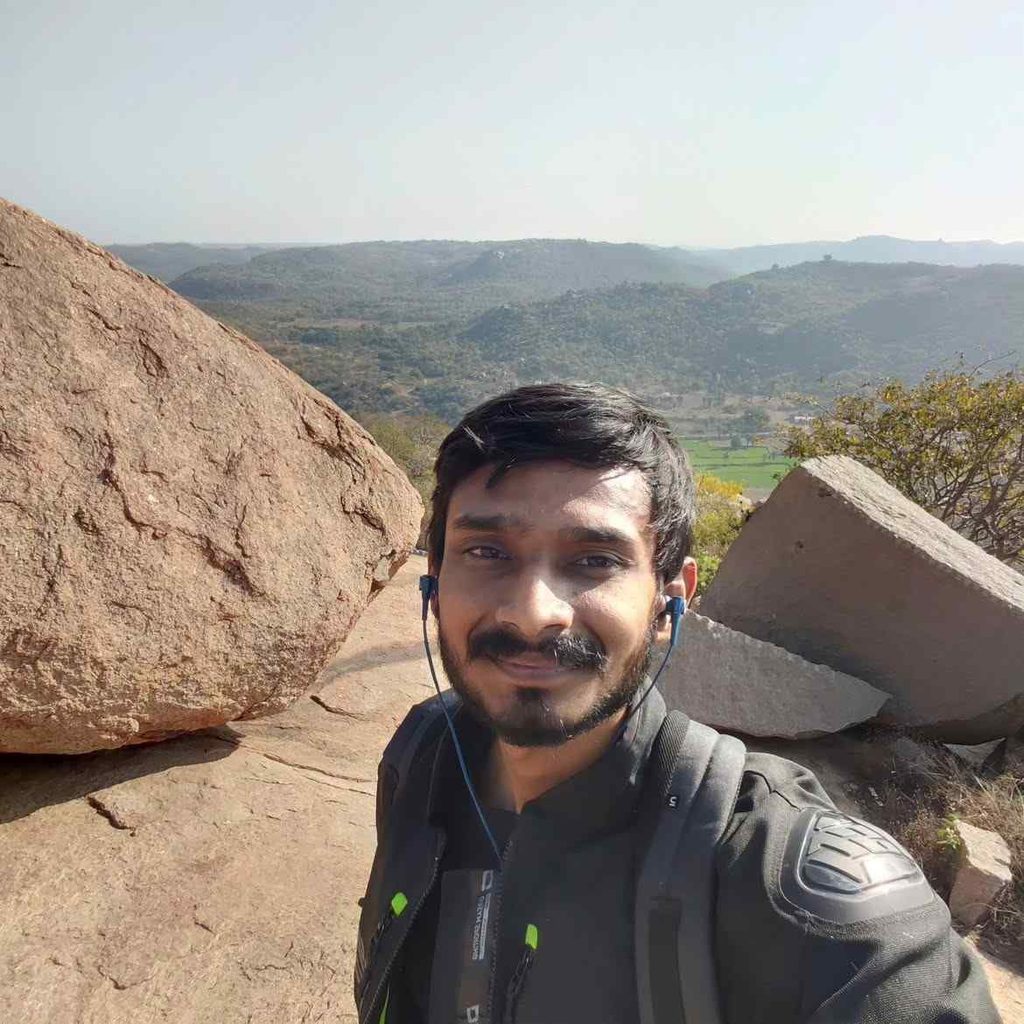
How Long Did the Rachakonda Fort Trek Take Me?
It took me approximately 30 minutes to reach the upper section of the fort.
I wasn’t racing to the top.
I walked at a comfortable pace, stopped at a few places and looked around.
If you are someone who takes lots of photographs during the climb, it could easily take longer.
Once I reached the top, I found a place to sit.
And for a few minutes, I didn’t do anything.
I just sat there quietly.
After spending the entire week surrounded by laptops, office discussions, traffic and the same routine, sitting peacefully on top of an old fort felt surprisingly satisfying.
That was the moment when I felt:
Yes, this Saturday trip was worth planning.
But what made Rachakonda Fort much more interesting was the history behind the place.
While resting at the top, I started reading about who built Rachakonda Fort, why it was important and how it became connected with the Recherla Padmanayaka rulers of Telangana.
And honestly, after understanding its history, those broken stone walls started looking completely different to me.
Rachakonda Fort History: What I Learned at the Top
After reaching the upper part of Rachakonda Fort, I found a comfortable place and sat there for some time.
Initially, I was simply enjoying the silence.
But whenever I visit an old fort, I like knowing what actually happened there. Otherwise, we are just looking at broken walls and stones without understanding why they are important.
So while resting, I started reading about Rachakonda Fort history.
That was when I realised this wasn’t just a random ruined fort outside Hyderabad.
Rachakonda was once an important political centre in medieval Telangana and was closely connected with the Recherla Padmanayaka rulers, who became powerful after the decline of the Kakatiya kingdom.
Who Built Rachakonda Fort?
Rachakonda Fort is mainly associated with the Recherla Padmanayaka dynasty, also commonly referred to as the Velama rulers.
The political background is interesting.
After the Kakatiya kingdom collapsed in the early 14th century, several regional powers began competing for control over different parts of Telangana.
According to Telangana: Land and People, published through the Dr. MCR HRD Institute of Telangana, Singama Nayaka shifted his political headquarters from Amangallu to Rachakonda, where the surrounding rocky hills offered a naturally secure location.
Later, during the rule of Anapota Nayaka I, major improvements were made to Rachakonda Fort, including defensive walls and a tank known as Anapota Samudra.
This helped Rachakonda develop into an important fortified capital. (Source)
Why Was Rachakonda Fort Important?
When we look at Rachakonda today, it is quiet.
There are broken walls, massive rocks, scattered ruins and hardly anything that makes you imagine it as a capital.
But several centuries ago, the situation was completely different.
The Recherla Padmanayakas became one of the major political powers in Telangana during the post-Kakatiya period.
Historical accounts show that the Rachakonda kingdom expanded considerably under Anapota Nayaka I and Madanayaka I.
By around 1369 CE, their influence reportedly extended across large parts of Telangana. They controlled important forts including Warangal, Bhongir and Sanigaram, while their territory extended towards the Krishna and Tungabhadra regions.
Devarakonda later became another major centre of the dynasty and functioned as a second capital.
So Rachakonda wasn’t simply a defensive structure.
It was a political and military centre from which an important medieval Telangana kingdom was governed.
Knowing this while actually standing there made the place much more interesting to me.
What Happened After the Recherla Padmanayakas?
The Recherla rulers controlled Rachakonda during a period when the Deccan was witnessing continuous political conflicts.
They interacted and fought with several powers, including the Musunuri rulers, Reddy kingdoms, Bahmani Sultanate and other regional forces.
Over time, the Recherla Padmanayakas lost their control over Rachakonda.
Later historical accounts associate the region with the Bahmani Sultanate, Qutb Shahi rulers and eventually the Hyderabad state under the Nizams. Telangana government tourism information similarly places the Velama rulers between the Kakatiya and Bahmani periods in the history of the region.
Today, the fort is mostly in ruins.
But those ruins represent a period when Rachakonda was far more important than its present appearance might suggest.
Rachakonda Fort Architecture
After reading its history, I started paying more attention to the actual construction around me.
One of the most interesting features of Rachakonda Fort is its stonework.
The fort uses a construction method commonly described as cyclopean masonry.
Basically, massive irregular granite stones were carefully fitted together, and sections of the fort were constructed without using mortar to bind those stones.
The Telangana government describes the fort’s construction as one of its distinctive features, noting the use of large stones, monolithic pillars, beams, lintels and rock-cut walls. (Nalgonda)
When you’re standing beside these structures, you naturally start wondering:
How did people move and position stones this large hundreds of years ago?
The builders also made clever use of the natural landscape.
Instead of completely reshaping the hill, many defensive structures were integrated with the existing granite formations.
That means the rocky landscape itself became part of the fort’s defence.
Why the Location Was Perfect for a Fort?
Once you reach the higher sections, it becomes easier to understand why the rulers selected this location.
The fort is surrounded by rocky terrain and hills.
From above, you get wide views of the surrounding countryside.
Centuries ago, that would have been extremely useful.
Anyone approaching the fort could potentially be spotted from a distance, while the rocky terrain itself made attacking the fort more difficult.
Today, of course, I wasn’t looking for an approaching army.
I was looking at the scenery and enjoying the silence.
But knowing why the fort was positioned here made the landscape much more meaningful.
My Favourite Part Was Simply Sitting There
After walking around for some time, I again found a quiet place and sat down.
I probably spent around one hour at the top of Rachakonda Fort.
I clicked photographs of the fort.
I took some selfies.
I explored some of the stone structures.
But strangely, the thing I remember most clearly is just sitting there.
No phone calls.
No office discussions.
No Hyderabad traffic.
Nothing.
Just the rocky landscape and silence.
This was exactly what I had wanted when I planned the trip.
During that period of my life, six working days continuously made every week feel repetitive.
Coming here didn’t magically solve anything.
Monday was still going to come.
I still had to return to work.
But for those few hours, I wasn’t thinking about any of that.
And sometimes that’s enough.
Rachakonda Fort Trek Difficulty
Based on my personal experience, I would describe the basic Rachakonda Fort trek as easy to moderate.
I reached the upper section in approximately 30 minutes.
Another trekking resource also estimates roughly 2 to 2.5 hours for the overall trek when climbing, exploring and returning are combined.
You don’t need professional trekking experience.
However, I wouldn’t call it a simple paved tourist walk either.
You will encounter:
- uneven rocks
- loose surfaces
- climbing sections
- exposed areas
- little shade in some sections
Is Rachakonda Fort Suitable for Beginners?
Yes, in my opinion.
If you are reasonably active and comfortable walking uphill for around 30 minutes, the basic Rachakonda Fort trek shouldn’t be too difficult.
Just take your time.
There is no reason to rush.
If you get tired, stop for a few minutes and continue.
However, elderly visitors, people with mobility problems and very young children may find the rocky sections more difficult.
Parents should also keep children close because this isn’t a developed viewpoint with railings everywhere.
Rachakonda Fort Timings
This is one detail where I found conflicting information online.
Some travel resources list 8:00 AM to 5:00 PM, while trekking resources say there isn’t a clearly defined fixed schedule for the trek and recommend completing the visit during daylight.
I also couldn’t find a clearly published current timing from an official Telangana monument authority.
So rather than telling you one timing as if it is guaranteed, my practical suggestion is:
Visit Rachakonda Fort during daylight hours.
Personally, I recommend reaching between 6:30 AM and 8:00 AM.
You get several advantages:
- cooler weather
- less crowd
- better trekking conditions
- softer light for photography
- enough time to explore slowly
- enough daylight to return safely
Even if the fort remains accessible later, I wouldn’t recommend exploring these ruins after sunset.
There isn’t enough tourist infrastructure here to make a night visit worth the risk.
Rachakonda Fort Entry Fee
This part is slightly confusing, and my own experience was different from information I found online.
During my visit, when I was leaving Rachakonda Fort, two people were collecting an entry payment near the gate.
I was charged:
₹50
This time, I received a receipt.
The reason I paid while leaving instead of entering was because I had reached very early in the morning and nobody was sitting at the gate when I first arrived.
However, some travel resources updated in 2026 still describe Rachakonda Fort as having free entry.
Because I couldn’t find a clear current official tariff published online, I don’t want to tell readers that ₹50 is a permanent fixed ticket price.
My suggestion
If someone is collecting an entry fee:
Ask for the official receipt.
Charges can change, so carry some cash but verify what you’re paying for.
Parking at Rachakonda Fort
As I mentioned, I didn’t find a proper developed parking area during my visit.
I parked my bike on a rocky patch.
An elderly person then approached me and collected ₹50 from me as a parking charge.
At that moment I assumed it was normal.
Only while leaving did I realise that the situation wasn’t so simple.
So I recommend being cautious about any parking payment.
Best Time to Visit Rachakonda Fort
For the overall season, October to February is probably the most comfortable period for visiting Rachakonda Fort because temperatures are better for outdoor walking and trekking. Recent travel guidance for the fort also recommends this period.
Winter: October to February
This would be my first choice.
The weather is generally more comfortable for the climb, and you don’t have to deal with extreme afternoon heat.
Summer: March to May
You can visit, but start very early in the morning.
A large part of the trek is exposed to sunlight, and rocky surfaces become hot quickly.
I wouldn’t personally plan a midday summer trek here.
Monsoon: June to September
The biggest advantage is the scenery.
The surrounding region can become greener and much more attractive.
But there is a downside.
Wet rocks become slippery.
So if it has rained heavily, don’t take unnecessary risks on steep sections.
How Much Time Should You Keep for Rachakonda Fort?
I recommend keeping approximately 2 to 3 hours for the complete visit.
A comfortable plan would look like this:
30–45 minutes: Climbing
60–90 minutes: Exploring, resting and photography
30–45 minutes: Descending
If you love history or photography, you can easily spend longer.
I personally didn’t feel the need to rush.
This wasn’t one of those trips where I had ten tourist places to finish before sunset.
Rachakonda Fort was the main destination.
So I had enough time to sit quietly, understand the history, take photographs and simply enjoy being away from Hyderabad for a few hours.
Then I Started Descending
After spending around an hour at the top, I finally decided to return.
I packed my things, took one last look around and started walking back towards where I had parked my bike.
The descent was easier and faster for me.
At that point, I was happy with the trip.
The ride had been good.
The trek was enjoyable.
The history surprised me.
And most importantly, my mind felt much fresher than it had the previous day.
I reached the bottom, walked towards my bike, put on my riding gear and started moving towards the main gate.
I thought the Rachakonda Fort part of my trip was finished.
But what happened at the gate, and then again 2–3 km after leaving the fort, completely changed my impression of how this tourist place was being managed.
What Happened While Leaving Rachakonda Fort?
After completing the descent, I reached my bike, wore my riding gear and started moving towards the entrance gate.
Until this point, I was actually happy with the trip.
The early-morning ride was refreshing, the trek was manageable, I learned something new about Rachakonda Fort history, and sitting quietly at the top had given me the break I wanted from my hectic office routine.
Then I reached the gate.
Two people were now sitting there and collecting an entry fee.
When I had entered early in the morning, nobody had been there, which was why I had simply gone inside.
They stopped me while I was leaving and asked me to pay ₹50.
This time, I was given a receipt.
I didn’t have a problem paying an official entry charge if that was the rule.
What confused me was what happened next.
Parking Charge Confusion
I told the people at the gate that I had already paid another ₹50 for parking to an elderly person inside.
They told me that the person who had collected that money was not connected with their ticket collection.
That immediately irritated me.
When I parked my bike in the morning, there was no proper parking board, no clearly marked parking space and no online payment option. The person had insisted that I pay before continuing towards the fort, so I assumed it was an actual parking charge.
Now I was being told something completely different.
I tried asking the people at the gate about it, but I didn’t find their response particularly helpful either.
At that point, I had already paid ₹100 and didn’t want to waste the rest of my morning arguing.
So I started my bike and left.
Note about current Rachakonda Fort charges
This is one area where travellers should be careful.
Information online is still inconsistent. Some updated travel guides continue to describe Rachakonda Fort entry as free and mention that there is no designated parking lot, while during my own visit I personally paid ₹50 at the gate and received a receipt.
Because charges and management can change, I wouldn’t tell you to expect exactly the same amount I paid.
My simple recommendation is:
Whenever somebody asks for an entry or parking payment, ask what the charge is for and request a proper receipt.
Then I Was Stopped Again After Leaving the Fort
I thought the payment issue had ended once I crossed the fort gate.
Unfortunately, it hadn’t.
After riding approximately 2 to 3 km away from Rachakonda Fort, a group of local women came onto the road and stopped my bike.
There were around five or six women.
They started asking me for money.
By this point, I was already irritated because I had paid ₹50 near my parking spot and another ₹50 at the fort entrance.
I told them that I had already paid money at the fort and didn’t have cash to give them.
But they kept insisting.
I tried explaining the situation again.
Still, they didn’t move aside immediately.
This continued for around 15 minutes.
Finally, I started my bike and slowly moved forward until I was able to continue my journey.
I want to make one thing clear here.
This was my personal experience during that particular visit. I am not saying every visitor will face exactly the same situation, and I don’t want to generalise about the people living around Rachakonda.
But since it happened to me, I think it is important to mention it so other travellers are at least aware.
Why the Management Disappointed Me?
The fort itself impressed me.
The management around it didn’t.
Rachakonda Fort has genuine historical importance, an enjoyable short trek, beautiful rocky terrain and enough history to make it a very good weekend destination from Hyderabad.
But the visitor experience could be much better.
Even older reports about Rachakonda have pointed out the lack of proper signage and tourist facilities, while recent travel information still describes the fort as largely undeveloped with no formal parking arrangement.
A proper entrance board, clearly displayed ticket price, designated parking space and official parking receipt would remove most of this confusion.
For a fort with this much history, I really feel it deserves better maintenance.
My Return Ride to Hyderabad
Once I finally reached the main road, I felt relieved.
At least now I could simply ride back towards Hyderabad without thinking about parking or ticket collections.
After riding for some time, I stopped for coconut water.
That cost me ₹60.
Maybe it was because of the morning trek or maybe because I had spent the last fifteen minutes arguing, but that coconut water felt completely worth ₹60 at that moment.
After that, I continued towards Hyderabad.
I also stopped at a petrol station and filled ₹500 worth of petrol into my bike.
Everything looked normal again.
I thought the drama for the day was finished.
My bike had one final surprise waiting for me.
My Bike Tyre Got Punctured in Hyderabad
After entering Hyderabad city, another biker came close to me and pointed towards my tyre.
He told me that my tyre looked punctured.
I hadn’t even noticed it.
That rider genuinely helped me because I might have continued riding without realising what was happening.
Luckily, I didn’t have to search for a puncture shop for long.
There was one only around 500 metres away.
I slowly rode there and got the tyre repaired.
The puncture repair cost me ₹280.
So after dealing with the parking issue, entry ticket, people asking for money and finally a punctured tyre, this simple weekend trip had become much more eventful than I expected.
But that’s motorcycle travel.
Not every trip goes exactly according to plan.
Sometimes the unexpected problems become the part of the journey you remember most clearly.
My Rachakonda Fort Trip Budget
Here is what I personally spent during this trip.
| Expense | My Cost |
| Parking payment near the fort | ₹50 |
| Entry payment at gate | ₹50 |
| Coconut water | ₹60 |
| Petrol | ₹500 |
| Puncture repair | ₹280 |
| Total | ₹940 |
I haven’t included lunch because I returned to my hostel and ate afterward.
Also, don’t use ₹940 as the standard cost for visiting Rachakonda Fort.
A large part of my cost came from the unexpected puncture repair.
Your petrol expense will also depend on where you start from, your vehicle mileage and current fuel prices.
Rachakonda Fort Distance From Hyderabad and Other Cities
One thing I noticed while researching Rachakonda Fort is that different websites show different distances.
That’s normal because the distance changes depending on the starting point and route.
For example, road-planning sources put central Hyderabad to Rachakonda Fort at roughly 53 to 61 km, while older route descriptions sometimes mention 60 to 70 km. My own journey from Kondapur was around 92 km.
For trip planning, you can use the following approximate distances.
| Starting Location | Approx. Road Distance | Expected Travel Time |
| Hyderabad | 55–70 km | 1.5–2 hrs |
| LB Nagar | Around 45–60 km | 1–1.5 hrs |
| Kondapur | Around 90–95 km | Around 2 hrs |
| Nalgonda | Around 65–70 km | 1.5–2 hrs |
| Warangal | Around 140–160 km | 3–4 hrs |
| Karimnagar | Around 210–220 km | 4–5 hrs |
| Vijayawada | Around 250–270 km | 5–6 hrs |
| Devarakonda | Around 30 km | Around 1 hr |
How to Reach Rachakonda Fort From Hyderabad?
For most travellers, I would recommend visiting by bike or car.
There are two commonly mentioned road approaches.
Route 1: Via Ibrahimpatnam
A commonly used route is:
Hyderabad → LB Nagar → Ibrahimpatnam → Manchal → Tippaigudem → Rachakonda Fort
Recent travel information describes the Ibrahimpatnam-Manchal side as one of the shorter approaches from LB Nagar.
This route may be convenient if you are starting from southern or eastern Hyderabad.
Route 2: Via Choutuppal
Another option is:
Hyderabad → LB Nagar → NH65 → Choutuppal → Rachakonda
Historical route information also describes approaching the fort by taking NH65 towards Vijayawada and turning around Choutuppal.
My Google Maps tip again
If you’re travelling on a motorcycle, I personally recommend checking the car route before blindly following the two-wheeler route.
During my trip, the bike option started showing smaller and more confusing roads.
Once you get closer to Rachakonda, downloading offline maps and asking locals if you’re confused is a good idea.
Nearby Places to Visit From Rachakonda Fort
If you’re travelling a long distance, you may want to combine Rachakonda with another destination.
Here are some options.
| Place | Approx. Distance From Rachakonda Fort | Why Visit |
| Devarakonda Fort | Around 30 km | Another Recherla-era historical fort |
| Ramoji Film City | Around 30–35 km | Entertainment and family outing |
| Bhoodan Pochampally | Around 35–45 km | Famous Ikat weaving destination |
| Bhongir Fort | Around 55–60 km | Trekking and fort history |
| Yadadri Temple | Around 60–70 km | Famous Lakshmi Narasimha temple |
| Nalgonda | Around 66 km | Temples and regional sightseeing |
| Kolanupaka | Around 80–90 km | Jain and temple heritage |
Can You Combine Rachakonda and Bhongir Fort in One Day?
Yes, technically you can.
But I would only do this if you start very early.
Both places involve climbing, so completing two forts in strong afternoon sunlight could become tiring.
For a comfortable trip, I would prefer:
Morning: Rachakonda Fort
Lunch break: Somewhere on the route
Afternoon: Bhongir Fort, only if you still have enough daylight and energy
If you’re more interested in temples than another trek, combining Rachakonda Fort with Yadadri may suit you better.
Another Telangana Heritage Trip You Can Plan
If old forts interest you, Rachakonda isn’t the only place I have explored.
I have also personally visited Warangal Fort, where you can explore the Kakatiya-era ruins, Kush Mahal and Ekashila Gutta.
Closer to my hometown, I explored Elgandal Fort near Karimnagar, another place that surprised me because I had lived around Karimnagar for so long without knowing much about it.
And if you enjoy combining history with temples, I also visited Kolanupaka Shiva Temple, which can fit nicely into a Yadadri Bhuvanagiri heritage trip.
You can check those travel experiences on my blog while planning your next Telangana trip.
Is Rachakonda Fort Safe for Solo Travellers?
I visited Rachakonda Fort solo, and the actual trek wasn’t a problem for me.
But the place is relatively isolated.
If you’re travelling alone, especially early in the morning, I recommend informing someone where you’re going and sharing your live location whenever possible.
Keep your phone charged and don’t stay around the fort until dark.
The basic trek itself felt manageable to me, but there are rocky edges and ruined structures without proper barriers.
Use common sense and don’t take unnecessary risks for photographs.
Is Rachakonda Fort Worth Visiting From Hyderabad?
For me, yes, but with one major condition: visit for the fort, trek and peaceful environment, not for tourist facilities.
Rachakonda Fort is not comparable to Golconda Fort.
You won’t find the same level of development.
What you get instead is a much more raw experience.
Old gateways.
Huge granite rocks.
Ruined fortifications.
A short climb.
Open countryside.
And far fewer people.
The wider tourism region also recognises Rachakonda alongside Bhongir as an important heritage attraction. Incredible India includes both forts together in its Bhongir heritage itinerary.
If that type of place interests you, Rachakonda is worth considering.
My Final Verdict on Rachakonda Fort
After almost two hours of riding back, I finally reached my hostel.
I parked my bike, removed all my riding gear, got fresh and went for lunch.
After lunch, I slept properly.
And just like that, another destination was completed.
Was the trip perfect?
Definitely not.
The confusing parking payment disappointed me.
The additional ticket payment confused me.
Getting stopped again after leaving the fort irritated me.
And the puncture added another ₹280 to my budget.
But when I think about why I went to Rachakonda Fort in the first place, the trip actually did what I wanted it to do.
I was tired of the same office routine.
Wake up.
Office.
Work.
PG.
Sleep.
Repeat.
For one Saturday, I escaped that loop.
I rode nearly 92 km from Kondapur, climbed an old fort, sat quietly at the top, learned something about Telangana’s history and returned with a much clearer mind.
Monday morning still came.
The office was still there.
The workload hadn’t magically disappeared.
But my mind felt fresher.
And sometimes that’s exactly why I travel.
One destination completed.
Now it was time to open Google Maps again and find the next one.
Frequently Asked Questions
Where is Rachakonda Fort located?
Rachakonda Fort is located in the Rachakonda area of Yadadri Bhuvanagiri district, Telangana. Older travel articles may still describe it as being in Nalgonda because of previous district boundaries.
What is the Rachakonda Fort distance from Hyderabad?
Depending on your starting location and route, it is roughly 55–70 km from central Hyderabad. From my PG in Kondapur, my route was approximately 92 km.
How long does it take to reach Rachakonda Fort from Hyderabad?
From central or eastern Hyderabad, keep roughly 1.5 to 2 hours. From areas such as Kondapur, Hitech City or Gachibowli, it may take around two hours or more depending on traffic.
How difficult is the Rachakonda Fort trek?
I personally found it easy to moderate.
It took me around 30 minutes to climb to the upper section.
The path isn’t properly paved, though, so wear shoes with good grip.
Can beginners visit Rachakonda Fort?
Yes.
The basic trek should be manageable for most reasonably active people, but you still need to be comfortable walking over uneven rocky terrain.

Solo traveller, biker, and explorer sharing honest travel guides, hidden places, and unforgettable road trips across India.