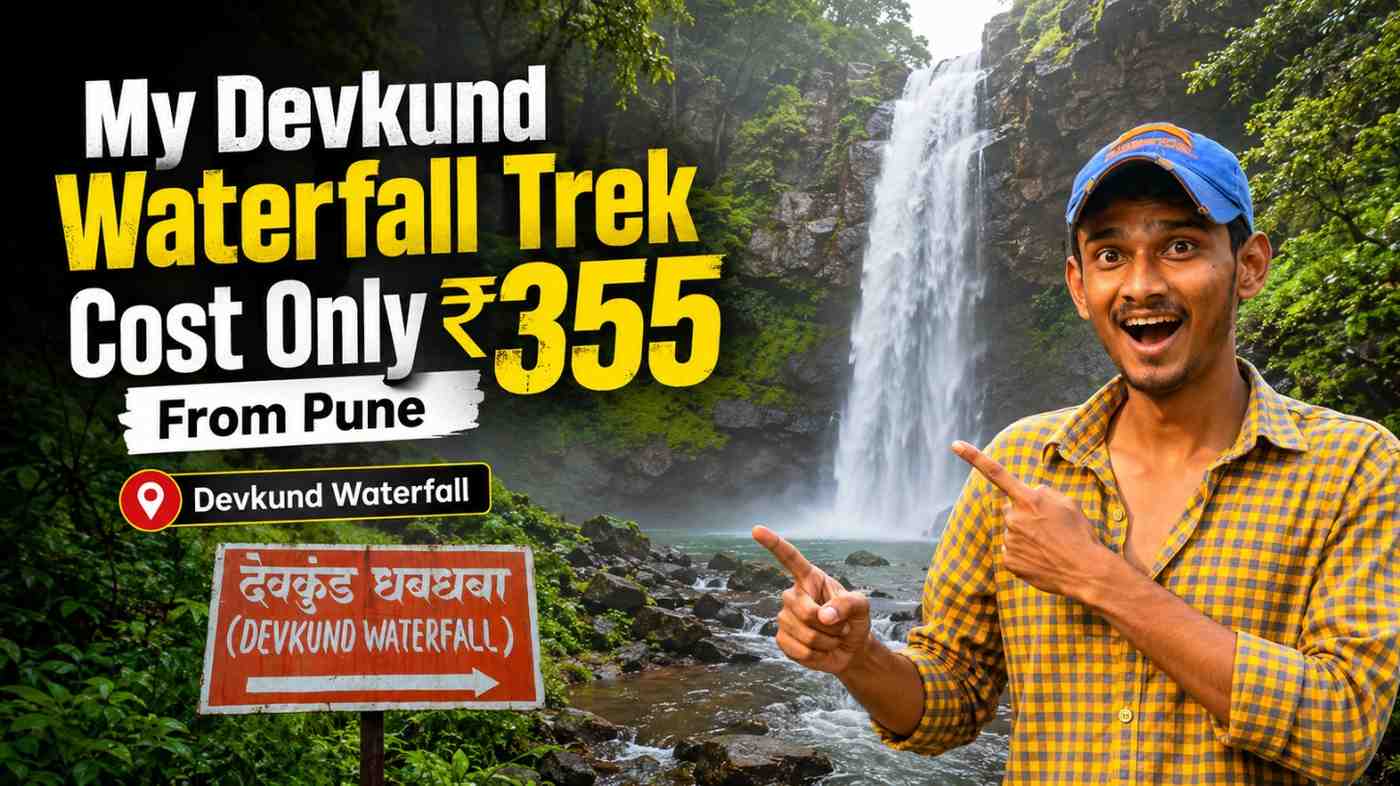
Devkund Waterfall: My First Solo Trek From Pune on a Tight Budget
Devkund Waterfall was the place where my solo-travel journey really started.
Today, when I look back at all the trips, bike rides and treks I have completed, this one feels different. I did not have a motorcycle, I did not have much money, none of my friends were coming with me, and I had absolutely no idea whether my public-transport plan would actually work.
Still, I went.
And things definitely did not go according to plan.
I reached the base village far later than expected, discovered that the waterfall was still around three hours away on foot, had to arrange an unexpected overnight stay, ran short of money, slept without dinner, and the next morning discovered another expense I had not planned for: a local guide.
But somehow, everything worked out.
Eventually, after hours of travelling and trekking through the forest, I stood in front of one of the most beautiful waterfalls.
So if you are searching for Devkund Waterfall from Pune, especially without your own vehicle, this guide is not just going to tell you where the waterfall is. I will show you exactly how I tried to reach it on a student budget, where my plan went wrong, and what I would do differently today.
Important: The fares, bus timings, road conditions and guide charges mentioned in my personal story are what I experienced during my trip. They can change significantly. Always confirm current transport timings, trekking access and local charges before travelling.
Devkund Waterfall Quick Information
| Information | Details |
| Place | Devkund Waterfall |
| State | Maharashtra |
| District | Raigad |
| Base Area | Bhira Goan–Patnus |
| Waterfall Type | Plunge waterfall |
| Trek Difficulty | Easy to moderate for regular trekkers |
| Trek Distance | Roughly 5–7 km one way depending on the trail/start point |
| Trek Time | Around 2–3 hours one way for many visitors |
| Best Overall Period | Post-monsoon months, particularly October–November |
| Famous For | Forest trek, natural pool, waterfall and Western Ghats scenery |
| Distance from Pune | Roughly 110–115 km by common road routes |
| Recommended Start | Early morning |
| Guide | Local guide requirements can apply, so confirm at Bhira before starting |
| Parking | Available around the base area, but charges and exact arrangements may change |
| Google Maps | Devkund Waterfall, Bhira, Raigad |
Where Is Devkund Waterfall Located?
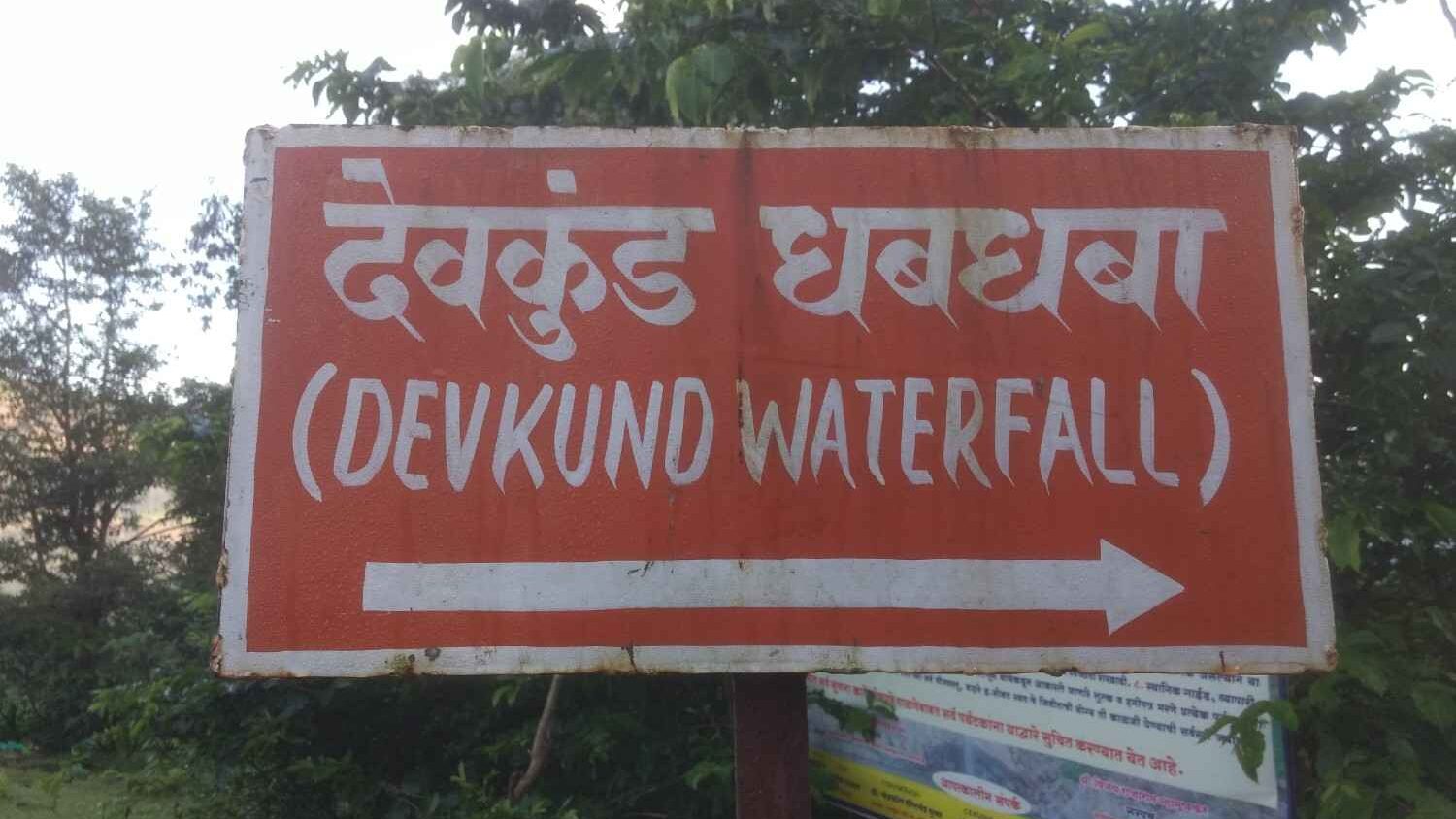
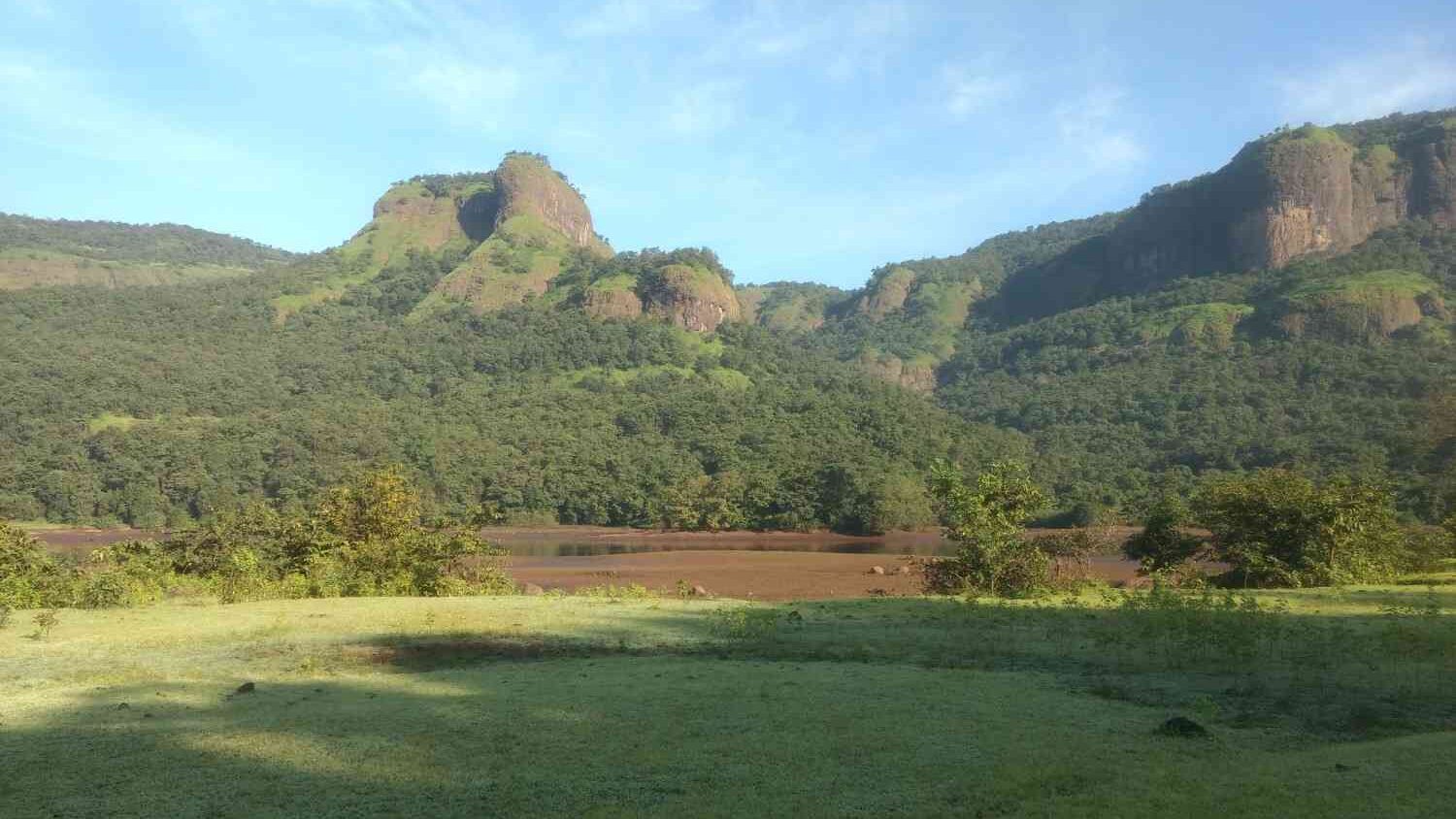
Devkund Waterfall is located near Bhira and Patnus in Raigad district, Maharashtra, in the Western Ghats region.
You cannot simply drive directly beside the waterfall.
The journey normally ends around the Bhira–Patnus base area, after which you have to trek through forest trails, open sections, rocky terrain and seasonal water crossings to reach Devkund.
That is something I did not fully understand when I planned my first visit.
Instagram reels made it look simple.
Reach the location.
Walk for some time.
See the waterfall.
Come back.
Reality gave me a very different itinerary.
Devkund Waterfall Location in Simple Terms
If you are coming from Pune, think of the journey like this:
Pune → Tamhini/Mulshi region → Bhira–Patnus → Trek → Devkund Waterfall
If you are dependent on public transport, however, reaching Bhira can be much more complicated.
My route became:
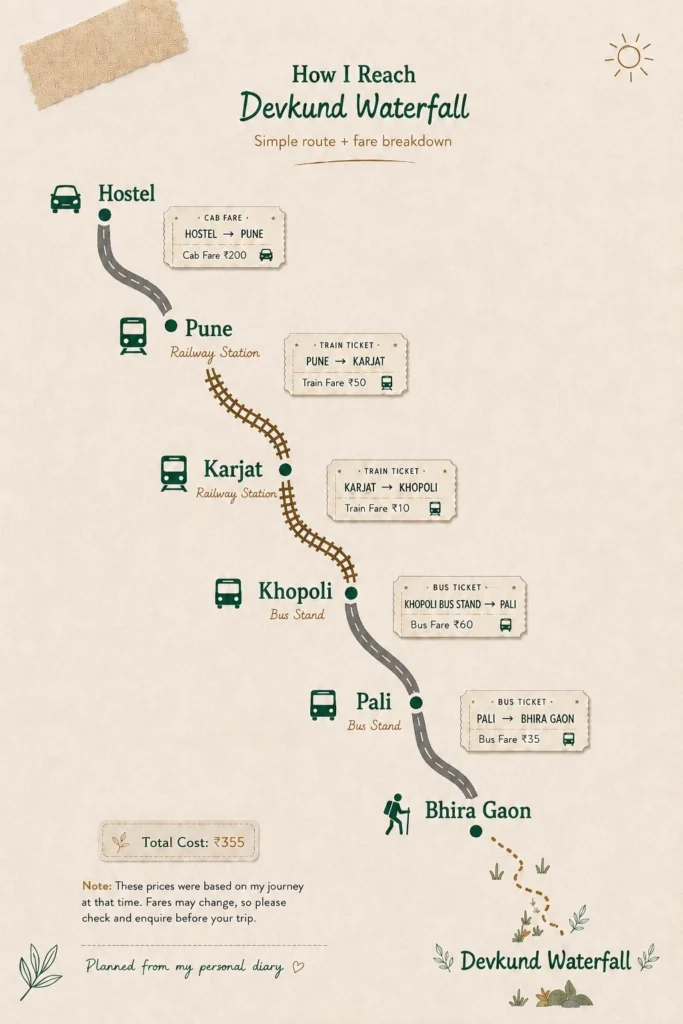
Wagholi → Pune Railway Station → Karjat → Khopoli → Pali → Bhira/Patnus → Devkund Trek
It was certainly not the fastest way to reach Devkund Waterfall from Pune.
But when you are travelling as a student without a bike or car, sometimes you work with whatever transport you can find.
What Is Special About Devkund Waterfall?
Devkund is classified as a plunge waterfall, meaning the falling water drops relatively freely from the cliff before reaching the pool below.
The most memorable part for me was the setting.
It doesn’t feel like a roadside waterfall where you park your vehicle, click five photos and leave.
You earn the view.
You first walk through the forest.
You cross different sections of terrain.
You keep hearing water around you.
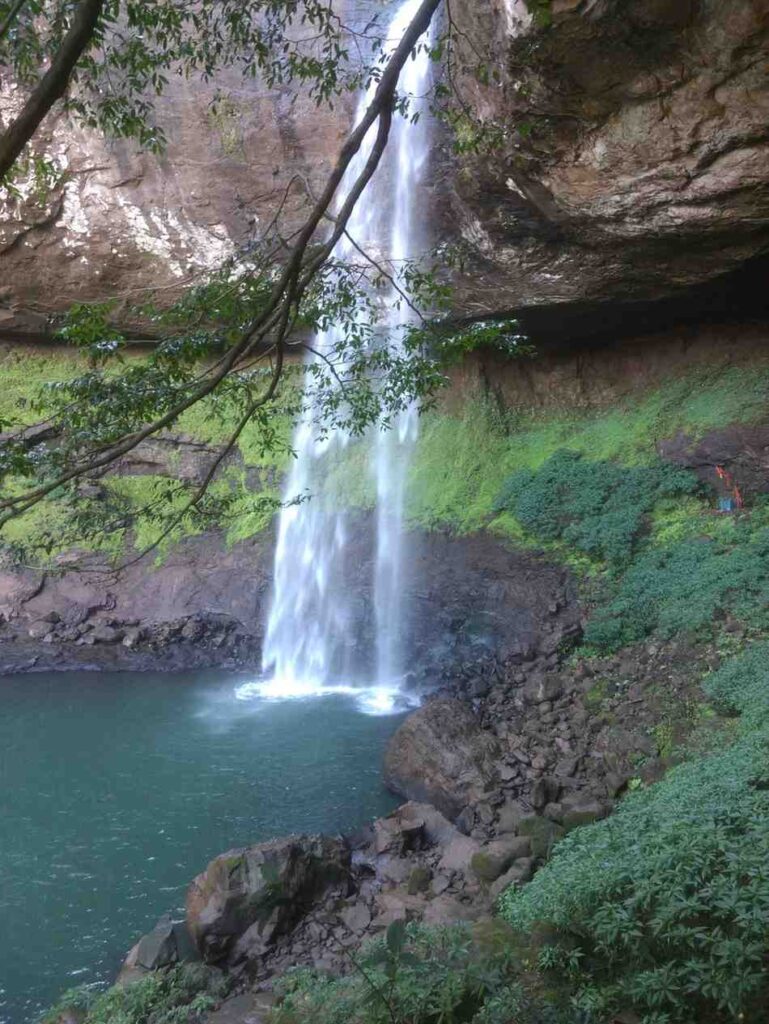
And after spending hours walking, the waterfall finally appears between massive dark rock walls with a pool below it.
That first view made the entire journey worth it for me.
Devkund is also widely associated with the upper Kundalika River system around Bhira. Sources commonly describe the waterfall as being connected with the origin of the Kundalika River, although some descriptions appropriately use the wording “believed to be” or “said to be” the river’s origin rather than presenting it as a precisely established hydrological source.
The Kundalika eventually flows through the Raigad region and is particularly famous around Kolad for white-water rafting. Maharashtra Tourism currently promotes Kolad as one of Maharashtra’s major rafting destinations.
How My First Solo Trip to Devkund Waterfall Started?
After completing my bachelor’s degree in Pune, many people around me started moving into the next phase of their lives.
Some friends returned to their hometowns.
Some started attending job interviews.
Others became busy planning what they wanted to do next.
I was still in Pune.
And instead of immediately going back home, one thought kept coming into my mind:
I have spent years studying here. Why should I leave Maharashtra without properly exploring it?
Especially during the monsoon.
If you have travelled around Maharashtra during the rainy season, you probably understand what I mean.
The Sahyadris turn completely green.
Clouds start floating between the hills.
Small streams suddenly appear beside roads.
Waterfalls become visible everywhere.
Even normal ghat roads start looking cinematic.
For me, Maharashtra during monsoon sometimes felt like a real-life La La Land.
If you have time to travel through this region during the rains, do it at least once. Just remember that monsoon trekking also comes with serious risks, including slippery trails, flash floods and temporary access restrictions.
Maharashtra Tourism itself recommends Devkund particularly in the post-monsoon October–November period and early monsoon, rather than treating peak heavy rain as automatically ideal trekking weather.
I Found Devkund Waterfall Through Instagram
Like many of my trips, this one started with random scrolling.
One day I was watching Instagram reels when a video of Devkund Waterfall appeared.
Tall cliffs.
Green surroundings.
A beautiful waterfall dropping into a natural pool.
I immediately searched the location.
Then I started watching more videos.
Then another.
And another.
Soon I had already decided:
I am going there on Sunday.
There was only one problem.
Actually, there were several.
I didn’t have a bike.
I didn’t have extra money to spend on private taxis.
I had never done this journey before.
And nobody was coming with me.
So my next question became:
How Can I Reach Devkund Waterfall From Pune Without a Bike?
I started searching online for buses, trains and different route combinations.
I checked information from multiple sources because there was no single straightforward public-transport option showing me:
“Take this bus from Pune and get down at Devkund.”
That would have been too easy.
Instead, I created my own route using a combination of trains, state transport buses and local travel.
At that point, I had no idea how important those transport connections and timings were going to become.
Devkund Waterfall From Pune: Road vs My Public Transport Route
Today, travellers with their own vehicle have a much easier option.
Current trek information generally puts the Devkund Waterfall from Pune road distance at roughly 110–115 km, with the popular driving approach running toward Bhira through the Mulshi/Tamhini side. Travel time varies considerably with rain, road conditions, traffic and the exact starting point in Pune.
Pune to Devkund by Own Vehicle
A commonly used approach is approximately:
Pune → Paud/Mulshi → Tamhini Ghat region → Bhira/Patnus → Devkund trek
For somebody with a motorcycle or car, this can potentially turn Devkund into a one-day outing if they leave very early.
I did not have that luxury.
My Budget Public Transport Route
My route was:
BJS Phata/Wagholi → Pune Railway Station → Karjat → Khopoli → Pali → Bhira Patnus
Looking at it now, I can immediately see why my journey consumed almost the entire day.
At that time, however, I was simply trying to reach Devkund with the limited money and information I had.
Asking Friends One Last Time
Before deciding to travel alone, I contacted a few friends.
“Are you coming?”
One had work.
Another had something else planned.
Someone else simply wasn’t interested.
Normally, that could have been enough for me to cancel.
And for a moment, I did start doubting myself.
Should I really travel alone?
What if I cannot find the bus?
What if I get stuck somewhere?
What if I cannot reach Devkund?
But I had already spent weeks thinking about this trip.
Eventually I told myself:
If somebody comes, good. If nobody comes, I am still going.
That small decision probably changed the way I travelled afterwards.
This became my first proper solo trek.
Saturday Night: Packing for My First Solo Trek
On Saturday, I kept the preparation simple.
I didn’t have professional trekking gear.
I packed some snacks so I could eat during the long journey and carried enough water to stay hydrated.
My biggest concern wasn’t even the trek.
It was transportation.
I knew I would have to change multiple vehicles, and missing one connection could completely disturb my schedule.
That is exactly what eventually happened.
I slept with a mixture of excitement and doubt.
The next morning, I woke up early and started from my hostel near BJS Phata, Wagholi.
There was no turning back now.
Wagholi to Pune Railway Station
The first section was straightforward.
From my hostel near BJS Phata, I booked a cab to Pune Railway Station.
The distance was around 18 km from my location, and the cab cost me approximately ₹200 during that trip.
For a student trying to complete Devkund on a tight budget, ₹200 already felt expensive.
But I needed to reach the railway station early enough to continue toward Karjat.
Soon I reached Pune Railway Station, bought my ticket and started the next part of the journey.
Pune Railway Station to Karjat
I purchased a train ticket from Pune to Karjat for around ₹50 during my trip.
Eventually, I reached Karjat at around 8:30 AM.
At this point, everything still felt under control.
Morning.
Plenty of daylight remaining.
And in my mind, Devkund didn’t feel very far away.
I was wrong.
Karjat to Khopoli by Train
From Karjat, I bought another railway ticket to Khopoli.
My fare at that time was around ₹10.
The Karjat–Khopoli section is connected through the suburban railway network, which made this part relatively easy compared with what was coming next.
I reached Khopoli at roughly 9:30 AM.
Then I made my way toward Khopoli Bus Stand.
This was where my journey started becoming much slower.
Khopoli to Pali by Bus
At Khopoli Bus Stand, I asked about a bus towards Pali village.
The enquiry staff told me I would have to wait approximately 30 minutes.
No problem.
I had expected some waiting time.
I sat at the bus stand, opened the snacks I had brought from Pune and ate while waiting.
Around half an hour later, the bus arrived at the platform.
I immediately boarded it.
I deliberately selected a front seat because I wanted to record parts of the journey.
My ticket from Khopoli to Pali cost around ₹60 during my trip.
The bigger issue on this route wasn’t money.
It was frequency.
Public buses towards smaller villages were far less frequent than the trains I had used earlier.
That meant every missed connection could add another hour or two.
And I was slowly losing daylight.
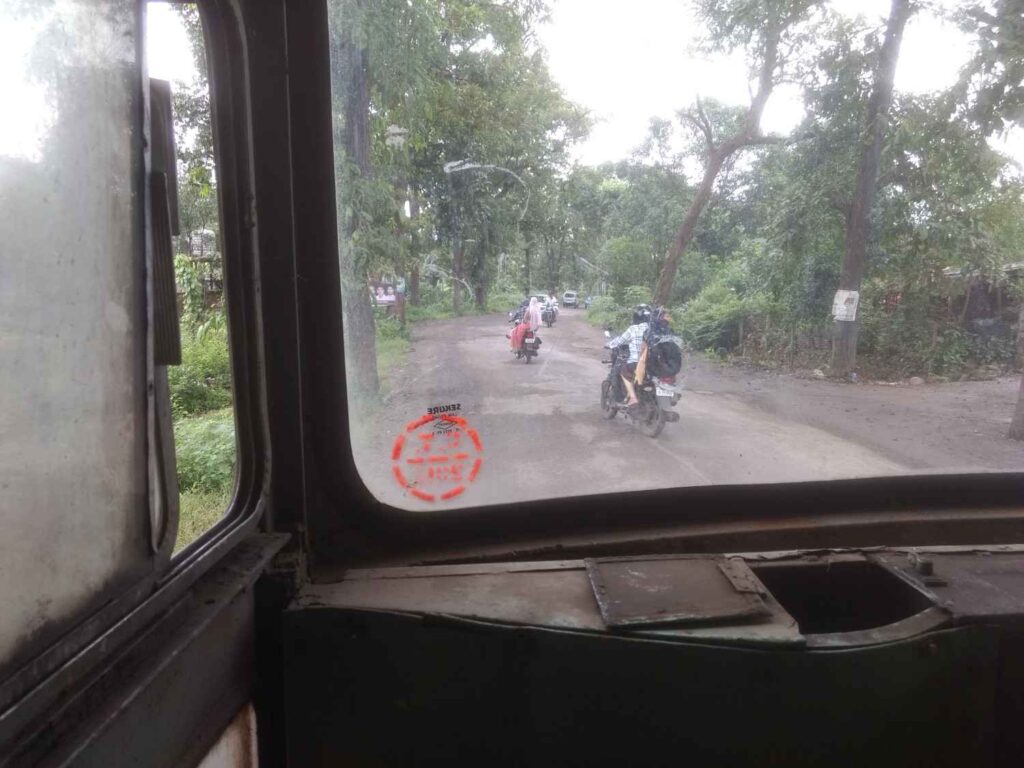
Khopoli to Pali: Around 40 KM That Felt Much Longer
The Khopoli to Pali journey was around 40 km in my route, but the bus took close to two hours because of the local route and stops.
I didn’t mind too much.
This was my first solo journey through this part of Maharashtra, so I kept watching the changing landscape outside.
Eventually, at approximately 12:30 PM, I reached Pali village.
By then, I had already been travelling for hours.
But I still wasn’t at Devkund.
Bhira remained ahead.
Pali to Bhira: The Bus I Had Already Missed
After reaching Pali Bus Stand, I immediately enquired about transportation towards Bhira village, the base area for the Devkund trek.
The person at the enquiry counter gave me the news I did not want to hear.
I had missed the bus.
“Next bus?”
Around 1:30 PM, I was told.
That meant another hour of waiting.
I sat calmly at the bus stand.
There was nothing else I could do.
I listened to music.
Walked around for a little while.
And since I had time, I decided to eat something proper.
I found khichdi for around ₹50.
Maybe I was hungry after travelling since morning, but it tasted seriously good.
At least one thing was going according to plan.
Then the 1:30 PM Bus Didn’t Arrive
After waiting for approximately an hour, I asked again.
“Bus kab aayegi?”
The bus was delayed because of some issue.
I waited.
And waited.
Eventually, it finally reached the platform at around 2:30 PM.
At that stage, I should probably have realised that completing a three-hour trek on the same day was becoming impossible.
But I still didn’t know exactly how long the trek would take.
I boarded the bus anyway.
The ticket from Pali to Bhira/Patnus cost me approximately ₹35 during my journey.
The road distance was only around 27 km in my route.
But again, public transport had its own pace.
Road From Pali to Bhira
Pali–Bhira section took me roughly another hour.
During my visit, parts of the road were narrow, broken and full of potholes.
It was basically a single-lane rural road in several sections, which slowed the bus further.
Roads can improve, deteriorate or be repaired between seasons, so I don’t want someone reading this years later to assume the exact same conditions still exist.
But during my journey, that road added one more challenge to an already long travel day.
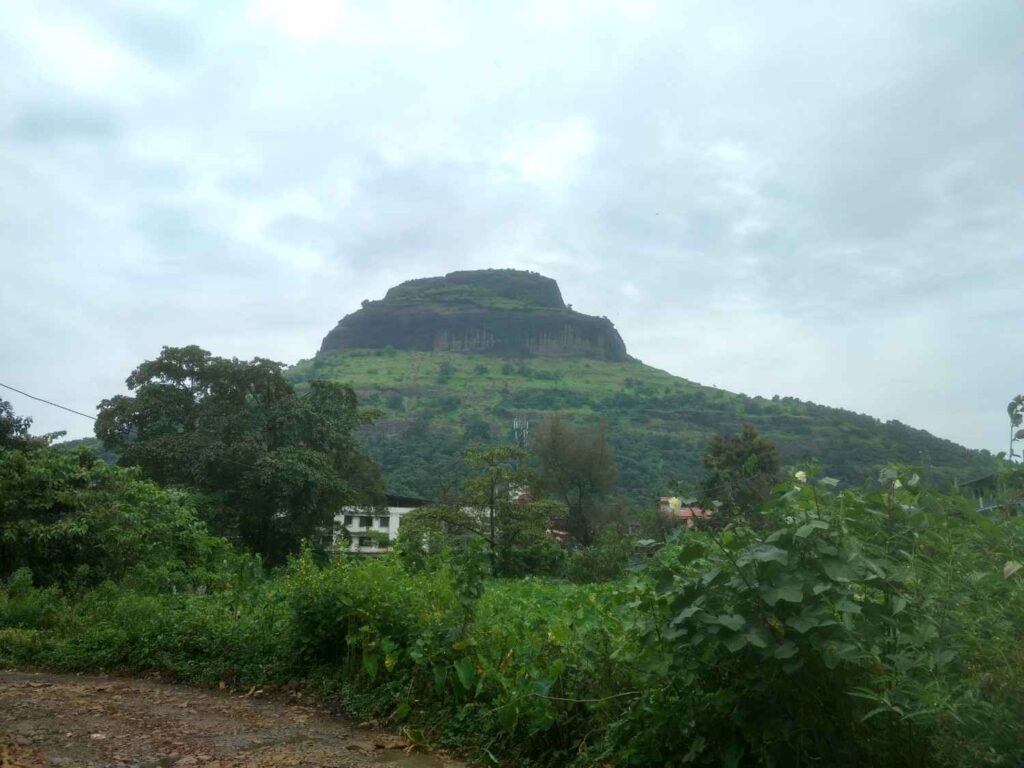
Finally, sometime around 3:00–3:30 PM, I reached the Devkund base area near Bhira.
I was exhausted.
But also extremely excited.
After changing a cab, trains and multiple buses since early morning, I had finally reached the place I had been trying to reach all day.
I thought the difficult part was finished.
Then I asked a local person:
“Devkund Waterfall kidhar hai?”
He explained the route.
Then came the sentence that completely destroyed my plan.
The waterfall was still roughly three hours of trekking away.
And starting that late was not advisable because it would become dark before I could safely return.
I just stood there thinking:
Now what?
I had travelled all the way from Pune.
I couldn’t simply turn around without seeing Devkund.
But I also couldn’t enter an unfamiliar forest in the evening and return after dark.
That was when my simple one-day budget trip suddenly became an overnight solo adventure.
And I had no hotel booking, very little money left, and another surprise waiting for me the following morning.
My Unexpected Night at Bhira and Finally Reaching Devkund Waterfall
Standing at the Devkund Waterfall base village around 3 PM, I had only one thing on my mind.
I had travelled this far.
There was no way I wanted to return to Pune without seeing the waterfall.
But the local person was clear.
The trek would take around three hours one way, daylight was already running out, and starting at that time was not safe.
That meant my original plan had failed.
I had planned this as a one-day trip.
Now I needed to stay overnight in a village where I had never been before.
I hadn’t booked any accommodation.
My budget was already getting tight.
And I was travelling completely alone.
This was the moment when my first solo trip became much more real than I had expected.
Searching for a Room Near Devkund Waterfall
After thinking for a few minutes, I decided there was only one practical option.
Stay near Bhira for the night.
Wake up early.
Start the trek in the morning.
So I went to a local shop and asked:
“Is there any room available for one night?”
The shop owner said yes.
Then he told me the price.
₹1,000.
For somebody travelling on a student budget, that number immediately hurt.
I had been carefully using trains and buses just to save money, and now one night of accommodation was going to cost more than several parts of my entire journey combined.
So I tried bargaining.
I explained that I had travelled from far away, I was alone, and ₹1,000 was outside my budget.
I asked:
“Uncle, ₹500 mein ho sakta hai kya?”
He thought about it for some time.
Then he agreed.
I was so relieved.
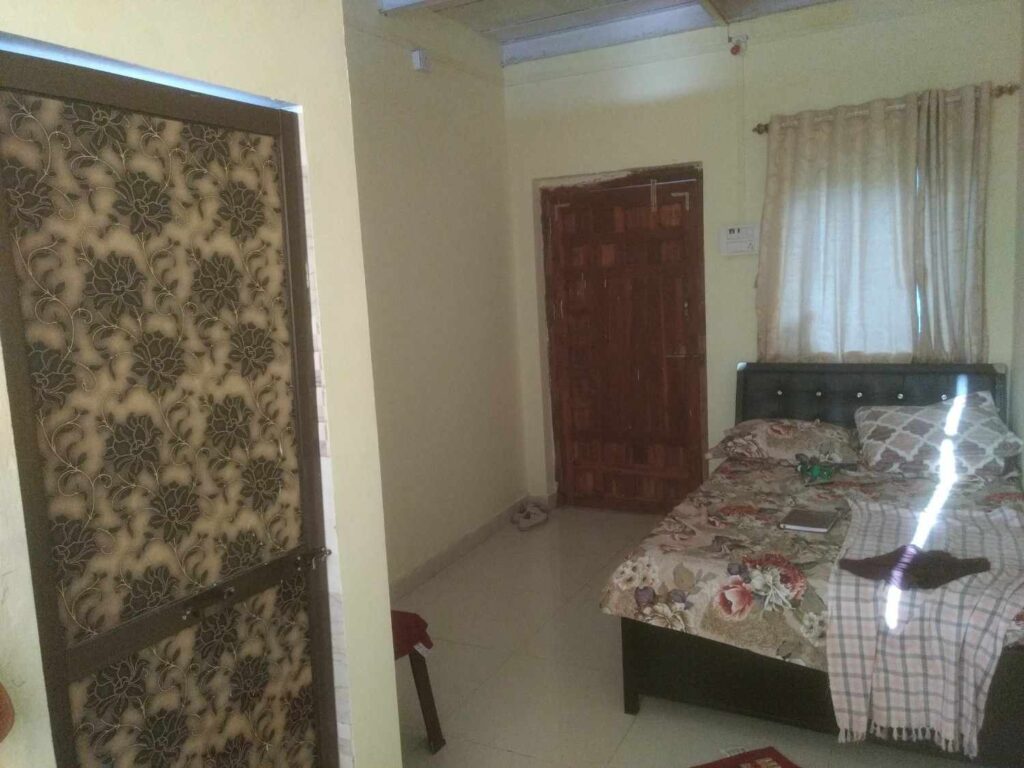
For around ₹500, I finally had somewhere to sleep.
This was an informal local stay during my trip. Accommodation options and prices around Bhira can change, especially during weekends and peak trekking season, so it is better to check current options before travelling.
The Moment I Realised How Useful a Bike Would Have Been
I entered the room, freshened up and simply lay down on the bed.
After travelling since early morning, my body was tired.
But my mind was still active.
I started replaying the entire day.
Cab.
Train.
Another train.
Bus.
Another bus.
Hours of waiting.
Missed connections.
And finally an unexpected overnight stay.
That was when one thought came strongly into my mind:
A bike makes travel so much easier.
If I had my own motorcycle, I could have started from Pune much earlier, reached Bhira directly, parked near the base village and probably saved several hours of changing public transport.
At that stage of my life, however, I didn’t have that option.
So I told myself one of those lines that somehow helps when plans go completely wrong:
“Jo bhi hota hai, achhe ke liye hota hai.”
Whatever happens, happens for a reason.
Maybe this wasn’t how I had planned the trip.
But it was already giving me an experience I would remember for years.
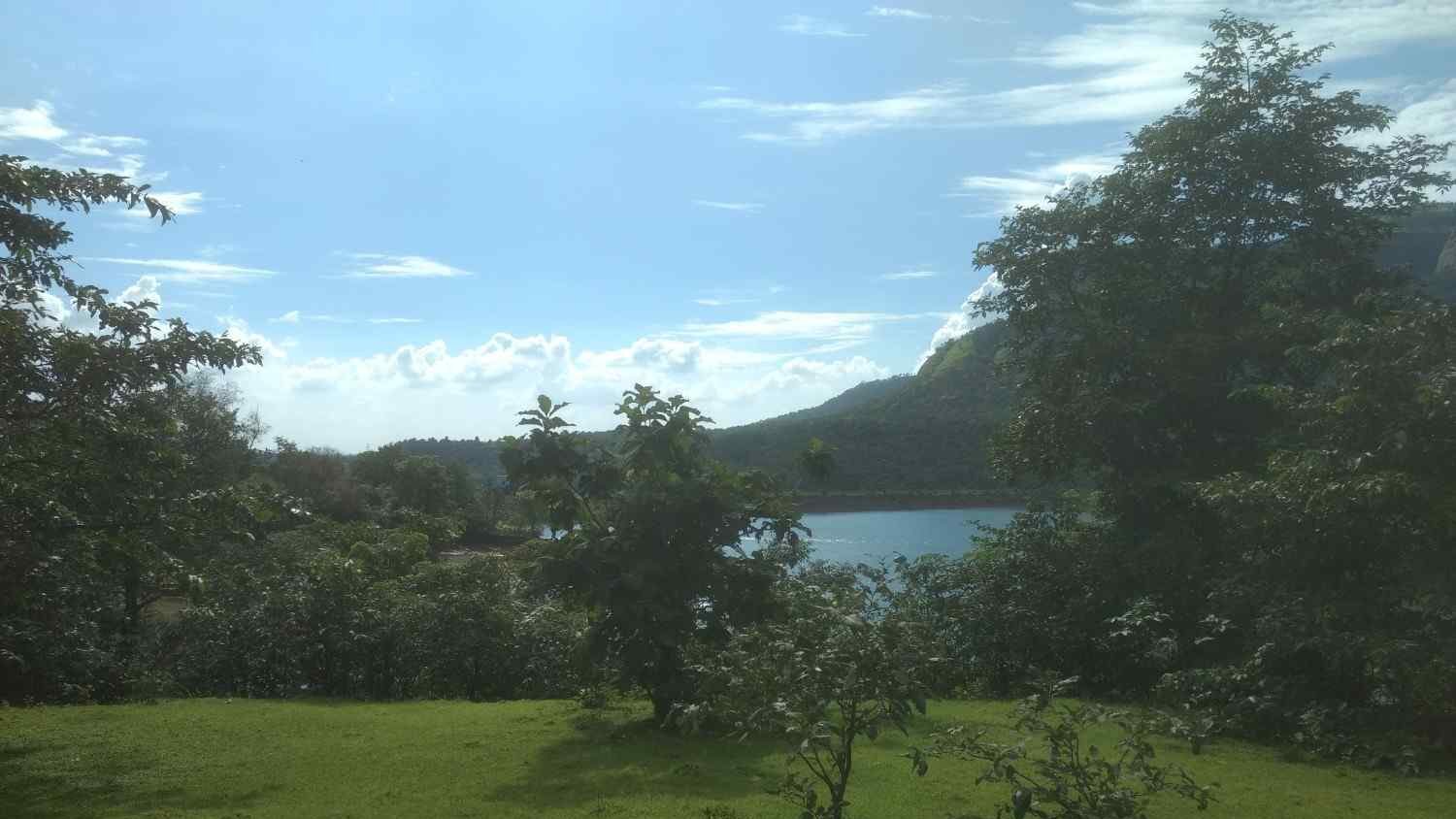
My Budget Was Almost Finished
After resting for a while, I started calculating my expenses.
That was another mistake.
Cab from Wagholi to Pune Railway Station.
Train tickets.
Bus tickets.
Food.
Room rent.
And I still had the trek remaining.
When I added everything together, I realised I had crossed the budget I had originally planned.
I didn’t have much cash remaining for the next day.
So I called one of my friends.
I explained the situation and asked if he could lend me around ₹1,000.
A few minutes later, he sent the money.
Problem solved.
Or at least I thought so.
The next morning I would discover another expense that I had completely forgotten to research.
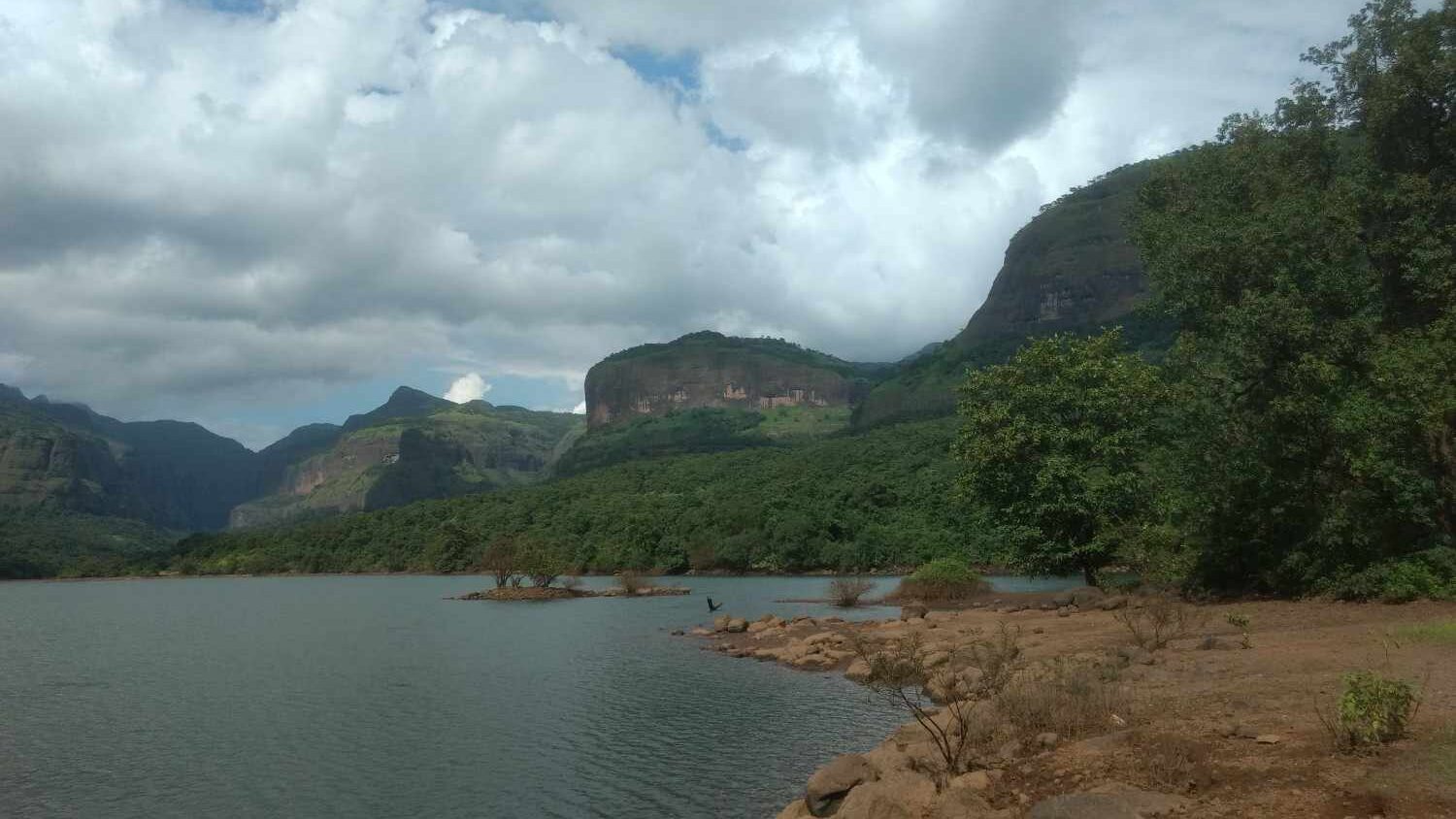
I Forgot About Dinner
After sorting out the money problem, I relaxed again.
I was tired.
Excited.
Still thinking about finally seeing Devkund the next morning.
And somehow, in all that excitement, I forgot to think about dinner.
By the time I stepped outside the room, it was around 9 PM.
The village had already become quiet.
Very quiet.
There were no busy restaurants like Pune.
No late-night food shops.
No delivery app coming to rescue me.
Most people had already closed their shops and gone home.
I checked my bag.
The snacks I had carried from Pune were also finished.
That was it.
No dinner.
I went back to the room and slept with an empty stomach.
Not exactly the luxurious solo-travel experience Instagram reels show you.
But this is also what travel looks like sometimes.
Bad planning teaches faster than any travel guide.
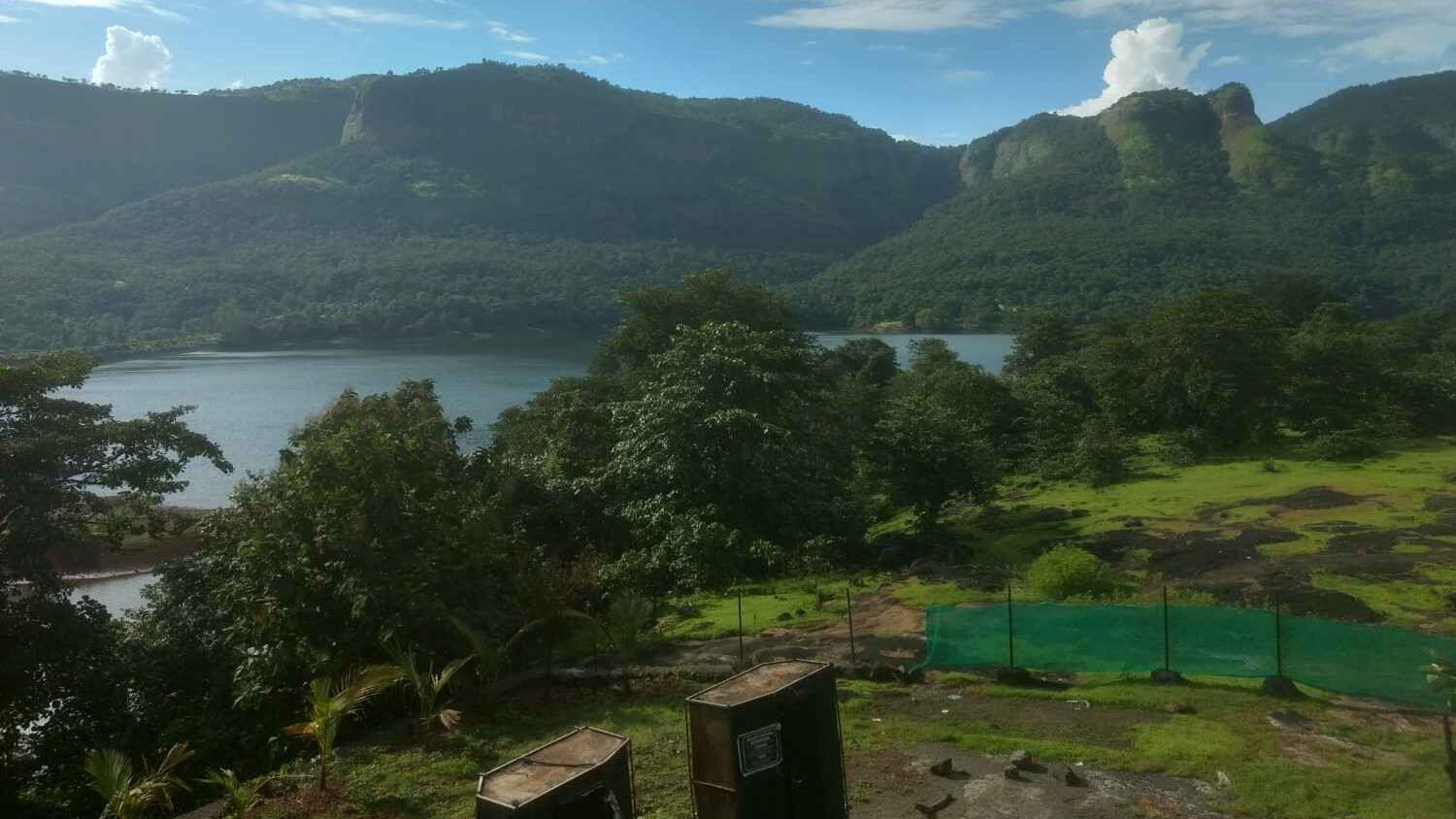
Morning at the Devkund Base Village
The next morning, I woke up early.
There was only one target now:
Devkund Waterfall.
I came outside, got ready for the trek and started asking local people about the trail.
That was when I learned about another requirement.
I was told I needed to take a local guide.
And the quoted guide charge was approximately:
₹1,000.
My reaction was simple.
Again?
Yesterday I had struggled to arrange the room.
Now another ₹1,000?
For a solo traveller, the cost felt heavy.
If four or five people travelled together, dividing the guide fee wouldn’t hurt much.
But I was alone.
One local person understood my situation and suggested something useful.
He told me to wait for some time.
If another traveller arrived, I might be able to join them and divide the guide cost.
That sounded like my only good option.
So I waited.
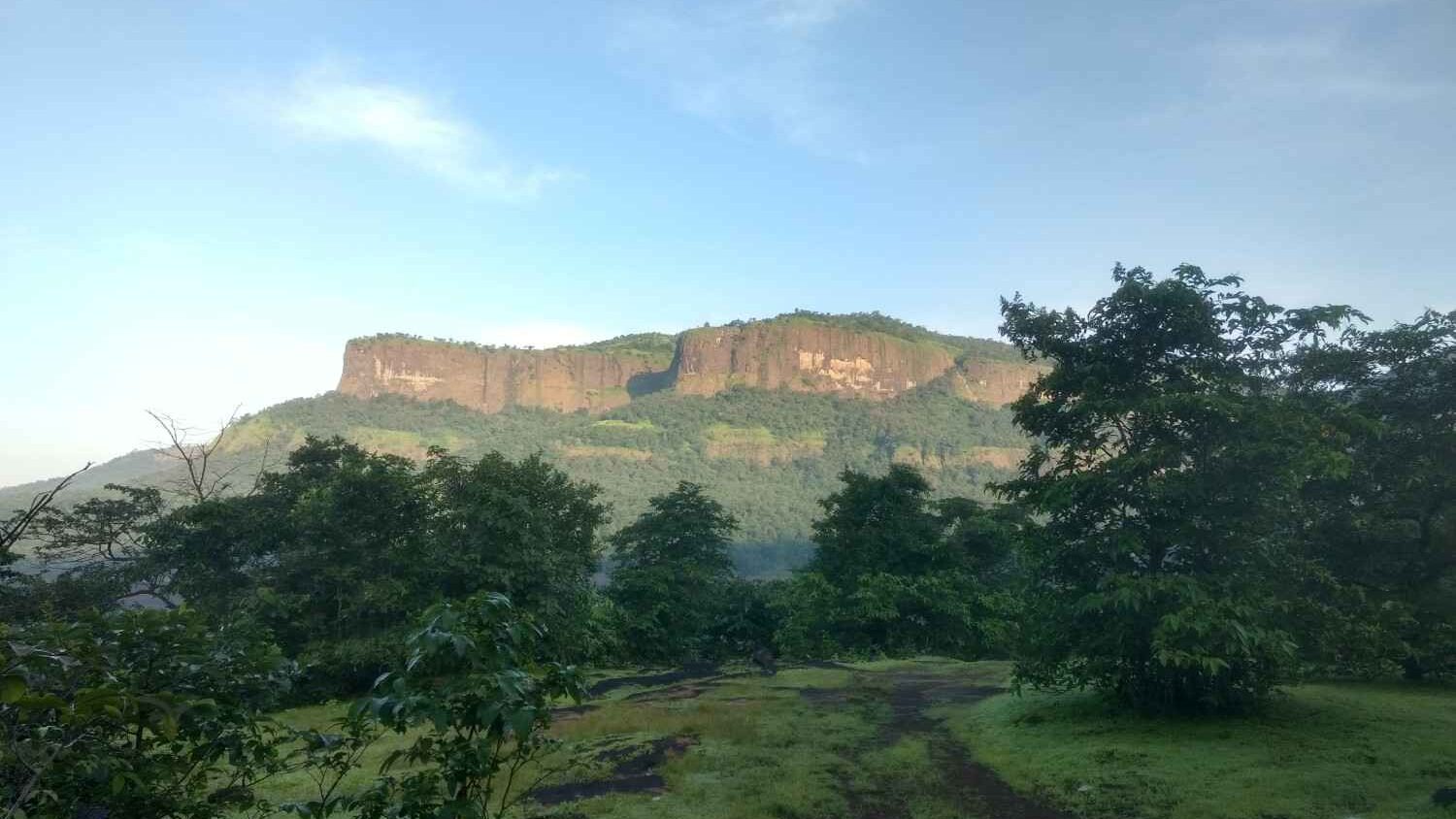
Breakfast and Another 30-Minute Wait
While waiting near the base village, I had breakfast.
After sleeping without dinner, even simple tiffin tasted amazing.
Then I sat there for around 30 minutes.
No group.
No trekker.
I started wondering whether waiting would actually help.
This was a weekday, so the area was much quieter compared with weekends.
That was good for seeing Devkund without a huge crowd.
But bad when you were trying to find somebody to share a guide.
And then a car arrived.
Meeting the Photographer Who Changed My Trip
Only one person got out of the car.
He wasn’t carrying a normal small backpack.
He had proper camera equipment.
Photography accessories.
A full setup.
It immediately looked like he had come specifically to shoot Devkund.
I learned that he had already visited the waterfall earlier.
His previous trip had been during a weekend, when there were many visitors around the waterfall.
Because of the crowd, he couldn’t capture the kind of clean photograph or video he wanted.
So he had decided to return on a weekday.
This time, he wanted the waterfall with fewer people around.
He had already contacted a guide before arriving.
Perfect.
I approached him and explained my situation.
I asked whether I could join him for the trek and divide the guide charge.
He agreed.
That one “yes” saved my budget.
Instead of paying ₹1,000 alone, we could split the cost.
My share would be approximately ₹500.
After everything that had gone wrong the previous day, finally something had worked in my favour.
Starting My First Solo Trek to Devkund Waterfall
Technically, I was no longer completely alone on the trail.
There was the photographer and our guide.
But this was still the first trip I had planned, started and managed entirely on my own.
That feeling was different.
No friend had arranged the transport.
Nobody had booked accommodation for me.
Nobody was responsible for getting me back home.
Every decision was mine.
We started trekking toward Devkund Waterfall.
The photographer began arranging his gear while walking, and naturally we started talking.
I told him the entire story of my previous day.
How I left Wagholi early.
How I travelled through Pune, Karjat, Khopoli and Pali.
How the bus was delayed.
How I reached Bhira around 3 PM.
How I had to unexpectedly stay overnight.
He listened and laughed at some parts.
Once we started chatting, the trek felt easier.
What Is the Devkund Waterfall Trek Like?
From my experience, the Devkund Waterfall trek felt moderate rather than extremely difficult.
It wasn’t a technical climb like some Sahyadri forts.
But that doesn’t mean you should underestimate it.
You still have to walk for several hours.
The trail passes through forested areas and uneven ground.
During and after rain, rocks and soil can become slippery.
Water crossings can also change depending on rainfall.
For somebody who doesn’t regularly walk or trek, the distance itself can become tiring.
During my trip, it took us close to three hours to reach Devkund Waterfall.
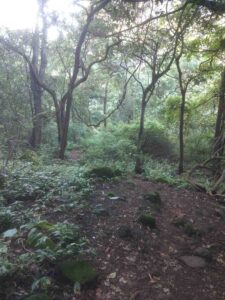
Walking Through the Forest
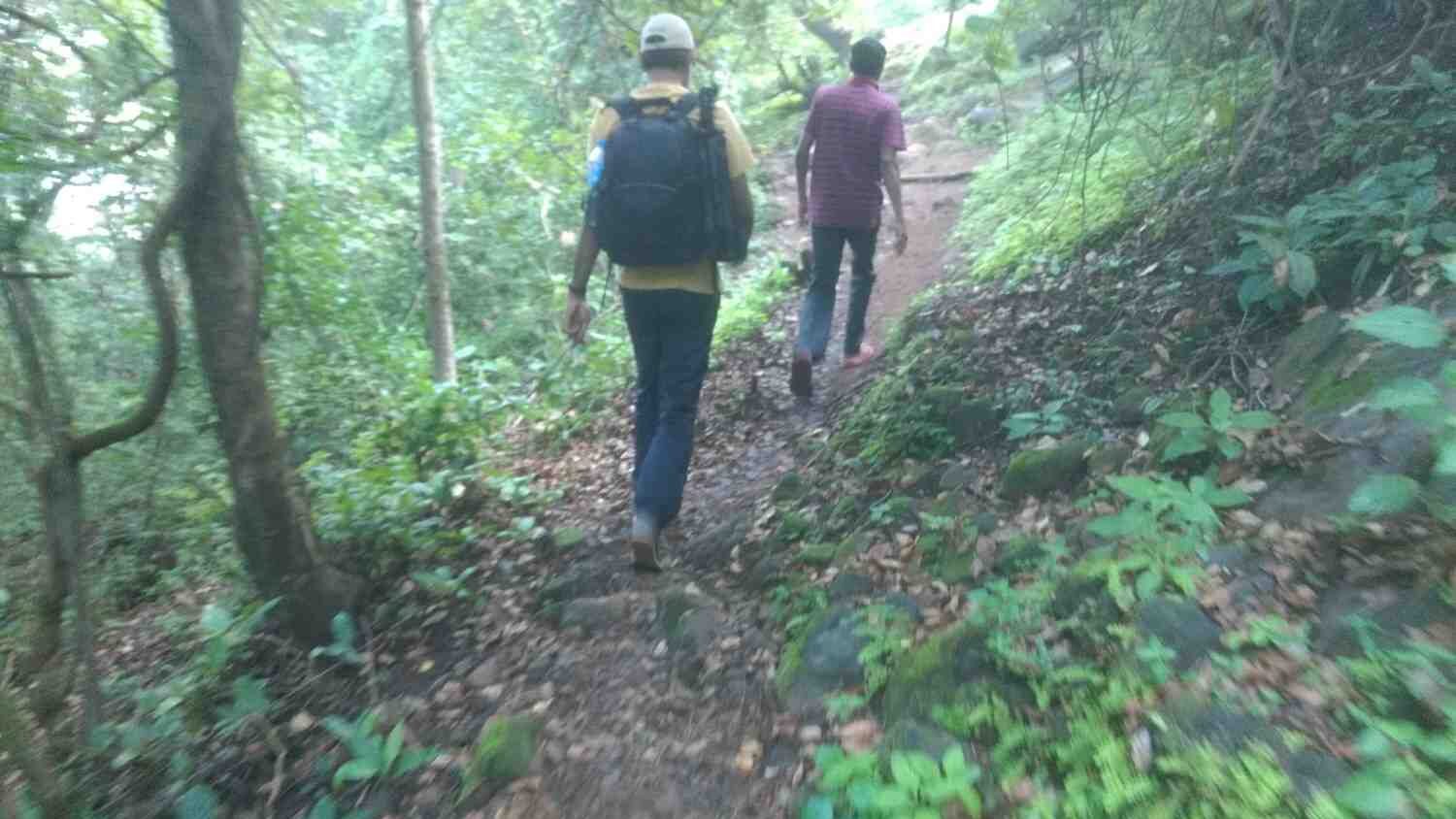
One thing I loved about the Devkund trek was that reaching the destination was only part of the experience.
The trail itself was beautiful.
We walked through green forest sections with the sounds of nature around us.
After coming from busy Pune, the difference felt huge.
There were no traffic horns.
No city crowd.
No constant buildings.
Just forest, hills, water and the trail.
Every few minutes I would look around and think:
This is exactly why I stayed in Pune instead of immediately going home after college.
There was so much of Maharashtra I had still not seen.
Wooden Bridge on the Devkund Trek
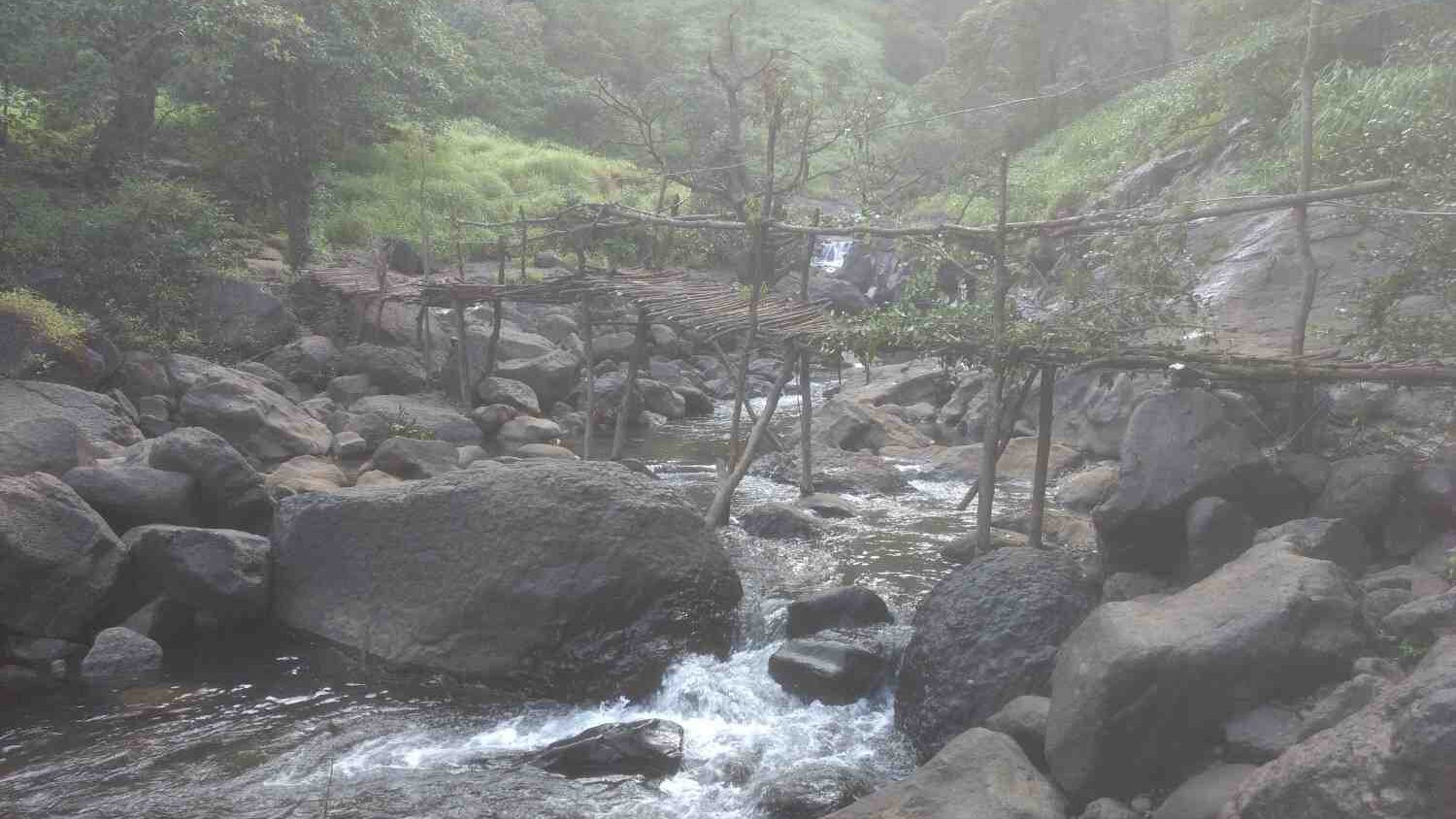
One section that stayed in my memory was a small wooden bridge connecting one part of the trail.
During weekends, I was told that locals sometimes collected around ₹10 per person to use that crossing.
Because I visited on a weekday, nobody was there collecting money during my trek.
Again, that was specifically what I experienced at that time.
Trail infrastructure and local arrangements can change, especially after heavy monsoon rains.
If you are visiting now, follow the current route shown by local authorities or guides rather than looking for an old bridge based only on photos or older blogs.
Monsoon trails can change surprisingly quickly.
Why You Should Not Start Devkund Trek Late?
After walking the route myself, I finally understood why the local person had stopped me from starting at 3 PM the previous day.
The issue wasn’t simply reaching the waterfall.
You also had to return.
If I had started around 3 PM and taken approximately three hours, I might have reached the waterfall close to sunset.
Then I would still have had another long forest trek back.
Doing that on my first visit, alone, in darkness would have been a terrible idea.
So although I was frustrated when the local person told me to stay overnight, he gave me the correct advice.
If you reach Bhira late in the afternoon, don’t force the trek just because you have travelled a long distance.
The waterfall will still be there the next morning.
Finally, I Heard the Waterfall
After trekking for hours, the surroundings slowly started changing.
The sound of flowing water became stronger.
That sound gives you new energy when you are tired.
You know the destination is close.
We continued walking.
Then finally, after nearly three hours of trekking, I saw it.
Devkund Waterfall.
For a few seconds, I simply stood there.
Everything from the previous day suddenly felt worth it.
The missed bus.
The long waiting time.
The bad road.
The unexpected room.
Borrowing money.
Sleeping hungry.
The guide problem.
All of it disappeared from my mind.
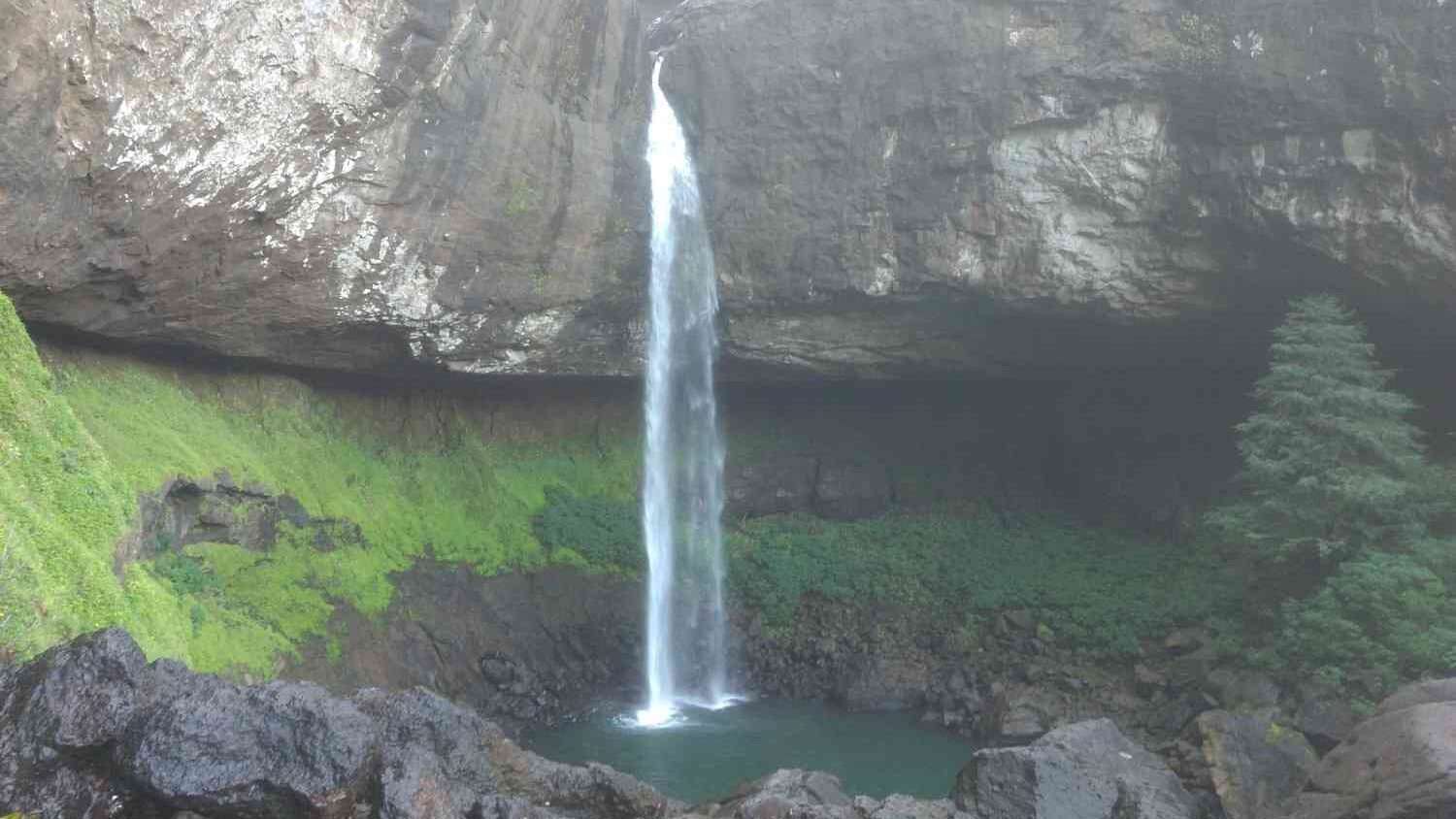
My First View of Devkund Waterfall
I had seen the waterfall countless times on Instagram before travelling.
But standing there was completely different.
A tall stream of water dropped between massive rock walls into the pool below.
Green vegetation covered the surrounding landscape.
The cliff made the waterfall look almost enclosed inside its own natural amphitheatre.
And because we were there on a weekday, it was much quieter than what I had seen in weekend videos.
I genuinely hadn’t seen a location like that before.
At that point in my travelling life, it was easily one of the most beautiful places I had visited.
Three hours of trekking suddenly felt like nothing.
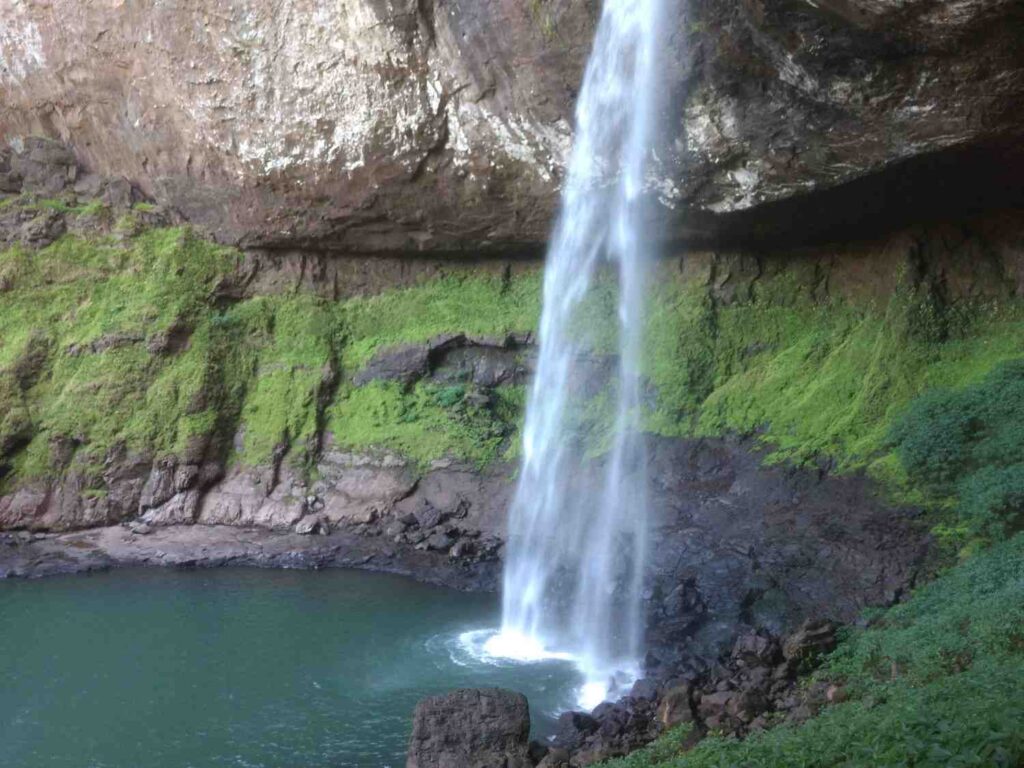
Spending Around Two Hours at Devkund Waterfall
We didn’t rush back immediately.
The photographer had specifically travelled there to get his perfect shot.
So he started setting up his equipment.
Camera.
Tripod.
Accessories.
He wanted to capture a clean timelapse of Devkund Waterfall without the weekend crowd interfering with his frame.
While he worked, I had plenty of time to enjoy the place.
I walked around the safe accessible area.
Took selfies.
Clicked photos.
Sat quietly for some time.
Looked at the waterfall from different angles.
After such a complicated journey, I didn’t want to immediately turn around and leave.
We spent roughly two hours around the waterfall.
And because there were fewer visitors that day, the place felt incredibly peaceful.
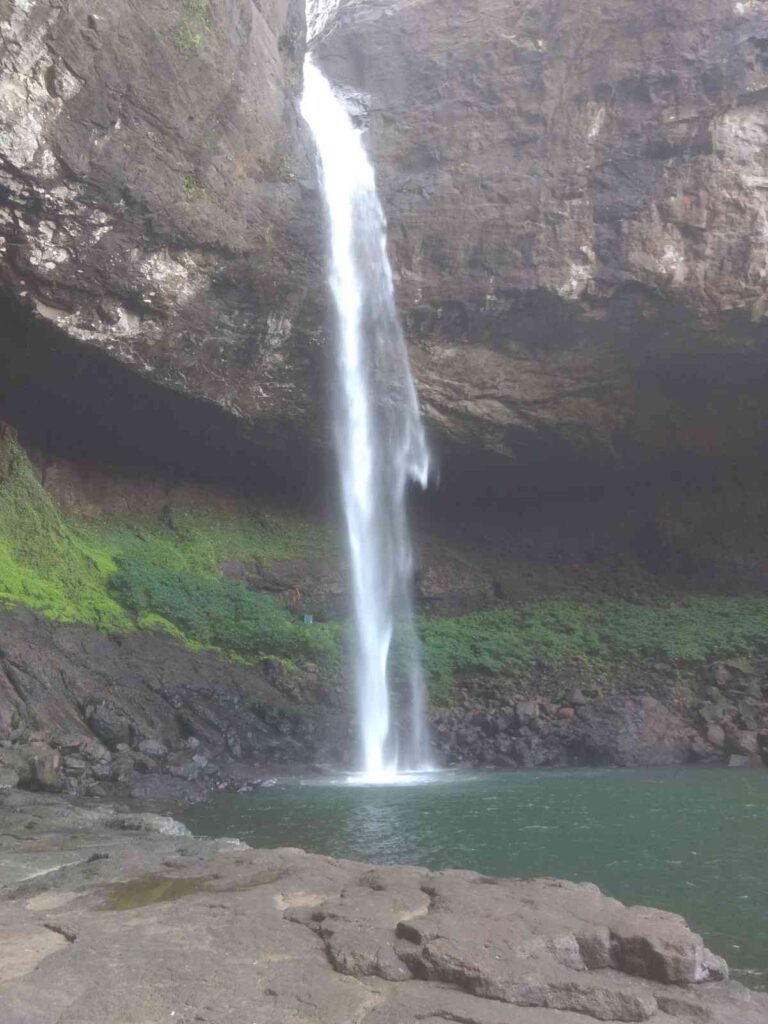
Starting the Return Trek
Once the photographer finished the shots he wanted, we packed up.
Now came the part that travellers sometimes forget while watching waterfall videos.
You have to walk all the way back.
There is no shortcut.
No cable car.
No vehicle waiting beside the waterfall.
So after already trekking around three hours to reach Devkund and spending almost two hours there, we started another long walk toward Bhira.
My legs were definitely more tired during the return journey.
But mentally I felt lighter.
Mission accomplished.
I had actually reached Devkund.
Another Three Hours Back to the Base Village
The return journey again took us close to three hours.
By then, we had already spent a large part of the day walking.
This is why I recommend carrying enough water and some quick snacks.
You may be on the trail for many hours when you combine:
Trek to Devkund + time at waterfall + return trek.
Don’t assume you are going for a short one-hour walk.
Wear footwear with good grip.
Carry water.
Travel light.
And keep some energy for the return.
Reaching the waterfall is only half the trek.
Paying the Guide
Once we reached the base village, we settled the guide charges.
The total amount quoted during my trip was around ₹1,000.
Because I had joined the photographer, we divided it between us.
I paid approximately:
₹500.
That felt much better than spending the entire ₹1,000 alone.
This is one reason travelling with a small group can reduce the per-person cost of trips like Devkund.
But please don’t use my old guide fee as a guaranteed current price.
Guide systems, entry arrangements and trekking regulations can change.
Ask locally for the current official or accepted charges before starting.
Then the Photographer Asked Me One Question
After completing the trek, the photographer asked:
“Ab Pune kaise jaoge?”
I said I would go back the same way.
Bus.
Then another bus.
Then train.
Basically reverse the entire complicated route I had used to reach Bhira.
Then he asked:
“Pune mein kaha rehte ho?”
I told him:
“Wagholi.”
He replied that he was also travelling back toward Pune.
And then he said something that immediately made my return journey ten times easier:
“Mein Viman Nagar tak drop kar deta hoon.”
I didn’t need to think twice.
“Okay!”
After all the bus waiting from the previous day, getting a direct ride toward Pune felt like winning a lottery.
Bhira to Pune by Car
We packed everything into the car and started driving toward Pune.
For the first time during this trip, I could simply sit comfortably and watch the road.
No timetable.
No bus enquiry.
No waiting at a platform wondering whether the bus would come.
Just drive.
Somewhere during the journey, we stopped at a restaurant for lunch.
I don’t remember the exact location anymore.
But because he was giving me a lift all the way toward Pune, I decided to pay for lunch.
It felt like the least I could do.
Then we continued.
Reaching Viman Nagar
After several hours on the road, we finally reached Viman Nagar, Pune.
I thanked him properly.
Without his help, my return journey would probably have involved several more hours of buses and trains.
He continued on his way.
And I still had one small journey remaining.
From Viman Nagar, I took public transport toward Wagholi.
From Wagholi, I took an auto toward BJS Phata.
Eventually, I reached my hostel.
Tired.
Probably smelling like someone who had spent an entire day trekking.
But extremely happy.
My First Solo Trek Was Complete
I had finally done it.
My first solo trip had not gone even remotely according to plan.
I wanted a cheap one-day trip.
Instead, I got:
- Multiple trains
- Multiple buses
- Long waiting periods
- An unexpected overnight stay
- A budget problem
- No dinner
- A surprise guide expense
- A new trekking partner
- A six-hour round-trip trek
- A free ride back toward Pune
- And one unforgettable waterfall
Looking back, I wouldn’t change much.
Because this journey taught me something important very early in my travelling life.
You can research everything.
You can make the perfect timetable.
You can calculate every rupee.
And travel can still completely destroy your plan.
You have to adapt.
Trip That Gave Me Confidence to Travel More
Before Devkund, travelling alone still felt uncertain.
After Devkund, something changed.
I had proven to myself that even when things went wrong, I could find another option.
Missed the bus?
Wait for the next one.
Reached too late?
Find a room.
Guide too expensive?
Find someone to share it with.
No return transport?
Sometimes help appears from a person you met only hours earlier.
That doesn’t mean you should travel without planning.
Good planning matters.
But you also shouldn’t cancel every trip simply because nobody is available to come with you.
This experience gave me the confidence to explore more places around Maharashtra.
But in my personal travel story, Devkund Waterfall was where the solo journey really began.
If you love exploring waterfalls, I have also covered a few beautiful waterfalls in Telangana from my own trips. You can check out my complete guides to Kuntala Waterfalls, one of the most popular waterfalls in Telangana, Sabbhittam Waterfall, a lesser-known spot near Karimnagar, and Bogatha Waterfall, often called the Niagara of Telangana. Each waterfall offers a different experience, so if you enjoy places like Devkund Waterfall, these are definitely worth adding to your travel list.
Devkund Waterfall Complete Travel Guide
My journey to Devkund Waterfall was definitely not the easiest way to reach it.
I changed trains, waited for buses, missed a connection, reached Bhira late, stayed unexpectedly for one night and started the trek only the next morning.
But because I made so many mistakes on my first trip, I also learned a lot about planning Devkund properly.
If you are visiting for the first time, this section covers everything I wish I had known before leaving Pune.
Devkund Waterfall From Pune Distance
One of the most common questions is:
How far is Devkund Waterfall from Pune?
The Devkund Waterfall from Pune distance is approximately 110–120 km by road depending on where you start in Pune and the route you follow.
A commonly used route is:
Pune → Pirangut → Paud → Mulshi → Tamhini Ghat → Bhira
Recent route guides estimate around 3 to 3.5 hours of driving in normal conditions.
But don’t plan your trip using distance alone.
Tamhini Ghat is a winding mountain road, and travel time can increase because of:
- Heavy rain
- Fog
- Weekend traffic
- Road repairs
- Slow vehicles
- Tourist traffic
- Poor visibility
So if Google Maps says three hours, I would still keep some buffer.
The biggest mistake I made was reaching Bhira in the afternoon.
For Devkund, reaching early matters more than reaching fast.
Devkund Waterfall to Pune Return Journey
The Devkund Waterfall to Pune return distance is again roughly 110–120 km by road.
If you are doing a one-day trip, remember that before starting that drive back you may already have completed around 10 km or more of trekking.
Recent trail guides estimate about 10–12 km for the complete out-and-back walk, depending on the exact route.
This means you should not plan the return like a normal Pune road trip.
You will probably be tired.
If riding a motorcycle, take a proper break before entering Tamhini Ghat.
Don’t rush simply because you want to reach Pune early.
Best Route From Pune to Devkund Waterfall by Bike or Car
If I had my own vehicle during this trip, this is the route I would choose:
Pune → Pirangut → Paud → Mulshi → Tamhini Ghat → Bhira → Devkund Base Village
This Pune approach is also listed by current Maharashtra trekking guides, while other travel sources similarly route Pune travellers through Paud and Tamhini toward Bhira.
My Suggested Schedule From Pune
If you have your own vehicle, I would plan something approximately like this:
| Time | Plan |
| 5:00 AM | Leave Pune |
| 8:30–9:00 AM | Reach Bhira |
| 9:00–9:30 AM | Parking, breakfast, registration/guide |
| 9:30 AM | Start trek |
| 12:00 PM | Reach Devkund |
| 12:00–1:00 PM | Enjoy waterfall and photography |
| 1:00 PM | Start return trek |
| 3:30–4:00 PM | Reach Bhira |
| 4:00–5:00 PM | Food and rest |
| Evening | Start for Pune |
Treat this only as a planning example, not a fixed official timetable. Weather, trail conditions and local entry rules should decide your actual schedule.
How to Reach Devkund Waterfall From Pune Without a Bike?
This is where things become complicated.
I personally travelled:
BJS Phata/Wagholi → Pune Railway Station → Karjat → Khopoli → Pali → Bhira
My journey proved that reaching Devkund using only public transport is possible, but it can become extremely time-consuming.
The biggest problem is not the train journey.
The difficult part is the final connection toward Bhira.
Local and state transport frequency can be limited, and missing one bus can completely change your plan.
That is exactly what happened to me.
My Public Transport Route
| Journey | Transport | What I Paid During My Trip |
| BJS Phata → Pune Railway Station | Cab | ₹200 |
| Pune → Karjat | Train | ₹50 |
| Karjat → Khopoli | Train | ₹10 |
| Khopoli → Pali | Bus | ₹60 |
| Pali → Bhira | Bus | ₹35 |
Important: These are historical fares from my own journey, not current ticket prices.
Do not reach the station expecting exactly the same fare or timetable today.
If you want to repeat my public transport route, confirm the latest trains and ask directly at the relevant MSRTC bus stand about connections toward Pali and Bhira.
Devkund Waterfall Parking
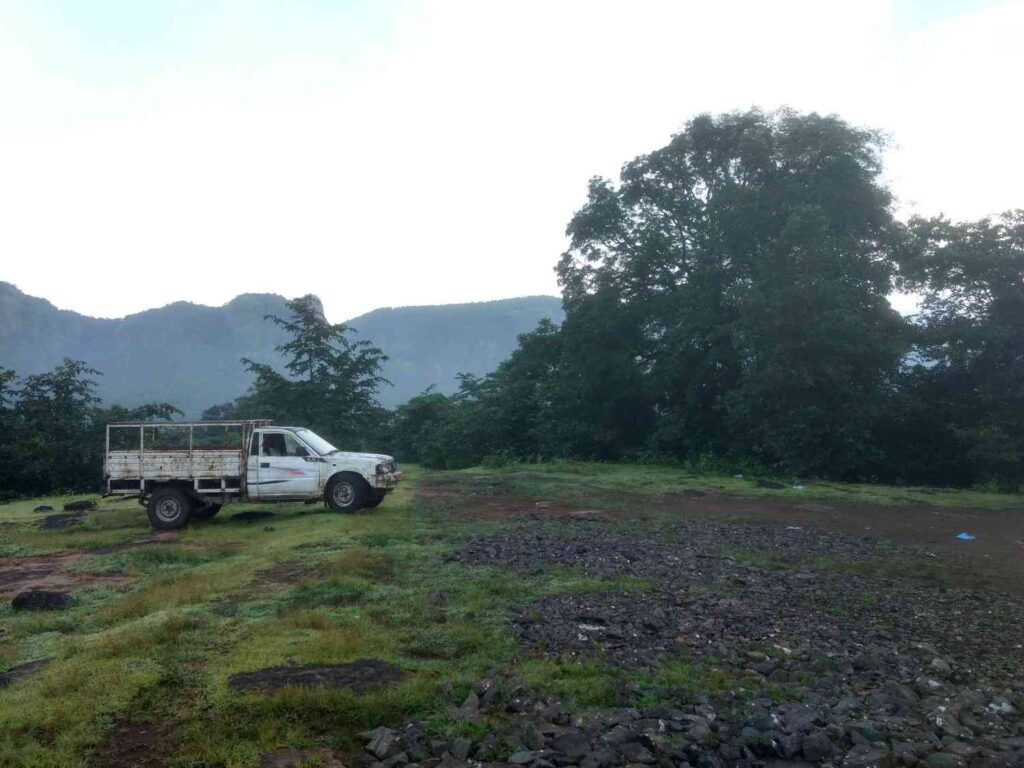
If you search for Devkund Waterfall parking, understand one thing first:
You are not parking beside the waterfall.
Parking is arranged around the Bhira/base village area, and from there you continue on foot.
I would avoid giving you one fixed parking price because local charges can change by vehicle type and season.
How Difficult Is the Devkund Waterfall Trek?
I would rate the trek:
Easy to Moderate
Maharashtra Tourism also describes Devkund as relatively moderate and notes that the route includes forest sections and stream crossings.
The trek does not normally involve technical climbing.
But you will face:
- Long walking distance
- Forest trail
- Mud
- Uneven rocks
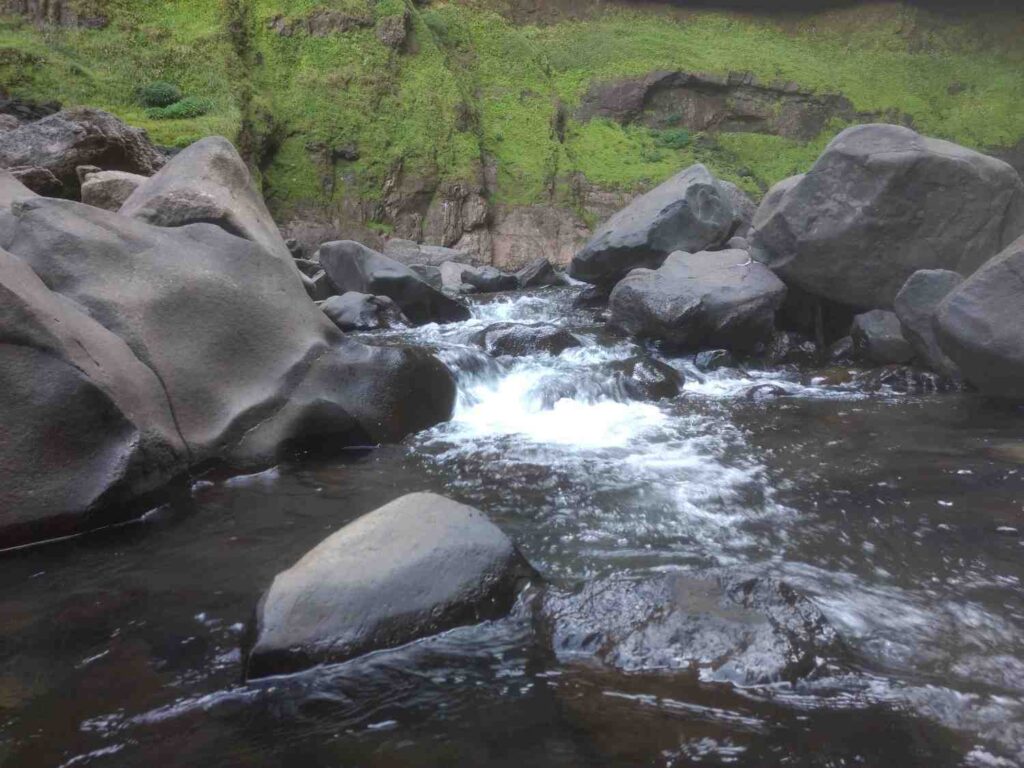
- Stream crossings
- Slippery sections during wet weather
- A long return walk after already becoming tired
So “easy to moderate” does not mean “wear slippers and casually walk.”
Wear proper trekking or sports shoes with good grip.
Do You Need a Guide for Devkund Waterfall?
During my trip, locals told me that I needed a guide.
The quoted charge was around ₹1,000 for the guide, which I eventually shared with another traveller and paid approximately ₹500.
Because rules can change, especially after monsoon incidents, don’t assume the system will be exactly the same when you visit.
Ask at the official/local entry point.
If you are travelling alone, try to join another small group if allowed.
It can reduce cost and, more importantly, gives you company on an unfamiliar forest trail.
Best Time to Visit Devkund Waterfall
For the best balance of waterfall flow, greenery and safer trekking conditions, I would choose:
October to November
My first choice.
You get:
- Good waterfall flow
- Green surroundings
- Better photography
- Lower risk compared with peak rain
- More comfortable trekking weather
December to February
Still suitable for trekking, but water flow can gradually reduce as the season progresses.
March to May
Possible, but the trek becomes hotter and the waterfall may have substantially less flow.
Peak Monsoon
This is where people make a dangerous assumption:
More rain = better waterfall trip.
Not always.
Heavy rainfall can make the forest trail slippery, increase stream levels and rapidly change water conditions.
Authorities can also temporarily restrict access.
Food and Water Near Devkund
Small local stalls around the base village can sell snacks and water and that basic facilities may be available around Bhira.
Still, I would carry my own essentials.
My trip already taught me what happens when you depend completely on finding food later.
I literally slept hungry because I stepped outside too late and everything around the village had closed.
Carry at Least:
- 1.5–2 litres of water
- ORS/electrolyte
- Bananas
- Dry fruits
- Energy bar
- Biscuits
- Small sandwich or packed food
Don’t carry a huge bag.
You have to walk with everything you bring.
My Actual Devkund Waterfall Trip Budget
Because I was travelling as a student, I tried to keep this journey as cheap as possible.
It didn’t exactly work.
Here is the amount I clearly remember spending:
| Expense | My Cost |
| BJS Phata → Pune Railway Station cab | ₹200 |
| Pune → Karjat train | ₹50 |
| Karjat → Khopoli train | ₹10 |
| Khopoli → Pali bus | ₹60 |
| Khichdi at Pali | ₹50 |
| Pali → Bhira bus | ₹35 |
| Room at Bhira after bargaining | ₹500 |
| My share of guide | ₹500 |
| Known Total | ₹1,405 |
This total does not include everything.
I also spent money on:
- Restaurant lunch during the return
- Viman Nagar to Wagholi transport
- Wagholi to BJS Phata auto
- Snacks purchased before the journey
So my final trip expense was higher than ₹1,405.
And remember, these were the prices during my old trip, not current 2026 charges.
The funniest part?
I started this journey specifically because I wanted to visit Devkund on a very low budget.
Travel had other plans.
Nearby Places to Visit Around Devkund Waterfall
1. Tamhini Ghat
If you are coming from Pune by road, the journey through Tamhini Ghat is already part of the experience.
During the rainy season, the entire landscape becomes green, cloudy and filled with seasonal waterfalls.
However, drive carefully because rain and fog can reduce visibility.
2. Ballaleshwar Temple, Pali
This one has a personal connection with my route because I actually passed through Pali while travelling toward Bhira.
If you have extra time, you can visit Shri Ballaleshwar Temple, one of Maharashtra’s eight Ashtavinayak Ganesh temples. Maharashtra Tourism notes that Ballaleshwar is unique among the Ashtavinayak temples because it is named after the devotee Ballal.
For people travelling through the Khopoli–Pali side, this can make a nice additional stop.
Final Thoughts
When I planned Devkund Waterfall, I only wanted to do one cheap trip before leaving Pune.
I didn’t realise that this journey would become the beginning of something much bigger.
Nothing went according to my plan.
I reached late.
I had to find a room.
My budget finished.
I borrowed money from my friend.
I slept hungry.
The next morning, I discovered the guide charge.
Then somehow I met a photographer who was also travelling alone, shared the guide cost with him, completed the trek and finally stood in front of Devkund Waterfall.
Even my return journey changed unexpectedly when he offered to drop me at Viman Nagar.
This wasn’t my most comfortable trip.
It wasn’t my cheapest trip either.
But it was probably one of my most important.
Because after reaching my hostel that evening, I knew one thing:
I could travel on my own.
And if you are planning Devkund yourself, remember the biggest lesson from my story:
Start early, carry emergency money and food, check the current trekking status, and don’t cancel a journey only because the original plan changes.
Sometimes the unplanned part becomes the story you remember the most.
Frequently Asked Questions
Is Devkund Waterfall parking available?
Yes, parking arrangements are available around the Bhira/base village area. Parking charges can vary, so confirm the current amount when you arrive.
How long is the Devkund Waterfall trek?
Depending on exactly where the trail distance is measured from, recent sources put it at roughly 4.5–6 km one way. Most visitors should keep around 2–3 hours for one side.
During my visit, I personally took almost three hours.
Is Devkund Waterfall trek difficult?
The trek is generally considered easy to moderate, but the long walking distance, rocks, mud and stream crossings can make it tiring for beginners. Maharashtra Tourism also classifies it as a relatively moderate trek.
Can we swim at Devkund Waterfall?
Swimming or entering the deeper pool near the main waterfall can be restricted. Follow the current safety ropes, local instructions and your guide instead of assuming the entire pool is safe.
Is a guide compulsory for Devkund Waterfall?
During my trip, I was required to take one.
Can I reach Devkund Waterfall by public transport from Pune?
Yes, but it is not straightforward.
I personally travelled from Pune to Karjat, Karjat to Khopoli, Khopoli to Pali and then Pali to Bhira.
Bus frequency on the final sections was low during my trip, which is why I reached Bhira too late to trek the same day.
If travelling today, verify current train and MSRTC connections instead of blindly following my old timings.
Is Devkund Waterfall suitable for a one-day trip from Pune?
Yes, if you have your own vehicle or organised transport and leave Pune early.
With public transport, I would keep an overnight stay as a backup because missing one connection can make it difficult to start the trek on time.
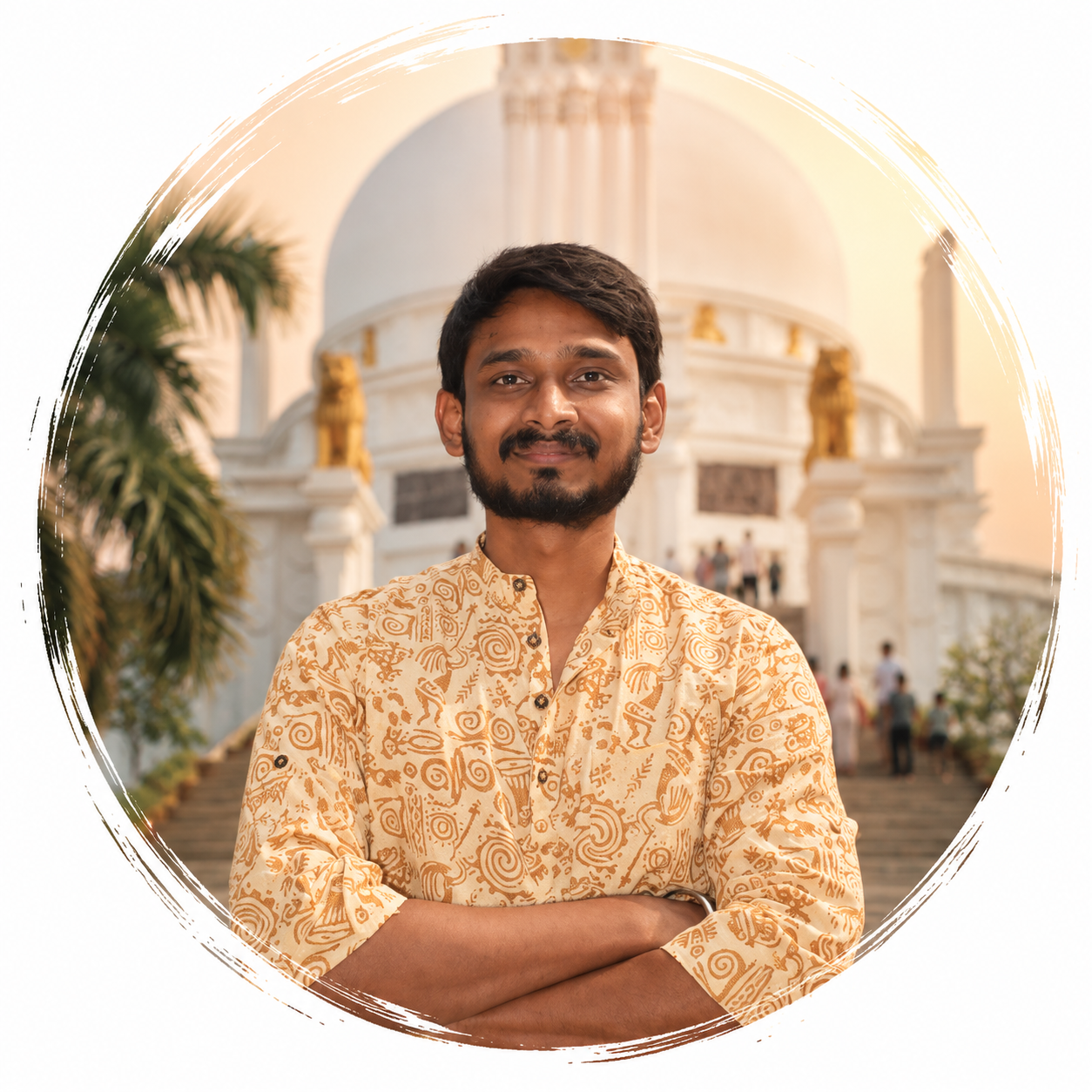
Solo traveller, biker, and explorer sharing honest travel guides, hidden places, and unforgettable road trips across India.
1 thought on “My Devkund Waterfall Trek Cost Only ₹355 From Pune”