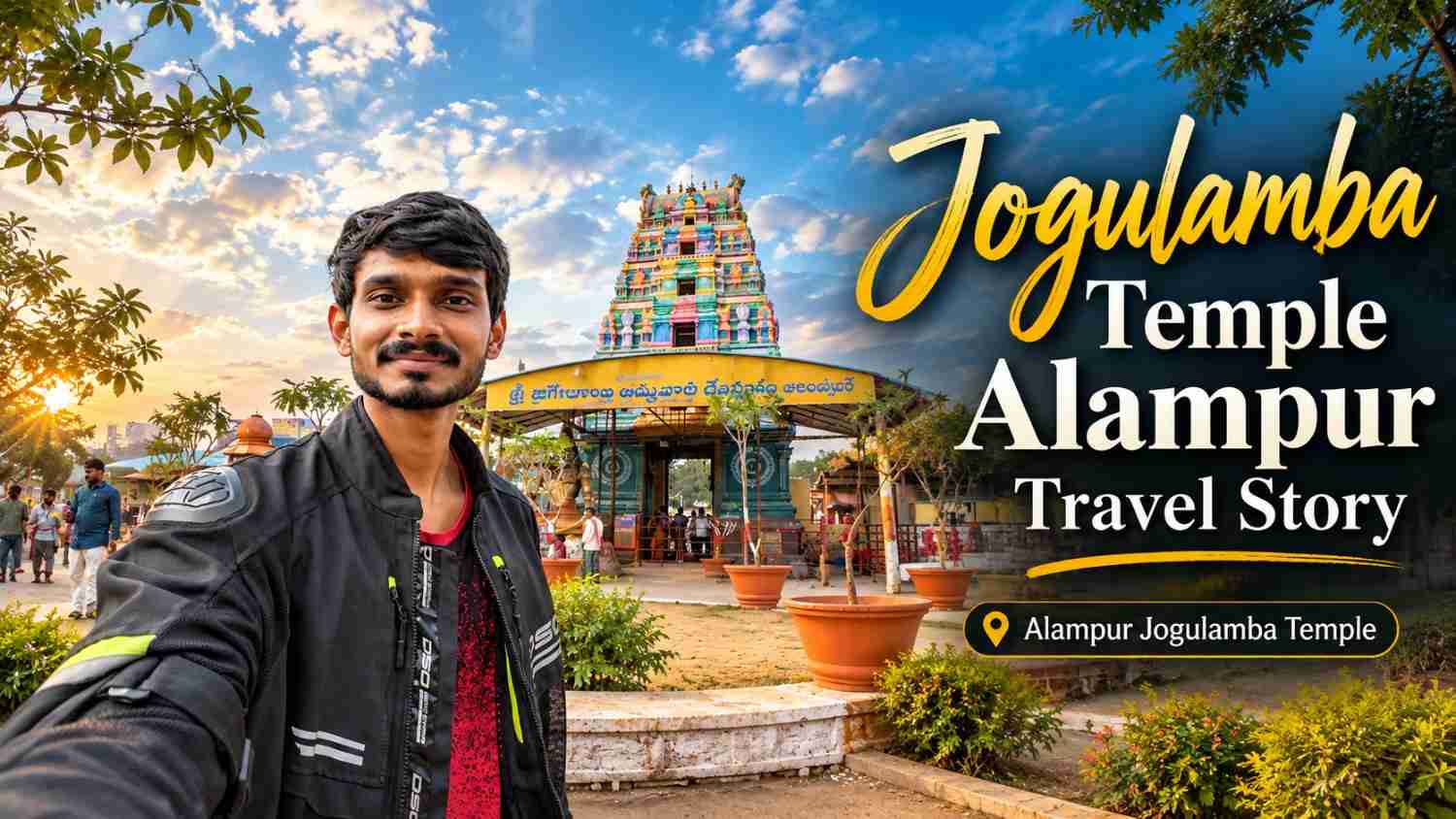
Jogulamba Temple: My 223 KM Divine Bike Ride From Hyderabad
Some of my trips begin after seeing a random Instagram reel. Others start when a friend suggests a destination.
This one started with a simple Google search.
At that time, I was staying in Hyderabad and wanted to explore more temples across Telangana. Instead of searching randomly on social media, I opened the Telangana Tourism website and started going through its divine and spiritual destinations one by one.
There were plenty of temples to choose from, but one name immediately caught my attention:
Jogulamba Temple, Alampur.
What made me stop searching was one particular fact. Jogulamba Ammavari Temple is regarded as one of the 18 Shakti Peethas, and it specifically as the 5th Shakti Peetha.
That was enough for me.
My weekend destination was fixed.
Shri Jogulamba Ammavari Temple.
Shri Jogulamba Ammavari Temple
Quick Information About Jogulamba Temple
| Information | Details |
| Temple | Shri Jogulamba Ammavari Temple |
| Main deity | Goddess Jogulamba |
| Location | Alampur, Telangana |
| District | Jogulamba Gadwal District |
| Famous for | One of the 18 Shakti Peethas |
| Shakti Peetha position | Traditionally regarded as the 5th Shakti Peetha |
| River | Near the Tungabhadra River |
| Hyderabad distance | Around 220 km from central Hyderabad |
| My distance from Kondapur | Around 223 km |
| My riding time | Around 4.5 hours |
| Nearest major city | Kurnool, Andhra Pradesh |
| Nearest railway station | Alampur Road, around 9 km |
| Temple timings | 7:00 AM–1:00 PM and 2:00 PM–8:30 PM |
| Entry | General darshan available |
| Photography | I found photography restricted inside the temple |
| My bike parking charge | ₹50 |
| Footwear | Free during my visit |
Where Is Jogulamba Temple Located?
One thing that can confuse first-time visitors is the location.
You may see people searching for Jogulamba Temple Kurnool, but the temple is not actually in Kurnool district or Andhra Pradesh.
Jogulamba Temple is located at Alampur in Jogulamba Gadwal district, Telangana. Kurnool is simply the closest major city on the Andhra Pradesh side, roughly 25–30 km away. The official district administration places the temple firmly in Alampur, Telangana. (Gadwal District)
Another interesting detail is the district name itself.
Jogulamba Gadwal district was created from the former Mahbubnagar district on October 11, 2016, and the district administration states that the district was named after the Jogulamba Shakti Peetha at Alampur. (Gadwal District)
So if someone searches for Jogulamba Temple Gadwal, Jogulamba Temple Alampur, or even Jogulamba Temple Kurnool, they are usually looking for this same temple.
Why Did I Choose Jogulamba Ammavari Temple?
Whenever I select a temple for my weekend trip, I usually want something more than just reaching the destination, taking darshan and riding back.
I like places that have a story behind them.
Jogulamba Temple had plenty.
During my research, I learned that Alampur is considered the western gateway to Srisailam. The region is also known for the nearby Nava Brahma temples and its connection with Badami Chalukya architecture. Telangana Tourism describes Alampur as an important combination of spirituality and heritage because the Shakti Peetha and ancient Chalukyan temples are located in the same historic temple town. (Telangana Tourism)
That made the trip even more interesting for me.
I was not going only to another temple. I was riding towards one of Telangana’s most historically important temple towns.
Planning My 223 KM Ride From Hyderabad
Once I finalized Jogulamba Temple, the next thing I checked was the distance from my hostel in Kondapur.
Google Maps showed me roughly 223 km and around 4 hours 30 minutes of riding.
For me, that was manageable as a one-day bike trip, but it meant one thing:
I needed to start early.
I decided to visit on Saturday. As usual, my preparation actually started on Friday evening after returning from the office.
I cleaned my helmet, checked my bike and made sure everything was ready for the next morning.
For a ride of more than 200 km one way, I never like waking up and then discovering something needs attention on the bike. Even a small issue can ruin the entire plan.
After finishing everything, I ate dinner early and went to bed.
But anyone who regularly waits all week for a weekend ride probably knows what happened next.
I couldn’t sleep properly.
Whenever the next morning has a long ride waiting for me, half of my mind is sleeping and the other half is already somewhere on the highway.
Starting My Ride at 6 AM
My alarm went off at 5:00 AM.
I got ready, took a bath, packed the few things I needed and went downstairs.
Then came one of my favourite small rituals before a trip.
Cold start.
At exactly 6:00 AM, I left my hostel in Kondapur and started another ride towards a divine destination.
My route was:
Kondapur → Shamshabad → Shadnagar → Jadcherla → Pebair → Alampur X Road → Jogulamba Temple
The major portion of the journey follows the Hyderabad–Bengaluru highway corridor, which made the long-distance section much easier.
My Route at a Glance
| Section | My Route |
| Starting point | Kondapur |
| Hyderabad exit | Shamshabad |
| Highway towns | Shadnagar → Jadcherla → Pebair |
| Turn towards temple | Alampur X Road |
| Final destination | Jogulamba Ammavari Temple |
| One-way distance | Around 223 km |
| Riding time | Around 4.5 hours |
Escaping Hyderabad Traffic
Early morning Hyderabad is better than peak-hour Hyderabad, but the city still feels busy.
Vehicles, junctions, traffic lights, cabs and people are everywhere.
For me, the actual feeling of a bike trip starts only after I cross the busy city limits.
Once Hyderabad slowly disappeared behind me, everything changed.
The traffic reduced.
The road opened up.
The surroundings became quieter.
And finally I could simply ride, listen to music inside my helmet and enjoy the highway.
That feeling is difficult for me to explain properly.
Sometimes the destination is important, but sometimes those quiet kilometres on an empty morning highway are the best part of the whole trip.
My Breakfast Stop on the Highway
After roughly two hours of riding, the sun had started coming out properly.
That was also when I started feeling hungry.
I began looking for a small tiffin centre on the roadside and finally found one. I parked my bike and ordered my usual breakfast choice.
One plate of bonda: ₹35.
Wherever I travel in Telangana or Andhra Pradesh, if bonda is available for breakfast, it is usually my first preference.
Nothing fancy.
Just hot bonda after riding for a couple of hours.
For some reason, food always tastes better during a bike trip.
I finished breakfast, rested for a few minutes and got back on the road.
Fuel Stop Before Continuing to Alampur
After breakfast, I checked the fuel indicator and decided not to take any chances.
I stopped at a petrol pump and filled approximately 7 litres of petrol, which cost me around ₹700 during this trip.
With the bike ready again, I continued towards Alampur.
The road remained enjoyable, and this was exactly the kind of morning ride I like. Good highway, music playing inside the helmet, fewer vehicles than the city and no office notifications to worry about.
I genuinely feel people in their twenties should experience at least one proper road trip, whether with friends or solo.
But there is one condition I always add.
Wear proper safety gear.
At the very minimum, use a good helmet. A beautiful ride isn’t worth risking your safety for.
Finally Reaching Jogulamba Temple
After approximately 4 hours 30 minutes, I finally reached Alampur and then the temple area.
Seeing the destination after more than 220 km on the bike always gives me a different level of satisfaction.
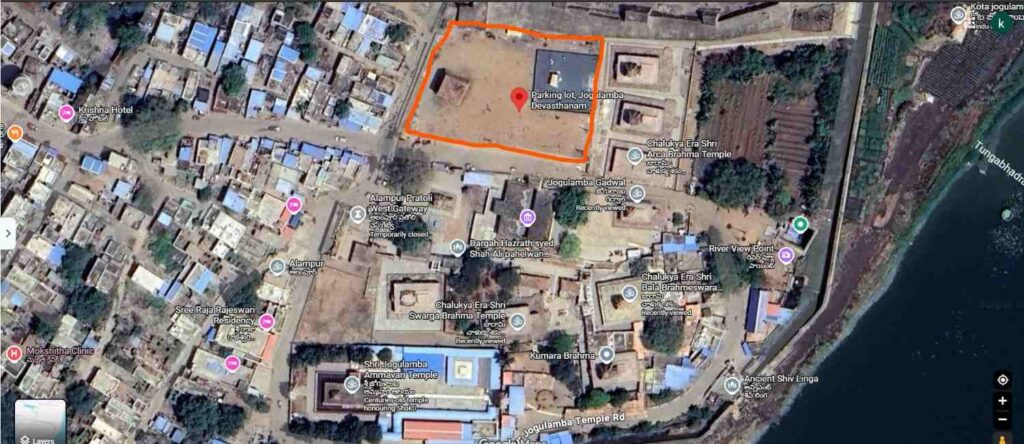
I followed Google Maps towards the parking area and parked my bike.
During my visit, I was charged ₹50 for two-wheeler parking.
To be honest, I felt ₹50 was slightly expensive for the parking facility provided.
The parking ground was muddy and did not feel properly maintained. At many other tourist and temple destinations I have visited, two-wheeler parking is usually around ₹10–₹20.
If ₹50 is being collected, I personally expect a cleaner and better organized parking area.
I also noticed toilets near the parking side, but I was disappointed with their cleanliness during my visit.
These are small things, but they matter when thousands of pilgrims and tourists visit an important destination.
Note: Parking charges and facilities can change after my visit, so treat ₹50 as my personal experience rather than a permanent official rate.
Entering Jogulamba Ammavari Temple
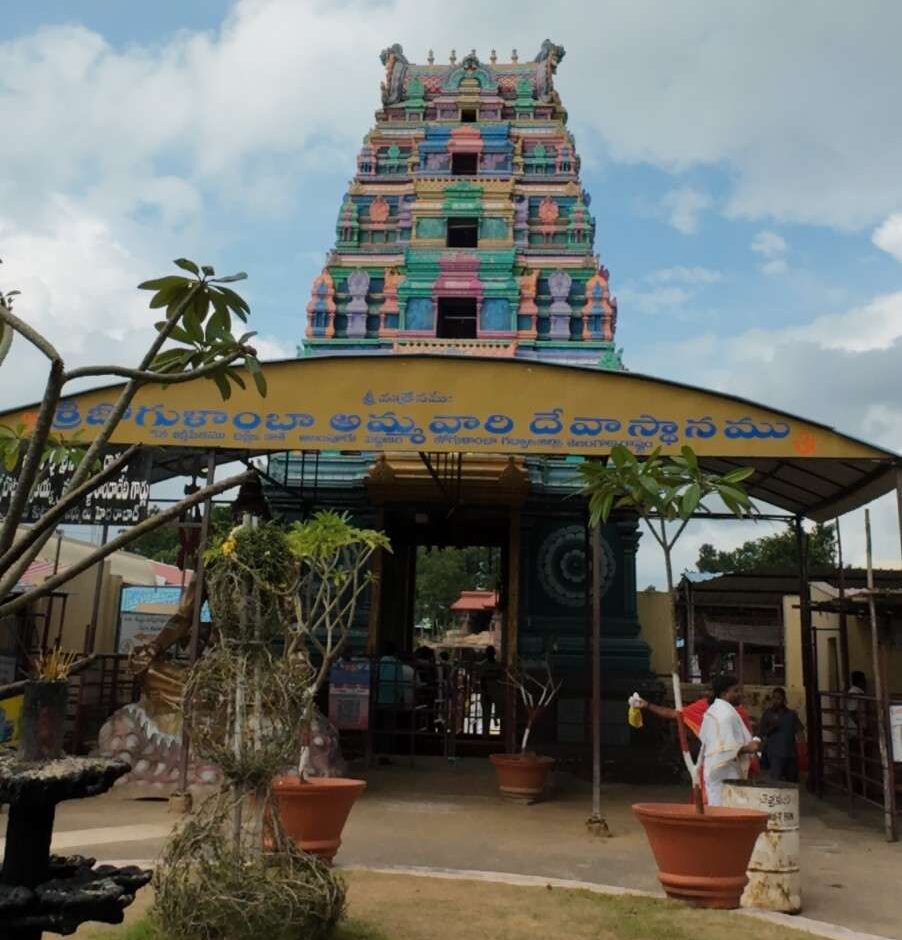
After parking my bike, I walked towards the temple entrance.
The footwear facility was free during my visit, so I left my shoes there and entered the temple premises.
I had expected a large Saturday crowd.
Surprisingly, the queue wasn’t very long.
Within a short time, I reached the main shrine and finally had darshan of Jogulamba Ammavaru.
After travelling more than four hours on the bike, standing peacefully inside the temple felt completely different.
I gave the priest ₹55 as dakshina.
There was no spiritual calculation behind ₹55.
That was simply the change I had left in my pocket.
The priest blessed me, and I stood there quietly for a moment before moving ahead.
Another destination was now added to my travel book.
But after coming outside, I realised that the most interesting part of Alampur was still waiting for me.
Around the Jogulamba temple area were ancient stone temples that looked completely different from the main shrine.
That immediately caught my attention.
I started wondering:
How old are these temples?
Why is Jogulamba considered the fifth Shakti Peetha?
What happened to the original temple?
And why are so many ancient Chalukya temples standing together in Alampur?
That curiosity took me into the history of Jogulamba Temple and the incredible Nava Brahma temple complex.
Jogulamba Temple History, Shakti Peetha & Alampur Heritage
Why Is Jogulamba Temple So Famous?
After completing my darshan, I came outside and started walking around the temple premises.
That was when this trip became much more interesting for me.
Before visiting, I knew only one major thing about Jogulamba Temple: it is one of the famous Shakti Peethas in India. But after reaching Alampur and seeing the ancient stone temples around the main shrine, I became curious about the history behind this place.
The more I read, the more I realised that Jogulamba Temple is not just another famous temple in Telangana.
Alampur is an ancient religious and archaeological centre with a history stretching back many centuries. Telangana Tourism identifies Jogulamba as one of the 18 Shakti Peethas, while the Jogulamba Gadwal district administration traditionally counts it as the 5th Shakti Peetha. (Telangana Tourism)
What Is the History of Jogulamba Temple?
The Jogulamba Temple history is probably the most interesting part of visiting Alampur.
The religious importance of the site comes from the Shakti Peetha tradition, while the wider temple town is strongly associated with the Badami Chalukyas, who ruled large parts of the Deccan.
According to the Telangana Department of Heritage, archaeological evidence such as Satavahana coins and Ikshvaku-period inscriptions indicates that Alampur had already developed as an important religious centre by around the 3rd century CE. The site later flourished under the Badami Chalukyas during the 7th and 8th centuries, followed by contributions from dynasties including the Rashtrakutas, Kalyani Chalukyas, Kakatiyas and Vijayanagara rulers. (Department of Heritage Telangana)
That explains why the area surrounding the modern Jogulamba temple looks completely different from an ordinary temple complex.
When I looked at those old stone structures after my darshan, I could clearly feel that I was standing in a much older historical site.
Why Is Jogulamba Temple Called the 5th Shakti Peetha?
According to the traditional list followed locally, Jogulamba Ammavari Temple is regarded as the fifth among the 18 Maha Shakti Peethas. The Jogulamba Gadwal district administration also identifies it this way. (Gadwal District)
The Shakti Peetha tradition is connected with the story of Goddess Sati and Lord Shiva.
In the traditional account, after Sati’s death, Lord Shiva carried her body in grief. Vishnu used his Sudarshana Chakra, and parts of Sati’s body are believed to have fallen at different places. These locations came to be revered as Shakti Peethas.
A commonly followed tradition associated with Alampur says that Sati’s upper teeth fell here. Lists of Shakti Peethas can vary between traditions, so I would describe this as a traditional belief rather than a historically verifiable event. (KaalPanchang)
This is one of the main reasons devotees travel long distances to visit Jogulamba Ammavari Temple.
What Does the Name Jogulamba Mean?
This was another detail I found interesting.
The district administration explains that the name Jogulamba is associated with the Telugu expression “Yogula Amma,” meaning “Mother of Yogis.” The goddess is represented here in a fierce form rather than the calmer forms of Devi that visitors may be familiar with at some other temples. (Gadwal District)
The official description depicts Jogulamba seated upon a corpse, with symbolic creatures including a scorpion, frog and lizard associated with her hair.
I won’t go too deep into the religious symbolism because different traditions interpret these elements differently, but it definitely makes Jogulamba one of the most distinctive forms of the goddess I have encountered during my temple trips.
What Happened to the Original Jogulamba Temple?
This was probably the part of the Jogulamba Temple history that surprised me the most.
Historical accounts commonly cited about the shrine state that the earlier Jogulamba temple was destroyed around 1390 CE. The principal image of the goddess was then protected and kept at the nearby Bala Brahmeswara Temple, where worship continued for centuries.
A new Jogulamba temple was eventually constructed at the original site, and the deity was reconsecrated there in 2005. A report published when the reconstruction was completed described it as the return of the temple after roughly 615 years. (Save Temples)
This completely changed the way I looked at the temple.
The building visitors see today may be relatively recent, but the religious tradition and the surrounding heritage are much older.
That distinction is important when reading about Jogulamba Temple online.
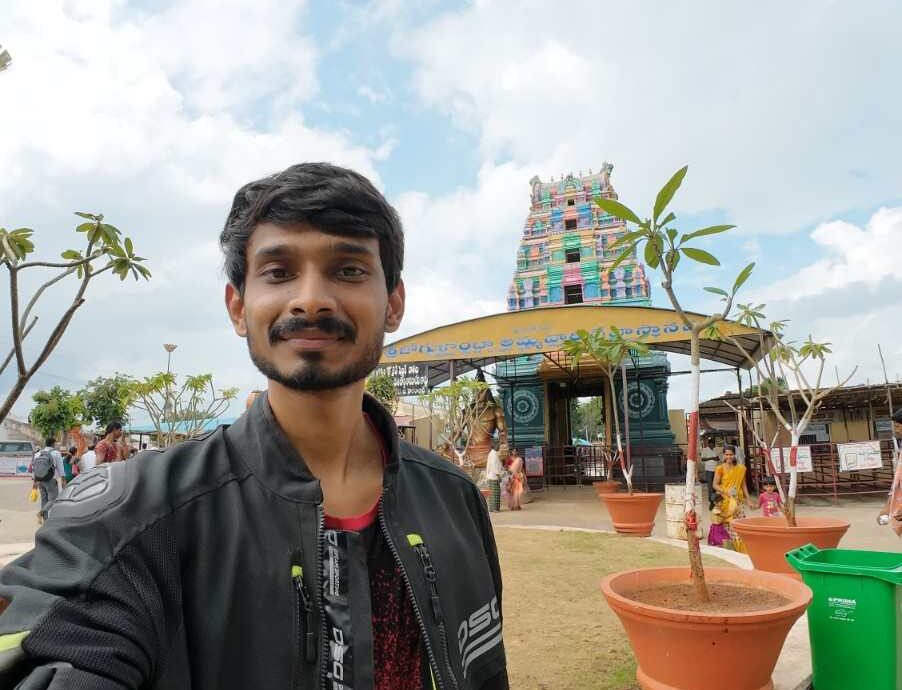
Ancient Temples Beside Jogulamba Temple
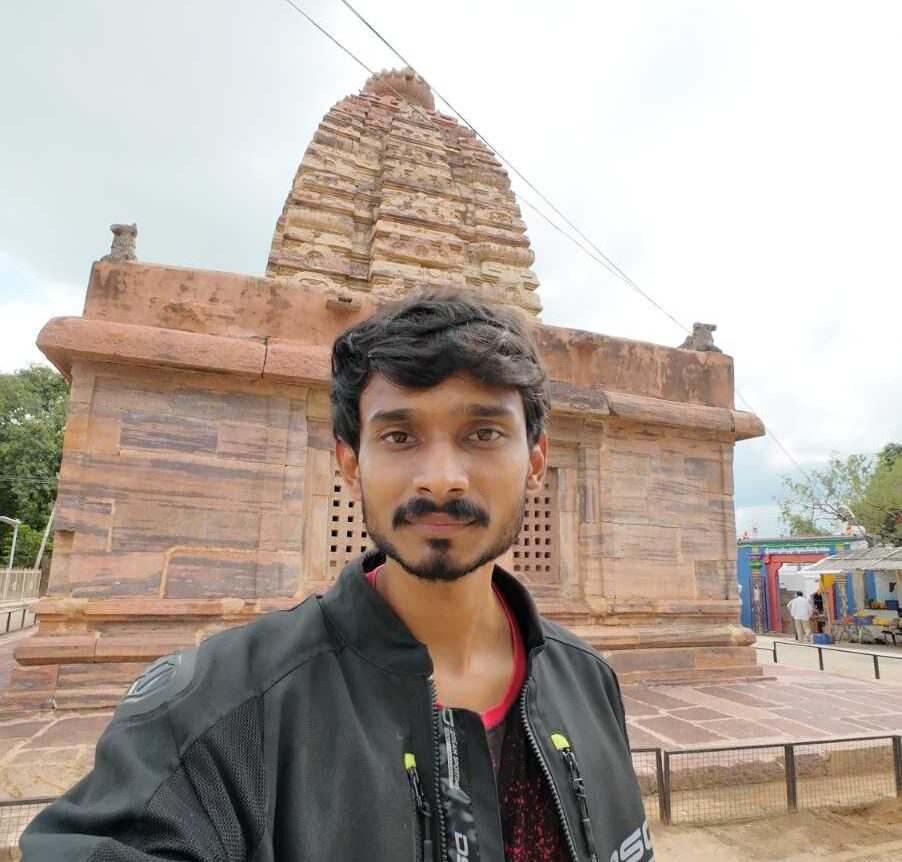
After coming outside the main Jogulamba Ammavari Temple, the old stone temples immediately grabbed my attention.
I genuinely didn’t expect to find this much history in the same area.
These temples are known collectively as the Nava Brahma Temples.
“Nava” means nine, and the complex consists of nine historic Shiva temples:
- Swarga Brahma Temple
- Padma Brahma Temple
- Garuda Brahma Temple
- Bala Brahma Temple
- Arka Brahma Temple
- Kumara Brahma Temple
- Vira Brahma Temple
- Vishva Brahma Temple
- Taraka Brahma Temple
The Telangana Department of Heritage associates the main phase of these temples with the Badami Chalukyas of the 7th and 8th centuries, while the district administration describes Alampur’s surviving structures as important examples of early Chalukyan architecture. (Department of Heritage Telangana)
For me, this is what makes Alampur different.
You can come for Jogulamba Ammavari darshan and unexpectedly end up exploring one of Telangana’s most important historic temple complexes.
If you’re interested in ancient temple architecture like I am, you can also read my experience visiting Kolanupaka Shiva Temple, another historic temple destination in Telangana connected with centuries-old religious and architectural heritage.
Why Is Alampur Called the Western Gateway to Srisailam?
Another interesting fact I learned is that Alampur has traditionally been regarded as the western gateway to Srisailam.
The Telangana Heritage Department notes that this association is mentioned in the Skanda Purana, while Telangana Tourism also describes Alampur as the gateway to Srisailam. (Department of Heritage Telangana)
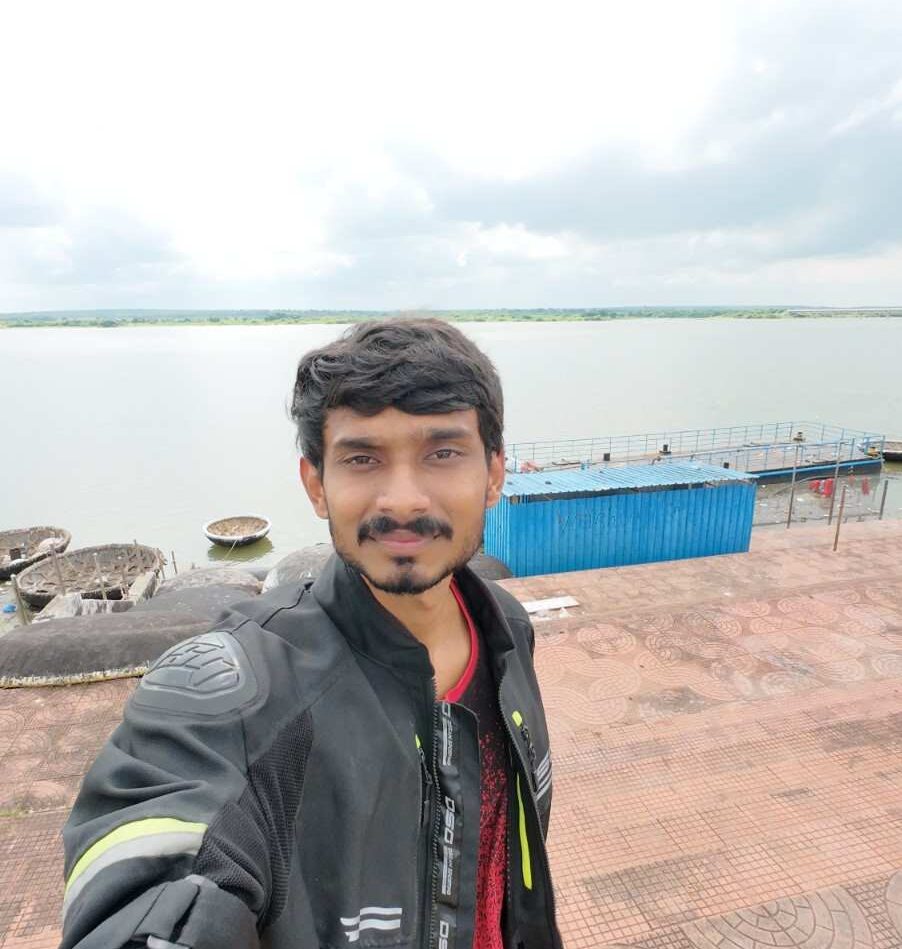
Because of its concentration of Shiva temples, the Shakti Peetha and its location near the Tungabhadra-Krishna river system, Alampur is also associated with names such as Dakshina Kailasam in local and religious traditions. (Telangana Tourism)
For someone interested in temples, you can easily spend much more time here than simply completing darshan and leaving.
Alampur Site Museum: Don’t Miss It If You Love History
Another useful place near the temple is the Alampur Site Museum.
I feel many visitors concentrating only on temple darshan may not realise how much archaeological history is preserved around them.
The Telangana Department of Heritage says the museum was established in 1952 and contains 124 stone sculptures and 26 inscriptional slabs, with material dating from approximately the 6th to the 16th centuries CE. It is located near the Jogulamba-Bala Brahmeswara temple complex. (Department of Heritage Telangana)
The currently listed museum timings are 10:30 AM to 5:00 PM on working days, with Friday and public holidays listed as closures. Check the latest timing before planning because visitor hours can change. (Department of Heritage Telangana)
If I were planning this trip again with more time, I would definitely allocate a separate hour for the museum and the Nava Brahma temples instead of treating Jogulamba as only a darshan stop.
Places You Can Explore Around Jogulamba Temple
Several attractions are packed into or close to the Alampur heritage area, so you don’t need to travel far between them.
| Place | Why Visit? |
| Nava Brahma Temples | Ancient Badami Chalukya Shiva temple group |
| Bala Brahmeswara Temple | Principal Shiva shrine associated with the Jogulamba tradition |
| Alampur Site Museum | Sculptures, inscriptions and archaeological remains |
| Tungabhadra River area | Adds to Alampur’s religious and scenic setting |
| Sangameswara Temple region | Another important part of the wider Alampur-Somasila heritage circuit |
The Nava Brahma temples are particularly worth adding because they turn a normal temple visit into a proper history trip.
Photography at Jogulamba Temple
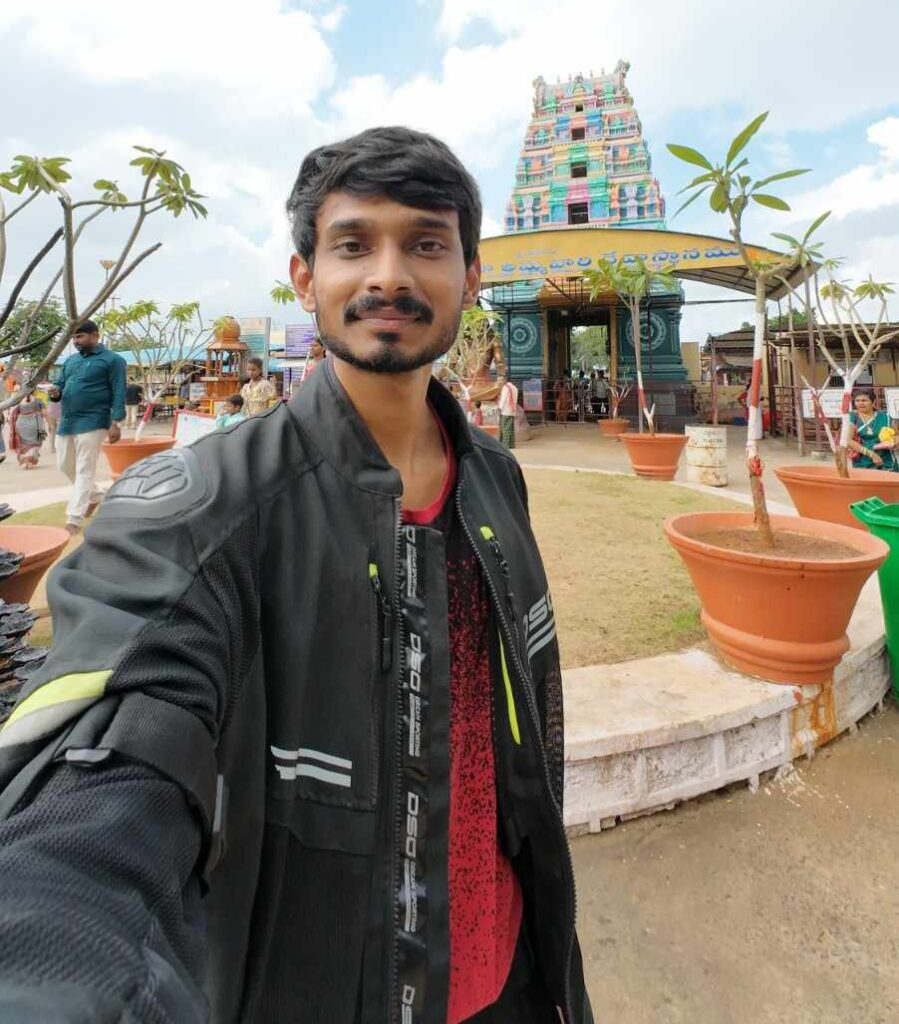
After darshan, I spent some time outside clicking a few selfies and Jogulamba Temple photos.
I’m an introverted person, so even during my trips I usually don’t take too many photos of myself. Most of the time, I prefer photographing the temple, architecture, roads and surroundings.
One important thing I noticed during my visit was that photography was not allowed inside the main temple.
So if you’re searching online for Jogulamba Temple images, most of what you’ll find will naturally show the exterior, gopuram, surrounding temples and heritage architecture rather than the main sanctum.
I would recommend respecting the photography restrictions instead of secretly trying to take pictures inside.
Outside the shrine, however, there is plenty to photograph.
The old Chalukyan structures were actually more interesting to me from a photography point of view because of their stone carvings, weathered walls and completely different architectural style.
Sitting Quietly and Reading the History
After walking around and taking a few photos, I sat down for some time.
Normally when I finish darshan, I start thinking about the return journey.
But this time those ancient temples made me stay longer.
I started reading about Alampur, the Badami Chalukyas, the Shakti Peetha and the story of the Jogulamba shrine.
The Telangana Heritage Department describes Alampur as a site influenced by multiple dynasties over many centuries. It even records that Vijayanagara emperor Sri Krishnadevaraya visited Alampur in 1521 CE after the conquest of Raichur. (Department of Heritage Telangana)
That small detail made me appreciate the place even more.
Thousands of people must have stood around these temples over hundreds of years.
Kings, priests, travellers, devotees and now tourists carrying smartphones.
And on that Saturday, one biker who had travelled more than 220 km from Hyderabad was sitting there reading their history.
Those are the little moments I remember after a trip.
My Experience After Visiting Jogulamba Ammavari Temple
Before this journey, Jogulamba was simply another destination I had selected from the Telangana Tourism website.
After visiting, my perspective changed.
The darshan was peaceful, but what stayed with me was the combination of faith, history and ancient architecture.
If you visit Jogulamba Temple, my suggestion is simple:
Don’t complete darshan and immediately leave.
Walk around.
Look at the Nava Brahma temples.
Spend some time studying the carvings.
Visit the museum if it is open.
Read a little about the history.
That extra hour can completely change your experience of Alampur.
I eventually walked back towards my bike knowing that I still had a 223 km return ride to Hyderabad waiting for me.
And unfortunately, the peaceful highway ride I enjoyed that morning wasn’t exactly what Hyderabad had planned for me on the way back.
The traffic was waiting.
So was the clutch.
And my left hand was definitely going to remember both.
My Return Ride From Jogulamba Temple to Hyderabad
After spending some time around the temple, clicking a few photos and reading about the history of Alampur, it was finally time for me to start the return journey.
Whenever I reach a destination after a long bike ride, there is always one thought in my mind:
I still have to ride the same distance back.
In my case, that meant another journey of more than 220 km towards Hyderabad.
I walked back towards the parking area, wore my riding gear, started my bike and slowly left the Jogulamba Ammavari Temple premises.
The temple visit had been peaceful.
The history had surprised me.
And now it was time to get back on the highway.
Returning to NH44 From Alampur
From Alampur, I followed the road back towards the highway.
One small incident happened before I entered NH44.
A few transgender people were asking travellers for money on the road. They approached me as well, but I genuinely didn’t have any cash left in my pocket because I had already given the small change I was carrying as dakshina inside the temple.
I simply told them that I didn’t have cash.
They were nice about it and allowed me to continue without creating any problem.
I said okay, started my bike again and finally joined NH44 for the long journey towards Hyderabad.
Once I reached the highway, the ride became smooth again.
My Pineapple Juice Break After Two Hours
After approximately two hours of riding, I started feeling tired.
A 220+ km ride in one direction might sound easy when you look only at the distance on Google Maps, but after completing temple darshan, walking around the complex and then getting back on the bike, your body starts asking for a break.
I noticed a juice stall beside the highway and stopped there.
I ordered a pineapple juice for ₹80.
Nothing special.
Just me, my bike parked nearby, a glass of juice and ten minutes without riding.
Those small highway breaks are honestly some of my favourite parts of solo trips.
You don’t have to follow anybody’s schedule.
If you’re tired, stop.
If you’re hungry, eat.
If you see an interesting place, explore it.
That freedom is probably why I enjoy solo bike trips so much.
After resting for around ten minutes, I started again.
My Second Fuel Stop
After roughly another hour of riding, I stopped for fuel once again.
This time I filled approximately 7 litres of petrol, which cost me ₹768.
Earlier in the morning, I had already filled around 7 litres for approximately ₹700.
So during this complete trip, I paid around ₹1,468 for petrol.
Fuel prices and your actual consumption will obviously differ depending on your bike, starting fuel level, mileage and petrol price at the time of your journey.
Once the fuel stop was completed, I continued towards Hyderabad.
At that point, the enjoyable part of my return ride was almost over.
Because Hyderabad traffic was waiting for me.
The Worst Part of My Ride: Entering Hyderabad Again
From Jogulamba Temple to the outskirts of Hyderabad, the ride was actually comfortable.
The highway section took me roughly three hours.
Then I entered the city.
And everything changed.
Traffic.
Signals.
Cars everywhere.
Constant braking.
And the worst thing for me on a bike: continuously using the clutch.
My bike barely had a chance to go above third gear.
After riding freely on NH44 for hours, suddenly moving slowly between signals and traffic felt frustrating.
My hand even started cramping because of the constant clutch use.
This is why I always prefer starting my trips early in the morning. Leaving Hyderabad at 6 AM is much more enjoyable than entering the city during the afternoon.
The highway portion had taken me roughly three hours, but getting through Hyderabad and reaching my hostel took nearly another two hours because of traffic.
Finally, at around 4:00 PM, I reached my hostel.
That Feeling After Reaching Home Safely
I parked my bike, removed my riding gear, got fresh and finally lay down on the bed.
That moment after completing a long ride always feels different.
Your body is tired.
Your helmet is somewhere on the floor.
Your riding gloves are off.
And suddenly there is complete silence.
The first thing that came into my mind was gratitude.
I thanked God once again for helping me complete another trip safely without any breakdown or major problem with my bike.
I also silently thanked my bike.
It might sound strange to some people, but anyone who loves travelling on a motorcycle will probably understand this feeling.
I never imagined that one bike would take me to so many temples, forts, waterfalls and completely unknown places.
I know what it feels like when you don’t have your own bike and have to depend on someone else every time you want to travel.
That’s probably why every time I return safely from one of these trips, I appreciate my bike a little more.
Jogulamba Temple became another destination added to my travel book.
But more importantly, it became another reminder of how much of Telangana is still waiting for me to explore.
What Is the Jogulamba Temple Distance From Hyderabad?
The Jogulamba Temple distance from Hyderabad is approximately 220 km by road, although the exact distance depends on where you start in the city.
In my case, I started from Kondapur, and Google Maps showed approximately 223 km with a riding time of around 4 hours 30 minutes.
My route was:
Kondapur → Shamshabad → Shadnagar → Jadcherla → Pebair → Alampur X Road → Jogulamba Temple
For bikers or car travellers, NH44 makes most of this journey straightforward.
Starting before 6 AM is something I strongly recommend because you can escape a large part of Hyderabad’s traffic before the city becomes busy.
Jogulamba Temple Distance From Major Cities
The following distances are useful if you’re planning a road trip to Alampur. Road distance can change slightly depending on your starting point and chosen route.
| Starting Place | Approx. Distance to Jogulamba Temple | Approx. Road Time |
| Hyderabad | Around 220 km | 3.5–4.5 hrs |
| Kondapur, Hyderabad | Around 223 km | Around 4.5 hrs in my trip |
| Kurnool | Around 25 km | 30–40 min |
| Gadwal | Around 63 km | Around 1 hr |
| Karimnagar | Around 350+ km | 6–7 hrs |
| Warangal | Around 365 km | Around 6 hrs |
| Vijayawada | Roughly 320–370 km depending on route | Around 5–7 hrs |
| Alampur Road Railway Station | Around 9 km | Short local transfer |
The approximately 25 km Kurnool to Jogulamba Temple distance is why many travellers search online for Jogulamba Temple Kurnool. However, the temple is located in Alampur, Jogulamba Gadwal district, Telangana, not in Kurnool district.
Warangal to Jogulamba Temple is approximately 365 km on one commonly mapped road route, while Karimnagar to Alampur is roughly 350 km or more.
For Vijayawada, route planners show considerable variation depending on the road selected. One current road estimate to Jogulamba Temple is about 319 km, so checking your live navigation before departure is better than relying on one fixed figure.
Is Jogulamba Temple in Gadwal?
Yes, but there is an important distinction.
Jogulamba Temple is located in Jogulamba Gadwal district, while the actual temple town is Alampur.
Gadwal town is the district headquarters and is approximately 63 km by road from Alampur.
So searches such as Jogulamba Temple Gadwal generally refer to the district, while the destination you should enter in navigation is Jogulamba Ammavari Temple, Alampur.
How to Reach Jogulamba Temple From Hyderabad?
For me, road travel was the easiest option because I had my bike.
By Road
From Hyderabad, take the Bengaluru side of NH44 and continue towards Jadcherla and the Kurnool direction before taking the turn towards Alampur.
The official district tourism information places Alampur approximately 220 km from Hyderabad and describes it as easily accessible through the Hyderabad-Bengaluru highway.
If you are travelling by bike like me, starting early makes a huge difference.
By Train
According to the Jogulamba Gadwal District Administration, Alampur Road Railway Station is approximately 9 km from the temple area.
From the station, you will need local road transport to reach Alampur.
Train schedules change, so I would check the latest railway availability before finalising the journey instead of depending on an old timetable.
What Is the Jogulamba Temple to Yaganti Distance?
Another useful combination for temple travellers is Jogulamba Temple and Yaganti.
The Jogulamba Temple to Yaganti distance is roughly 110–120 km by road, depending on the route selected.
One road-distance source places the journey at approximately 114 km and around two hours, while another places Sri Yaganti Uma Maheswara Temple at about 117 km.
That makes it possible to combine the two temples during a longer road trip, especially if you’re staying around Kurnool or travelling through Andhra Pradesh.
I would personally avoid trying to combine too many temples into the same one-day Hyderabad trip, though. Hyderabad → Jogulamba → Yaganti → Hyderabad would become a very long day on the road.
If you really want to cover both, staying around Kurnool or Nandyal side would make the journey much more comfortable.
Nearby Places to Visit From Jogulamba Temple
One mistake I almost made during my trip was thinking that Jogulamba Temple was the only attraction in Alampur.
It isn’t.
The temple is surrounded by a significant heritage landscape containing ancient Chalukyan temples, sculptures and archaeological remains. Telangana Tourism specifically highlights Jogulamba Temple and the Navabrahma group together when describing Alampur.
| Nearby Place | Approx. Distance/Location | Why Visit? |
| Nava Brahma Temples | Beside/within the Alampur heritage area | Nine historic Shiva temples associated with Badami Chalukya architecture |
| Bala Brahmeswara Temple | Within the temple complex | Main historic Shiva shrine and closely associated with Jogulamba worship |
| Alampur Site Museum | Near Jogulamba-Bala Brahmeswara complex | Sculptures and inscriptions from roughly the 6th–16th centuries |
| Papanasi Temple Complex | Short distance from Alampur | Group of historic temples worth combining with Alampur |
| Tungabhadra River | Near temple town | Important part of Alampur’s spiritual and geographical setting |
| Kurnool | Around 25 km | Convenient city for food, accommodation and onward Andhra Pradesh travel |
| Yaganti Temple | Around 110–120 km | Popular Shiva temple that can be combined on a longer itinerary |
The Telangana Department of Heritage says the Alampur Site Museum is located near the Jogulamba-Bala Brahmeswara temple complex and contains 124 stone sculptures and 26 inscriptional slabs, representing roughly the 6th to 16th centuries CE.
Telangana Tourism also mentions the nearby Navabrahma Temples and Papanashanam Temple complex as part of the Alampur heritage experience.
Jogulamba Temple Timings
The currently published official Jogulamba Temple timings are:
| Session | Timing |
| Morning Darshan | 7:00 AM – 1:00 PM |
| Temple Break | 1:00 PM – 2:00 PM |
| Evening Darshan | 2:00 PM – 8:30 PM |
These timings are listed for all days of the week by the Jogulamba Gadwal District Administration.
Because timings can change during festivals, special poojas or administrative changes, I still recommend checking current information before travelling hundreds of kilometres solely for darshan.
Best Time to Visit Jogulamba Temple
For a comfortable road trip, I would personally choose October to February.
Alampur can become very hot during summer, and walking around the historic temple complex in afternoon heat may not be enjoyable.
If you’re travelling by bike, an early morning start is even more important.
During my trip, starting at 6 AM helped me complete most of the long outward journey before the day became hotter.
You can visit throughout the year for darshan, but weekends, Navratri and other important festival periods can naturally attract larger crowds.
How Much Did My Jogulamba Temple Trip Cost?
This was my approximate spending during the trip.
| Expense | My Cost |
| Breakfast – Bonda | ₹35 |
| First petrol stop | ₹700 |
| Bike parking | ₹50 |
| Dakshina | ₹55 |
| Pineapple juice | ₹80 |
| Second petrol stop | ₹768 |
| Footwear | Free during my visit |
| Total amount spent | ₹1,688 |
The biggest expense was obviously petrol.
I paid approximately ₹1,468 for fuel during the journey.
One thing to remember is that this is the amount I paid while filling the bike during the trip, not a guaranteed fuel cost for everyone. Your total depends on your motorcycle mileage, fuel already present in your tank and current petrol prices.
For me, spending around ₹1,688 for a full-day solo ride, temple visit and more than 400 km of road travel felt reasonable.
My Practical Tips Before Visiting Jogulamba Temple
The most useful thing I can say after doing this trip myself is to start early and don’t treat Alampur as only a quick darshan destination. Keep enough time for the Nava Brahma temples and the museum if they are open.
Carry some cash for parking, offerings and small highway shops. During my visit, bike parking cost ₹50 and the footwear facility was free, but these arrangements may change.
If you’re travelling by motorcycle, fill fuel before leaving the main highway, carry water, use proper riding gear and avoid pushing yourself if you’re tired. A 400+ km day ride becomes much harder once you add city traffic at the end.
Also, respect the temple’s photography rules. During my visit, photography was not permitted inside the main shrine, so I limited my Jogulamba Temple photos to allowed areas outside.
More Temple Road Trips From My Travel Diary
If ancient temple architecture interests you, my Kolanupaka Shiva Temple trip is another journey worth reading. That visit introduced me to a historic Telangana temple complex with a completely different story and architectural style.
For another Goddess temple road trip, you can read my experience at Edupayala Vana Durga Bhavani Temple, where the route and atmosphere were very different from Alampur.
I have also covered Sarangapur Hanuman Temple and Dichpalli Ramalayam during another long devotional bike ride, which is a good option if you’re planning temple trips around the Nizamabad region.
Is Jogulamba Temple Worth Visiting?
For me, yes.
I initially selected Jogulamba Temple simply because I found it while researching divine destinations in Telangana and learned that it was one of the Shakti Peethas.
But after actually reaching Alampur, I realised there was much more to this destination.
The peaceful darshan was one part of the trip.
The ancient Chalukyan temples were another.
Then came the history, the architecture, the Tungabhadra River region and the experience of riding more than 400 km alone in a single day.
Looking back, this trip wasn’t only about reaching another destination on Google Maps.
It was another reminder of why I started travelling in the first place.
Sometimes I travel to escape work.
Sometimes I travel because I see an interesting location online.
And sometimes I simply want to know what is waiting at the end of a road I haven’t travelled before.
This time, that road took me to Jogulamba Ammavari Temple.
I returned exhausted, my hand hurting from Hyderabad traffic and my body asking for rest.
But mentally, I felt peaceful.
And before sleeping, I had only one thought:
Thank you, God, for bringing me home safely. And thank you to my bike for taking me to another place I never imagined I would visit.
Another divine destination completed.
And many more are still waiting.
Frequently Asked Questions
How to reach Jogulamba Temple from Hyderabad?
The easiest road route is Hyderabad → Shamshabad → Shadnagar → Jadcherla → Pebair → Alampur X Road → Alampur. Most of the long-distance journey follows the Hyderabad-Bengaluru highway corridor. The official district tourism page lists Alampur approximately 220 km from Hyderabad.
Jogulamba Temple which part of Sati fell here?
According to the Shakti Peetha tradition associated with Alampur, the upper teeth of Goddess Sati are believed to have fallen here. Telangana Tourism also describes Jogulamba as a Shakti Peetha associated with Sati’s upper teeth. This is a religious tradition rather than a historically verifiable event.
Is Jogulamba Temple one of the Shakti Peethas?
Yes. Telangana Tourism and the Jogulamba Gadwal district administration identify Jogulamba Temple as one of the 18 Shakti Peethas, with the local tradition regarding it as the fifth Shakti Peetha.
How far is Jogulamba Temple from Gadwal?
Gadwal town is roughly 63 km by road from Alampur/Jogulamba Temple, taking around one hour depending on traffic and route conditions.
Can Jogulamba Temple be visited as a one-day trip from Hyderabad?
Yes. I personally completed it as a one-day bike trip from Kondapur. I left at 6 AM, travelled approximately 223 km to Alampur, completed darshan and explored the area, and reached my hostel at around 4 PM.
However, the return ride can become tiring, especially after entering Hyderabad traffic. Start early and avoid rushing.

Solo traveller, biker, and explorer sharing honest travel guides, hidden places, and unforgettable road trips across India.